

You want a morning routine that actually sticks, so you’ll build one in a single week using tiny, evidence-backed habits. You’ll set a consistent wake time, prep the night before, add short movement and bright light, then try a brief planning or mindfulness practice. Each day you’ll test one simple change and track results. Start tonight—follow the day-by-day plan and see which habits you keep.
Why a One-Week Plan Actually Sticks

Because a week is short enough to avoid willpower fatigue yet long enough to create a feedback loop, a one-week plan increases your chances of sticking. You’ll capitalize on the novelty effect to boost initial motivation while avoiding burnout by limiting scope and duration. Design daily micro-behaviors you can repeat reliably, and use simple tracking—checkmarks, a timer, or a brief log—to generate immediate feedback. Employ cognitive priming cues: set your environment so triggers prompt the behavior automatically (light, placed water, laid-out clothes). Review nightly: note what worked, adjust one variable, and repeat. That structured iteration turns short-term gains into predictable patterns without overwhelming self-control. After seven days you’ll have clear data to decide whether to scale, tweak, or maintain. Expect modest, measurable progress daily.
Clarify Your Morning Goals
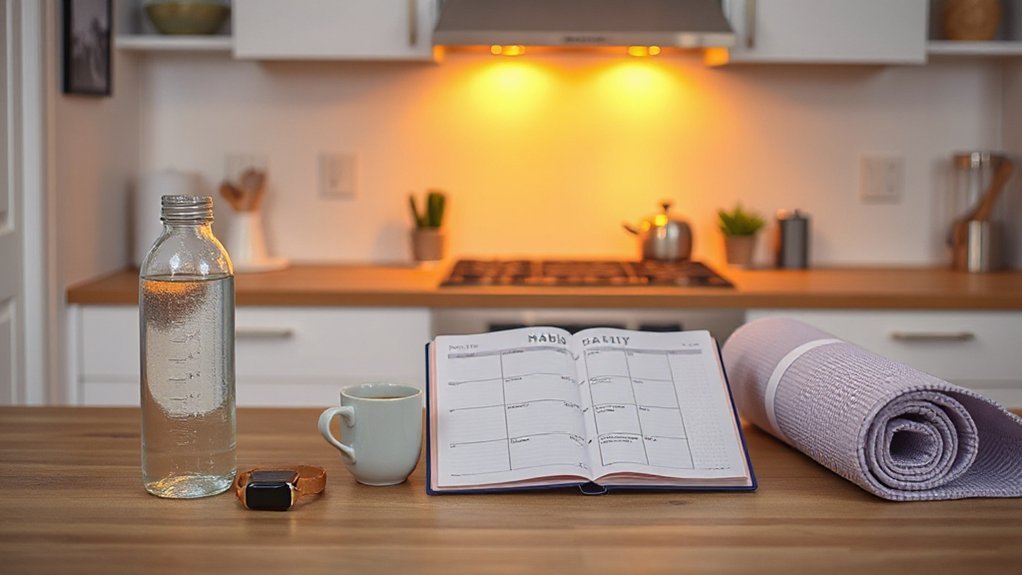
What do you want your morning to achieve? Start by listing three to five outcomes (energy, focus, calm) and rate each by importance and feasibility. Use value alignment: match outcomes to core values so motivation won’t fade under stress. Next apply priority mapping: order goals by impact and time cost, putting high-impact, low-cost items first. Set measurable success criteria, for example twenty minutes of focused work and ten minutes of breathing, and track them for a week to test assumptions. If data shows low adherence, adjust goal scope or timing rather than abandoning the routine. Finally, write a morning mission statement combining top outcomes and metrics. Review it nightly to reinforce intent and improve consistency. Celebrate small wins to sustain momentum and build habit.
Pick Simple, High-Impact Habits

Why not pick two to four small habits that deliver the biggest return for the least effort? Choose evidence-backed actions you can repeat: they build momentum and reduce decision fatigue. Start with a hydration habit—drink a glass of water to restore fluids and boost alertness. Use habit stacking: attach the new habit to an existing trigger so it sticks. Prioritize quality over quantity; three focused habits beat ten vague ones. Track progress for five to seven days and adjust.
- Drink a glass of water immediately after getting up.
- Do two minutes of light movement (stretch or bodyweight).
- Spend five minutes planning top priorities.
- Practice one minute of focused breathing to reduce stress.
Repeat consistently to make them automatic over time.
Day 1: Establish a Manageable Wake-Up Time
Start by choosing a wake-up time you can reliably hit most days—aim for a target that matches your sleep need and weekday obligations rather than an idealized early hour. Pick a time you can sustain for weeks; consistency improves sleep quality and daytime alertness. Set one alarm plus a backup, place your alarm across the room, and use alarm strategies like gradual volume or tone changes to reduce snoozing. Determine a fixed bedtime that yields sufficient sleep and commit to bedtime consistency; wind down 30 to 60 minutes before sleep by lowering screens and stimulation. Track sleep for three nights to confirm the schedule fits your energy. If you consistently miss your target, shift it by 15 minutes earlier or later until it’s reliable.
Day 3: Add Movement and Light Exposure
Once you’re up, get moving and into bright light—both boost alertness and help set your circadian clock. Spend ten to twenty minutes combining gentle cardio and dynamic stretches to increase blood flow, reduce stiffness, and prime cognition. If outdoor light isn’t available, use light therapy for twenty to thirty minutes at appropriate intensity (check device guidelines). Keep intensity moderate; you should feel awake, not wired.
- Do five minutes brisk walking or marching in place.
- Follow with five to ten minutes of dynamic stretches (leg swings, arm circles).
- Add five minutes of easy bodyweight moves (squats, lunges) to raise heart rate.
- Use a light therapy lamp by a chair while you hydrate or get ready.
Track how energy and focus shift; adjust duration gradually, weekly.
Day 5: Build a Short Mindfulness or Planning Practice
After moving and getting bright light, add a short mindfulness-or-planning practice to anchor your attention and priorities. Spend 5–10 minutes doing either Breath Counting or a quick planning ritual. For mindfulness, sit comfortably, close your eyes, and count breaths 1–10, repeat for three minutes; this reduces stress and improves focus. For planning, use Mini Journaling: write three priorities, one win, and a brief timeline. Evidence shows brief journaling clarifies goals and lowers rumination. Choose one method daily, or combine two minutes of Breath Counting followed by three minutes of Mini Journaling. Set a timer, keep it consistent, and track how you’re feeling after a week regularly. Small consistency yields measurable improvements in daily focus.
Day 7: Review, Adjust, and Lock In What Works
At the end of the week, review what you actually did versus your plan and note which parts boosted your focus, mood, or energy. Based on those observations, make one specific tweak—timing, sequence, or duration—and test it for three days. When a change consistently improves outcomes, automate it with a trigger and pair it with an existing habit to lock it in.
Reflect on the Week
How did your week actually go? Use a brief review: note Gratitude highlights, Learning moments, and measurable wins. Scan your log for patterns, energy peaks, and missed intentions. Ask: what felt sustainable, what drained you, and which habits shifted mood or focus.
- List three consistent wins and why they worked.
- Record two obstacles and the triggers behind them.
- Note one timing or environment change that improved consistency.
- Capture Gratitude highlights and Learning moments to reinforce motivation.
Decide which elements you’ll lock in for next week and which need small experiments. End with a clear, one-sentence commitment you can follow tomorrow. Keep tracking outcomes for two more weeks to confirm effects, then celebrate progress and repeat what works while staying open to minor refinements regularly.
Tweak Your Routine
Since you’ve gathered a week’s worth of data, use today to make targeted adjustments and lock in the elements that reliably move you forward. Review what consistently worked: timing, duration, and triggers. Note environmental cues that supported success (light, layout, notifications) and remove those that distracted. Use simple feedback loops—measure mood, energy, or completion rates each morning—to test one change at a time. If waking earlier helped, shift bedtime by 15 minutes this week and monitor results. If a step felt pointless, swap it for a 5-minute alternative and track impact. Aim for small, measurable tweaks you can evaluate within 48–72 hours. Document outcomes, then repeat this rapid-cycle improvement until your routine feels efficient and sustainable. Don’t be afraid to iterate quickly and deliberately.
Lock In Habits
When you hit Day 7, review the week’s data and lock in the elements that produced consistent gains. Evaluate which anchor behaviors triggered desired actions, note timing, context, and obstacles, and decide what to keep. Prioritize small wins—consistency beats intensity. Use habit automation: remove friction, set cues, and batch tasks so the routine runs with minimal willpower. Record commitments and schedule brief weekly check-ins to sustain momentum.
- Keep the anchor behaviors that reliably cue follow-up actions.
- Remove steps that create friction or decision fatigue.
- Automate cues: alarms, placed items, and environment tweaks.
- Schedule a 5-minute weekly review to tweak and reinforce.
Now commit and protect these changes; repetition will consolidate them into lasting habits. Celebrate progress, stay flexible, remain patient.
Troubleshooting Common Morning Roadblocks
Even if mornings feel chaotic, you can pinpoint and fix the usual roadblocks with targeted changes: track where time’s lost (snooze, scrolling, outfit decisions), use a single bedtime cue and dim lights to improve sleep, place your alarm across the room to stop snoozing, and prepare one priority task the night before so you get a quick win. Identify alarm resistance by noting how often you delay rising and thoughts follow. Replace a snooze habit with a consistent action—stand, hydrate, light—within two minutes of waking. Limit phone use to a scheduled check after you complete your first task. Layout clothes, pack essentials, and set realistic buffer times. Test small changes for three days, record outcomes, then iterate based on what improves your morning flow
Tips for Sustaining Your Routine Beyond Week One
Reinforcing small wins helps habits stick: track your routine for at least a few weeks (research shows habit formation often takes many weeks), tweak triggers, and make rewards immediate so you keep momentum. After week one, analyze which cues worked, reduce friction, and set micro-goals. Use social accountability by checking in with a friend or group and share progress. Implement simple reward systems tied to consistent days to reinforce behavior.
- Review and adjust morning cues weekly.
- Reduce steps for the hardest action.
- Pair the routine with a social accountability partner.
- Give yourself immediate, small rewards for streaks.
Keep data simple, be consistent, and iterate based on results. You’ll strengthen automaticity by repeating context-stable behaviors and reviewing outcomes monthly to avoid plateaus and celebrate progress.






Leave a Comment