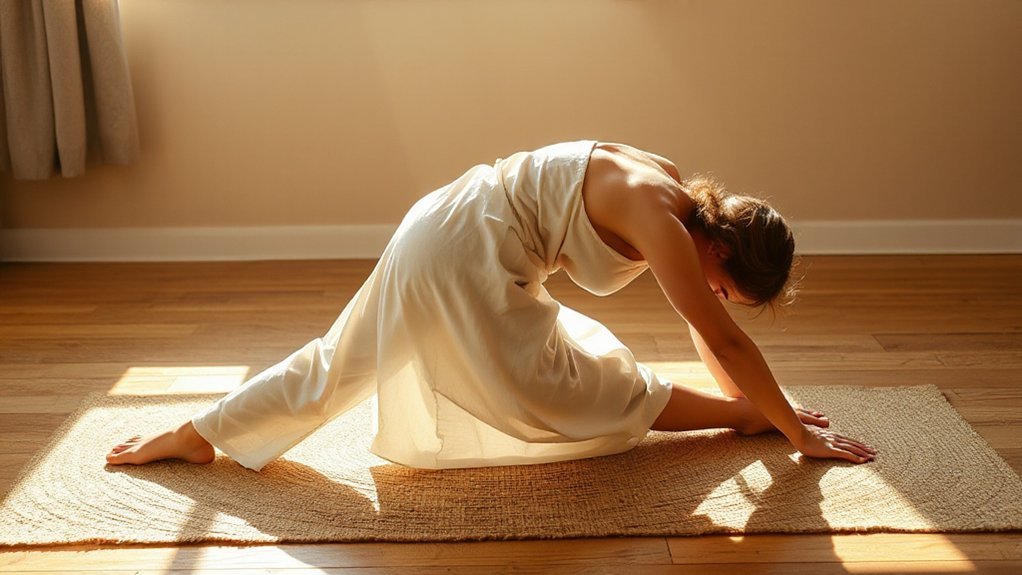

You don’t need marathon sessions—ten minutes daily crushes sporadic yoga binges. Hit child’s pose, downward dog, low lunges, bridge pose, and forward folds; hold each for 5–10 breaths. Use props like blocks and blankets to meet your body where it actually is, not where you think it should be. Exhale into the stretch, syncing breath to movement, and you’ll notice real gains fast. Keep going, and you’ll uncover exactly how to customize these poses for your unique flexibility journey.
Key Takeaways
- Ten minutes of daily practice with consistent short sessions outperforms sporadic long classes for flexibility gains.
- Hold each pose for 5–10 breaths (30–60 seconds) while matching breath to movement for safe progression.
- Child’s Pose, Downward Dog, Low Lunge, and Bridge Pose create full-body relief when practiced together regularly.
- Use props like blocks and blankets as precision tools to maintain proper alignment and comfortable holds.
- Exhale to soften into stretches; stop if sharp pain or jagged breathing occurs before five breaths.
Daily Yoga Practice Beats Occasional Deep Dives
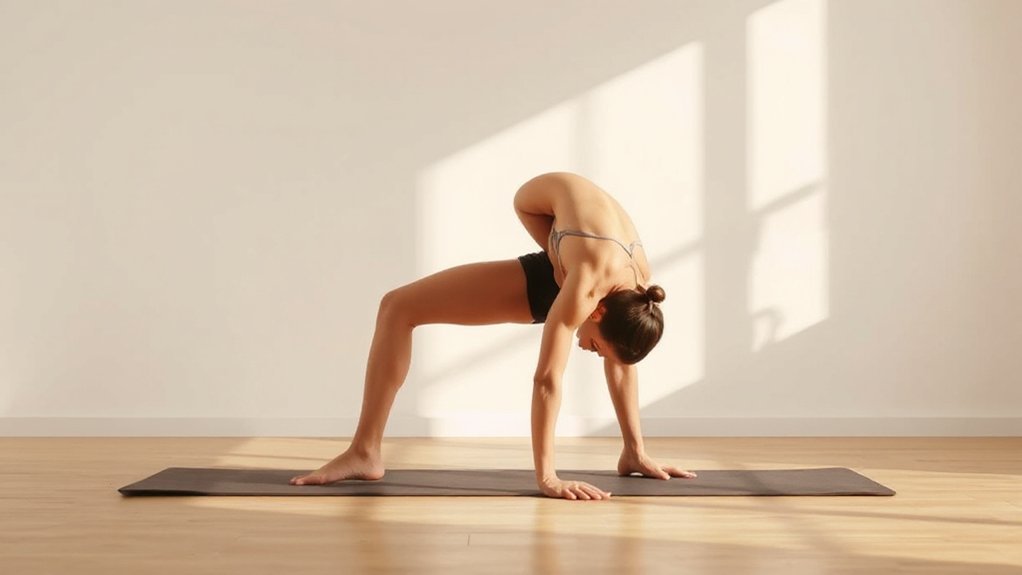
you don’t need a ninety-minute power class once a month to transform your flexibility and mobility. What actually works? Ten minutes daily. Research backs this up—consistent short sessions beat sporadic long classes every time, and even brief practice measurably improves your range of motion over weeks.
Here’s why: when you stretch regularly, your tissues adapt gradually. They lengthen safely. You’re not forcing deeper holds infrequently—that’s when injury creeps in. Instead, you’re building strength and length through gentle, repeated work.
Aim for 5–10 breaths per pose, roughly thirty seconds minimum. Keep sessions under twenty minutes with three or four targeted stretches. That’s sustainable. That’s doable on a Tuesday morning before coffee, or during lunch. The gains accumulate through frequency, not intensity. Your body responds to consistency, not occasional heroics. Show up daily, hold steady, and watch your mobility shift.
Hold Each Pose for 5–10 Breaths
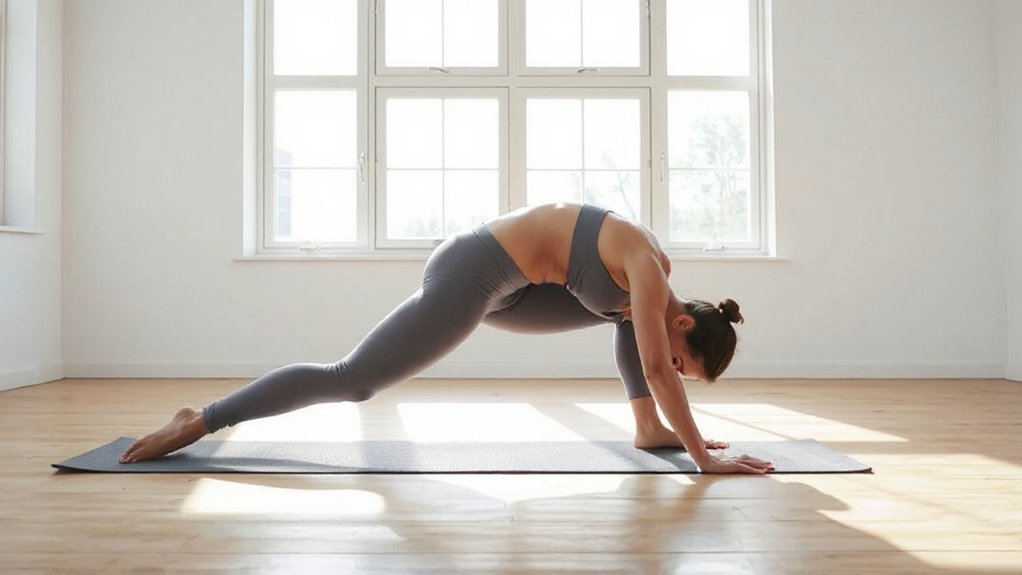
While holding a pose for mere seconds might feel like progress, the real magic happens when you stay put for 5–10 breaths—roughly 30 to 60 seconds depending on how long your inhale and exhale naturally flow.
The real magic happens when you stay put for 5–10 breaths—roughly 30 to 60 seconds of genuine progress.
Here’s why this matters: counting breaths instead of clock time keeps you anchored to the present moment, linking your movement directly to your breath. You’re not just stretching; you’re deepening the experience without forcing it.
Five to ten breaths promotes gentle tissue lengthening while calming your nervous system—the sweet spot between effectiveness and safety. Push beyond this window, and you risk overstretching, which nobody wants.
Notice sharp pain or jagged breathing before hitting five? Ease out immediately or use a modification—block, blanket, bent knee. No shame in adjusting.
The payoff? Consistent practice several times weekly yields real flexibility gains over weeks and months. Your body rewards patience.
Master Five Essential Poses for Full-Body Relief
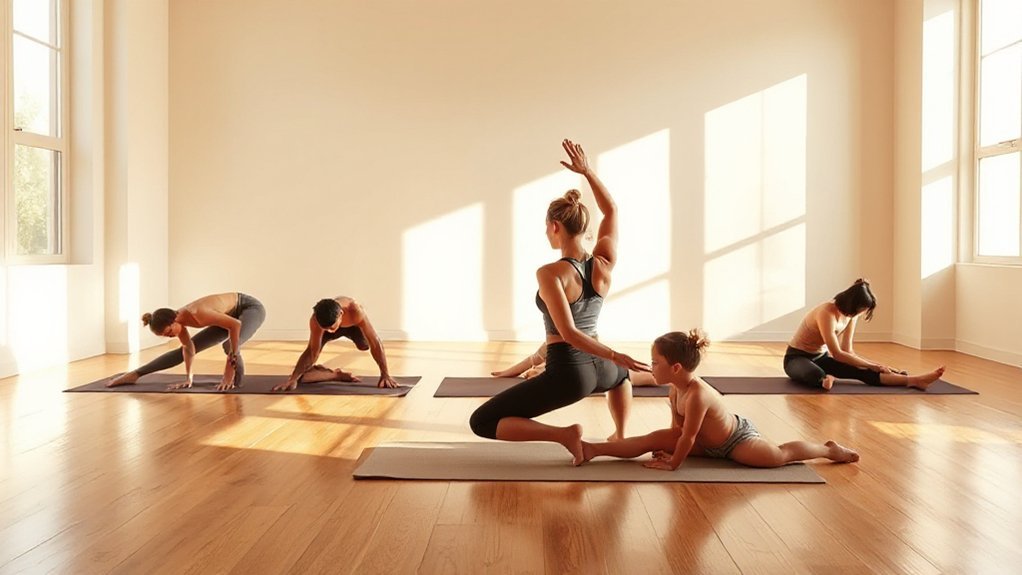
Building a solid foundation means mastering five poses that’ll transform how your body feels—and they’re simpler than you’d think.
You’ll access full-body relief by learning these essential stretches. Here’s what you need to know:
- Child’s Pose melts tension in your low back and shoulders—sit on your heels, extend your arms forward, and breathe deeply for 30–60 seconds.
- Downward-Facing Dog lengthens your entire posterior chain, from hamstrings to spine, using that upside-down V position for 5–10 breaths.
- Low Lunge opens your hip flexors and quads—step forward, stack that front knee over your ankle, and lift your chest.
- Bridge Pose strengthens glutes while opening your chest; lie back, feet close to your hips, then lift and squeeze.
These poses work together, creating balance throughout your body. Start here, hold steady, and you’ll notice real changes quickly.
Modify Poses for Your Flexibility Level
Mastering those five poses is only half the battle—the other half is meeting your body where it actually is, not where you think it should be. You’ve got options, and honestly, using them isn’t cheating.
Props are your friends. Blocks under your hands in Triangle? That shortens the lever arm and lets you breathe easy for a full five to ten breaths instead of white-knuckling through two. Bolsters, blankets, straps—they’re not crutches. They’re precision tools.
Bend your knees generously in forward folds. Lower that back knee in lunges. Use walls for balance work. These tweaks aren’t downgrades; they’re smart adjustments that keep you comfortable while building real flexibility over time.
Here’s the truth: consistency beats depth every single day. Ten minutes daily with moderated holds crushes occasional intense sessions. Your body responds to steady, sustainable practice. Listen to your breath. When it gets jagged, ease back. Sharp pain? That’s your signal to shift.
Sync Your Breathing to Deepen the Stretch
Your breath is the secret lever you’ve been missing—it’s not just something that happens while you stretch, it’s the actual tool that enables deeper flexibility.
Breath isn’t just background noise—it’s the forgotten tool unlocking the deeper flexibility you’ve been chasing.
Here’s how to harness it:
- Inhale to create space, lengthening your spine and opening your body before each fold
- Exhale to soften, releasing tension as you settle deeper into the stretch—this is where the real magic happens
- Match breath to movement, linking each repetition to one full breath cycle for seamless integration
- Use Ujjayi breathing, that gentle ocean-like sound from your throat, to calm your nervous system and let fascia actually relax
Aim for 5–10 steady breaths per pose in short sessions, or 30–60 seconds for static holds. Your breath’s quality matters more than depth. If you’re gasping, you’ve gone too far—back off immediately. Steady, even breathing signals you’re in the sweet spot. For longer yin holds, lean into slow exhales to breathe space into tight areas. Your nervous system downregulates, connective tissue surrenders, and deeper flexibility naturally follows.
Frequently Asked Questions
What Yoga Is Good for Injury Recovery?
Gentle, slow-paced styles work best: restorative yoga, yin, and yoga therapy. You’ll hold poses 30 seconds to 3 minutes using props like blocks and bolsters—no sharp pain allowed. Try Cat-Cow, Supported Bridge, and Child’s Pose for back issues. Breathe slowly, start with shorter holds, and progress gradually. Always coordinate with your physical therapist or yoga therapist first; they’ll customize your plan so you heal safely.
So
You’ve got this. Here’s the thing—you don’t need fancy studio sessions or hours of stretching. You’re building flexibility through consistency, holding poses steady, breathing deep, and honoring your body’s limits. Five essential stretches, daily practice, synced breath? That’s your recipe. Start tomorrow, stick with it, and watch how your body transforms. You’ll feel looser, stronger, calmer. That’s not coincidence—that’s commitment working.






Leave a Comment