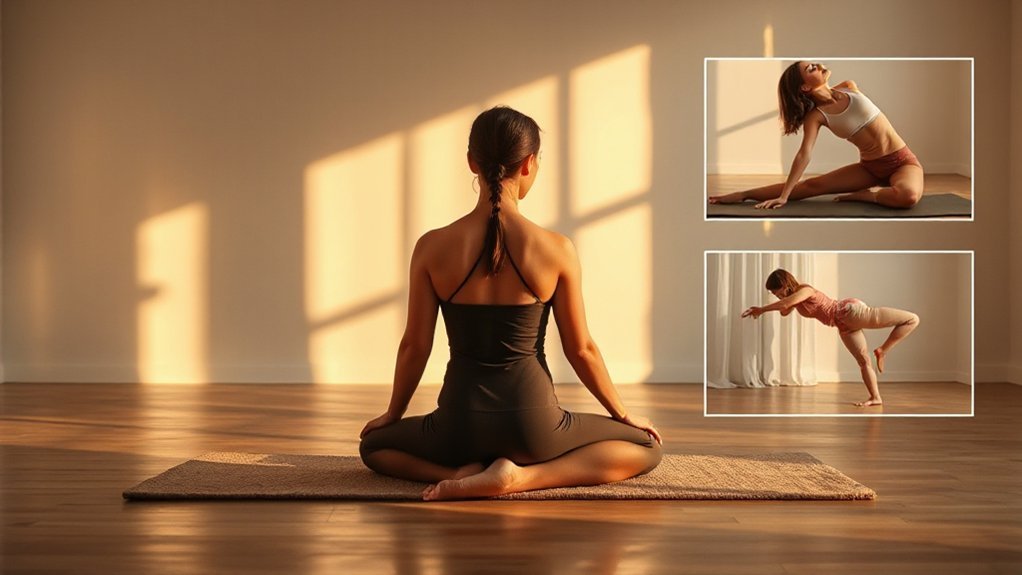

You’ve got tight muscles, weak stabilizers, and stress—yoga tackles all three. Cat–Cow warms your core, Downward Dog lengthens your hamstrings, and Bridge activates your glutes. Hold each pose 20–30 seconds, breathe slowly, and keep your spine neutral. Practice three to five times weekly for 15–30 minutes, mixing strengthening poses with restorative ones like Child’s Pose. Your nervous system calms down, pain perception drops, and movement patterns actually rewire. Stick with it four to six weeks—but there’s much more to know about alignment, scheduling, and when to call your doctor.
Key Takeaways
- Cat–Cow mobilizes the entire spine and warms the core in 5–10 breaths as an essential warm-up.
- Downward-Facing Dog lengthens the hamstrings, calves, and posterior chain; hold up to one minute with slight knee bend.
- Bridge Pose activates glutes and lower back with 20–30 second holds, feet hip-width apart and core engaged.
- Sphinx Pose or Low Cobra gently strengthens the back with 20–30 second holds while maintaining neutral spine.
- Child’s Pose and Supine Spinal Twist serve as restorative counterposes to release tension and restore spinal mobility.
Why Yoga Works for Back Pain

Because your back pain likely stems from tight muscles, weak stabilizers, and stress—yoga addresses all three at once.
When you practice yoga, you’re actually rewiring how your body moves. Those poses—Downward Dog, Bridge, Cat–Cow—they’re not random. They systematically stretch your hamstrings, hip flexors, and erectors while strengthening your core and glutes. You’re building the support system your spine desperately needs.
Here’s the magic: tight muscles pull your spine out of alignment, creating mechanical strain. Yoga lengthens what’s clenched, stabilizes what’s weak. Plus, slow breathing and mindful movement? They genuinely lower your pain perception. Your nervous system calms down. Stress releases.
Clinical guidelines actually list yoga as a first-line treatment for chronic low-back pain—not because it’s trendy, but because it integrates strengthening, flexibility, and relaxation into one practice. You’re correcting postural imbalances that keep causing flare-ups. That’s why it works.
8 Essential Poses for Back Pain Relief

Building a sustainable yoga practice means targeting the exact muscles and movement patterns that’re causing you grief—and these five poses do exactly that.
Start with Cat–Cow on all fours for 5–10 breaths, alternating between dropping your belly and lifting your chest (Cow), then rounding your spine (Cat). This warms your core and mobilizes your entire spine. Next, sink into Downward-Facing Dog, lengthening your hamstrings, calves, and posterior chain—hold up to a minute with a slight knee bend to ease low-back strain.
For gentle strengthening, try Sphinx Pose or Low Cobra, lifting only as high as comfortable in short sets of 20–30 second holds. Then engage Bridge Pose: feet hip-width apart, core tight, holding 20–30 seconds to fire up your glutes and lower back.
Finally, finish with Child’s Pose or a Supine Spinal Twist—restorative counterposes that release tension and restore mobility. These five moves create a complete, balanced practice targeting exactly what you need.
Alignment Cues for Safe Practice
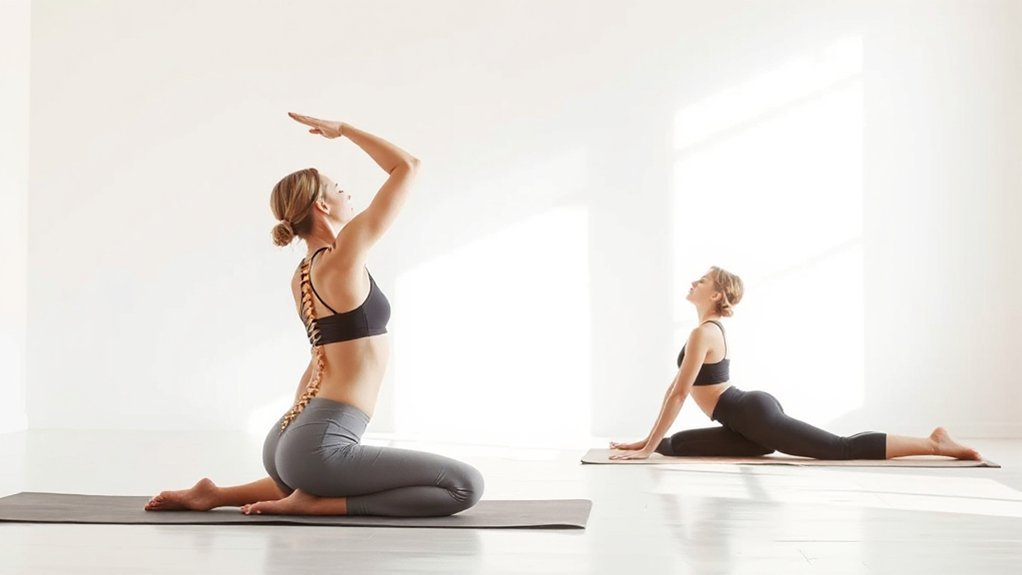
Perfect form matters just as much as the poses themselves—and here’s the thing: you can do every move right, but if your alignment’s off, you’re actually working against your back instead of for it. Let’s talk specifics.
| Pose Type | Key Alignment | Why It Matters | Common Mistake |
|---|---|---|---|
| On-Hands (Cat-Cow, Down Dog) | Stack wrists under shoulders, knees under hips | Distributes weight evenly, protects shoulders | Dumping weight forward into wrists |
| Backbends (Sphinx, Cobra, Bridge) | Neutral spine, engage core, lift tailbone | Prevents lower back compression | Overarching lumbar region |
| Forward Folds | Hinge from hips, bend knees slightly | Protects hamstrings and low back | Rounding spine instead of hinging |
| All Poses | Neck aligned with spine | Reduces strain throughout spine | Forcing head into extreme positions |
Your breath guides you through movement—move with it, not against it. Use props generously: blankets, blocks, whatever supports your body. Sharp pain or radiating sensations? Exit slowly, back off intensity, and check with your healthcare provider. Your alignment protects your future.
Your Weekly Practice Schedule for Back Pain
Consistency beats intensity every single time—and that’s your golden rule for building a sustainable back practice. You’ll want to aim for three to five sessions weekly, keeping each one between fifteen and thirty minutes. That’s it. Not marathon sessions; focused, purposeful work.
Here’s your structure: start every practice with one to two minutes of Cat-Cow flowing, then move into two or three strengthening poses like Bridge or Locust, holding each for twenty to thirty seconds and repeating twice. Layer in targeted hip and glute stretches—Pigeon or Seated Figure-Four work beautifully—for twenty to thirty seconds per side.
Finish with restorative poses: Child’s Pose, Knees-to-Chest, or Supine Spinal Twist, holding for twenty to sixty seconds. This rhythm—warm, strengthen, stretch, restore—creates real change without overwhelming your system. Progress gradually, increasing hold times as your body adapts. Listen closely on tough pain days; gentler options like Sphinx Pose exist for exactly those moments.
Red Flags: When to See a Doctor Instead
While your consistent yoga practice is building strength and flexibility, you’ve got to know when to step back and call in a professional. Listen to your body—it talks.
Head to the ER immediately if you lose bowel or bladder control, experience saddle-area numbness, or sudden severe leg weakness. These signal cauda equina syndrome, a genuine emergency. After trauma like falls or car crashes, get checked promptly; your spine might be fractured. Worsening leg weakness, tingling, or walking difficulties? That’s nerve compression talking, and you need imaging.
Watch for systemic red flags too: fever, chills, unexplained weight loss. These hint at infection or something more serious lurking beneath. Finally, if conservative care—rest, movement, over-the-counter pain relief—hasn’t helped after four to six weeks, stop waiting. Your doctor can pinpoint what’s actually happening and build a real plan.
Frequently Asked Questions
What Type of Yoga Is Best for Back Pain?
Gentle styles like Hatha, restorative, and Iyengar work best for you—they prioritize alignment and support. You’ll want therapeutic or trauma-informed classes led by instructors trained in back rehab; they tailor poses to your specific issue. Look for programs combining gentle stretching, core work like bridges, and breath-movement flow. Practice several times weekly, use props liberally, and avoid intense backbends without supervision. Always clear acute pain with your clinician first.
What Are the Big 3 Exercises for Lower Back Pain?
You’ve got three powerhouses: Cat-Cow mobilizes your whole spine, loosening tension with each breath—inhale into Cow, exhale into Cat, repeat for a minute. Bridge Pose strengthens your glutes and lower back support; squeeze hard, hold twenty seconds, repeat three times. Finally, Sphinx or Cobra extends your spine gently, opening your chest while stabilizing everything below. These three? They’re your foundation.
What Is the 30 Second Stretch That Relieves Back Pain?
You’ll want to try Knees-to-Chest—sounds like something your great-grandfather’s chiropractor recommended, but it genuinely works. Lie flat on your back, draw both knees gently into your chest, wrap your hands around your shins, and hold for thirty seconds while breathing deeply. Feeling tight? Do one knee instead to ease sciatic nerve pressure. Keep your neck relaxed, avoid jerky pulls, and breathe steady. Stop immediately if you feel sharp pain. This stretch decompresses your lumbar spine and reduces muscle tension beautifully.
Should You Do Yoga if Your Back Hurts?
Yes, you should do yoga if your back hurts—but here’s the catch: timing matters. New, severe pain? See your doctor first. Chronic ache? Yoga’s your friend. Stick with gentle poses like Cat-Cow and Child’s Pose, move slowly with breath, and bail immediately if something sharp hits. Think of it as listening to your body’s conversation, not ignoring its complaints.
So
You’ve got this. Your back doesn’t stand a chance against consistent practice—these poses’ll transform your pain into power, seriously. Start small, honor your body’s limits, and watch how flexibility blooms into strength. But here’s the thing: you’re not just stretching; you’re rewiring your relationship with movement itself. Stick with your schedule, trust the process, and don’t skip those alignment cues. Your future self’s already thanking you.







Leave a Comment