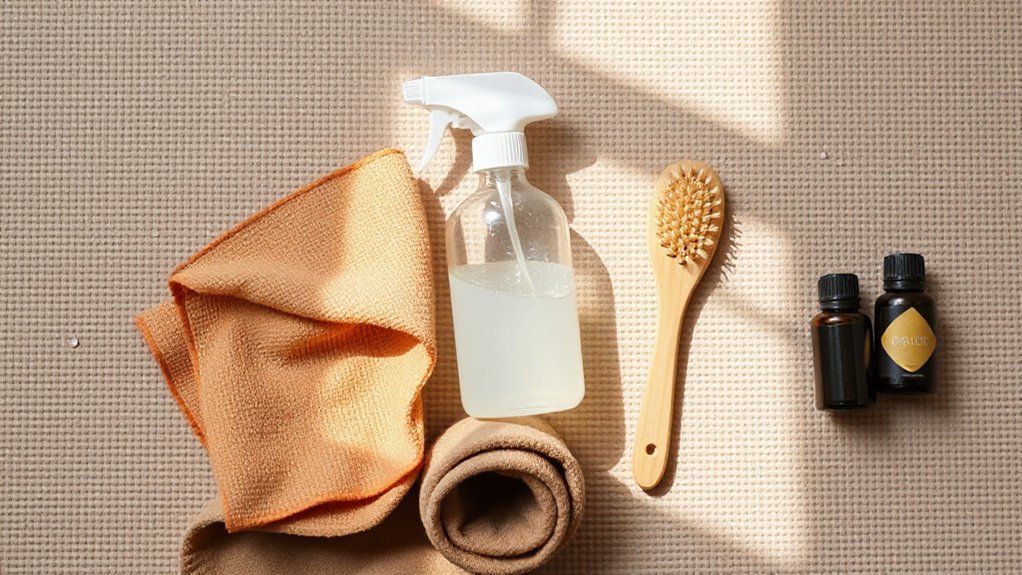

Your mat’s material—closed-cell PVC, natural rubber, or open-cell foam—determines everything. Wipe down immediately after practice with water or mat-specific cleaner, then dry completely before rolling. Every three to six months, deep clean based on your mat type: spray and scrub closed-cell mats, use manufacturer-approved restore on natural rubber, and dampen-and-press open-cell varieties. Skip disinfectants unless your mat’s non-porous; routine soap works fine. Troublesome odors? Baking soda paste does wonders. Store your mat loosely in cool, dry spots away from sunlight. The specifics of each material, though, deserve closer attention.
Key Takeaways
- Identify your mat material first—closed-cell PVC, natural rubber, open-cell PU, or machine-washable—to determine safe cleaning methods.
- Wipe down your mat with appropriate cleaner immediately after practice to prevent sweat and oils from settling permanently.
- Deep clean every 3–6 months using mat-specific products: Mat Wash & Refresh for closed-cell, Restore for natural rubber.
- Disinfect only non-porous closed-cell mats with EPA-registered cleaners; skip disinfection for absorbent mats like natural rubber or open-cell.
- Air-dry completely before rolling to prevent bacterial growth, mildew, and odor; store in cool, dry spaces away from sunlight.
Know Your Mat Material Before You Start
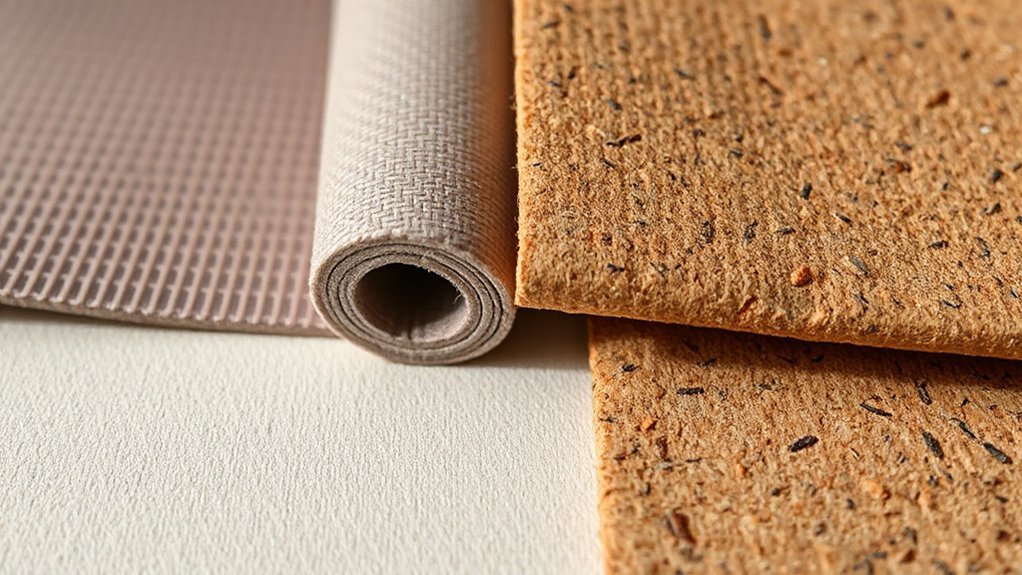
Before you grab that spray bottle and cloth, here’s the truth: not all yoga mats are created equal, and cleaning one the wrong way can wreck it.
Your mat’s material determines everything. Closed-cell PVC or TPE mats? They resist water absorption, so surface cleaning with mild soap works perfectly—no soaking needed. Natural rubber eKO mats demand gentleness; they’re absorbent and sensitive to sunlight, so use only manufacturer-approved cleaners and air-dry completely away from windows. Open-cell PU mats like GRP Travel are designed to grip through moisture absorption—never hit them with disinfectants or heavy soaking, just condition with foam on damp cloth. Only the Shala Yoga Rug tolerates machine washing; everything else refuses the wash cycle.
Identify your mat first. Check the label, review your receipt, or search the brand online. This single step prevents damage and extends your mat’s life substantially. You’ll clean smarter and safer once you know what you’re actually working with.
Clean After Every Practice
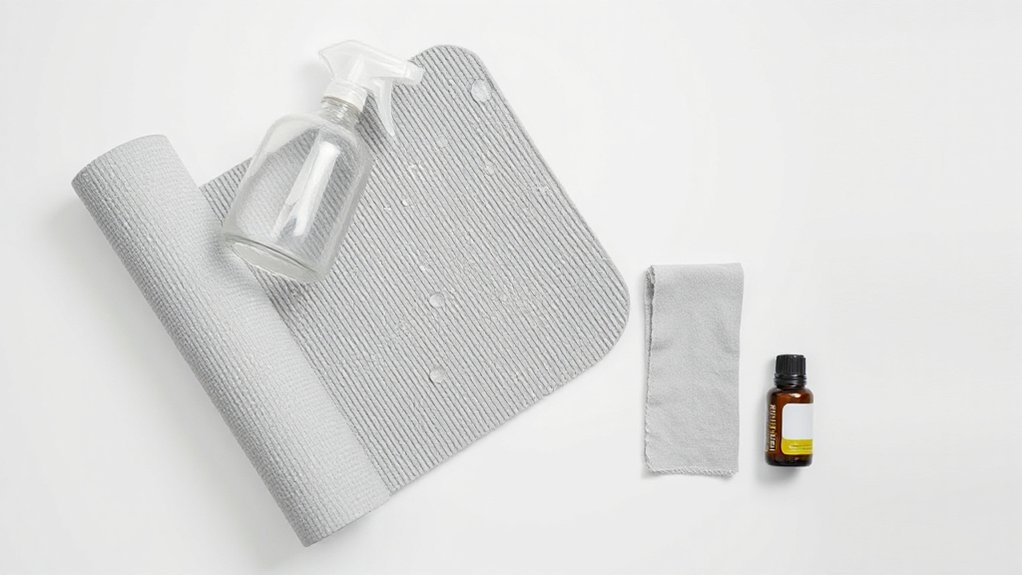
Now that you’ve identified your mat’s material, here’s the payoff: a simple post-practice wipe-down that takes ninety seconds and saves you from deep cleaning headaches later.
Your mat’s just absorbed an hour of your sweat, skin cells, and energy. Don’t let that linger. Here’s what matters:
Your mat’s absorbed an hour of your sweat and skin cells. Don’t let that linger—a quick wipe-down saves deep cleaning headaches later.
- Spray or dampen immediately—use Manduka Mat Wash & Refresh on closed-cell mats, or plain water for natural rubber eKO mats. Speed counts; dried sweat’s tougher to remove.
- Wipe thoroughly with a clean cloth—get the whole surface, corners included. This removes oils before they settle in.
- Dry completely before rolling—moisture breeds bacteria and odor. Hang moisture-absorbing mats; lay closed-cell ones flat or stand them upright.
This quick ritual protects your mat’s lifespan, keeps it fresh, and honestly? It feels good ending practice with intentional care.
Deep Clean by Mat Type
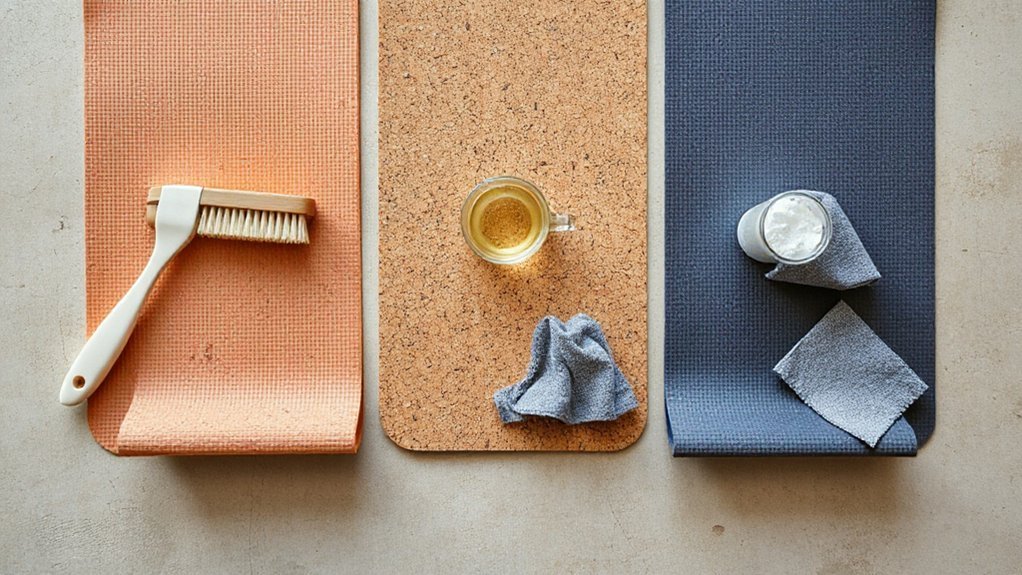
Every three to six months—or sooner if you’re a hot yoga devotee—your mat deserves more than a quick wipe-down.
Your mat type determines how you care for it. Got a closed-cell mat like PRO series or Manduka X? Spray Mat Wash & Refresh until it’s visibly wet, wait 1–2 minutes, gently scrub stains, then wipe and air-dry completely. Natural rubber eKO mats need different love: apply Manduka Natural Rubber Yoga Mat Restore generously, let it sit about five minutes, then wipe dry. Never soak or machine-wash these. GRP mats require a gentler touch—dampen a cloth, pump 2–4 squirts of foam cleanser onto it, press and wipe, rinse with fresh water, then hang to dry. The Shala Yoga Rug? That’s your exception—it’s machine-washable. Always, always make sure your mat’s completely dry before rolling it up. Moisture breeds odor and damage fast.
Disinfect Safely (Only If Your Mat Allows)
While disinfecting sounds like the ultimate hygiene move, here’s the truth: not every mat can handle it.
Before you grab that spray bottle, check your mat’s material. Non-porous, closed-cell mats like Manduka PRO or TPE Begin? They’re good to go. But moisture-absorbing mats such as natural rubber eKO or GRP series? Skip it entirely—chemicals soak in and won’t fully rinse out, leaving nasty residue on your skin.
When disinfection’s actually needed:
- Use EPA-registered cleaners only—Manduka Mat Wash & Refresh or Seventh Generation Disinfecting Multi-Surface Spray follow label instructions carefully.
- Honor the dwell time—let the disinfectant sit for 4–5 minutes to actually work; rushing defeats the purpose.
- Rinse thoroughly with clean water—wipe away every trace of chemicals that irritate skin or degrade your mat’s integrity.
Here’s the real talk: disinfect only when necessary—shared studio mats or suspected contamination. For your personal practice, honest soap and water after each session? That’s plenty. Your mat stays safer, longer.
Troubleshoot Cleaning Issues: Odor and Stains
If your mat’s started smelling like a gym locker, or you’ve noticed stains that won’t budge with your regular wipe-down, you’re not alone—and the good news is, both problems are totally fixable.
For surface stains and fresh oil marks, grab a mat-specific cleaner or mix a few drops of dish soap with warm water, then gently scrub. Rinse thoroughly and air-dry completely before rolling it up.
Stubborn odors? That’s trapped sweat, skin oils, and bacteria settling into your mat’s fibers. Make a paste with baking soda and water, let it sit 15–30 minutes, then wipe and rinse well. If odors persist, try an enzyme cleaner designed for sports gear—it’ll actually break down the smell rather than mask it.
Here’s the key: always dry your mat flat or draped until it’s completely moisture-free. Mildew loves damp environments, so don’t rush the process. Catch problems early, and you’ll keep your mat fresh for years.
Dry, Condition, and Store Between Sessions
Right after you roll up your mat, give it a proper wipe-down with the right cleaner for your mat’s material—Manduka Mat Wash & Refresh works great for closed-cell and TPE mats, while natural rubber eKO mats do better with Manduka Restore. Dry everything completely with a clean cloth before rolling. Here’s what you need to know:
- Air-dry flat or hang moisture-absorbing mats fully before storage—never roll them damp, as trapped moisture breeds mold and odor
- Store in a cool, dry spot away from direct sunlight and heat, which cause fading and those annoying white spots
- Roll loosely with the colored side out to preserve alignment markings and reduce material stress
Think of drying and storing as protecting your practice space—you’re genuinely caring for something that supports you. Skip the sealed bag temptation. Your mat stays fresher longer when it can breathe, and you’ll notice the difference in how it feels beneath you, session after session.
Frequently Asked Questions
What Is the Best Thing to Clean a Yoga Mat With?
You’ll get the best results with a purpose-made spray like Manduka Mat Wash & Refresh—just spray and wipe after practice. But honestly? A few drops of mild dish soap in warm water works great too. Gently scrub with a soft cloth, rinse thoroughly, wipe again, then air-dry completely. Skip bleach and harsh chemicals; they’ll wreck your mat’s material and leave nasty residues behind.
What Not to Use to Clean a Yoga Mat?
You know what they say: an ounce of prevention beats a pound of cure. Don’t use bleach, solvents, or disinfectant wipes—they’ll wreck your mat’s grip and color fast. Skip harsh scrubbing pads, steel wool, and strong detergents; they strip protective coatings. Never soak, hose down, or machine-wash it. And here’s the thing: fabric softeners and concentrated cleaners leave irritating residues. Basically, gentle’s your friend here.
So
You’ve now given your mat the gentle attention it deserves—keeping it fresh, extending its lifespan, and honoring the practice space you’ve cultivated. Regular maintenance isn’t tedious; it’s part of your yoga commitment. You’ll notice your mat responds with better grip, improved longevity, and that satisfying “ahh” moment when you unroll something pristine. Your future self thanks you.







Leave a Comment