

You’re waking early because your circadian rhythm’s out of sync or predawn light’s crashing your melatonin. Lock in the same wake time daily—yes, weekends too—and aim for six to seven hours. Block every sliver of light with blackout curtains, keep your bedroom cool and silent, and use sleep restriction: spend only as much time in bed as you’re actually sleeping. If you wake at four a.m., try diaphragmatic breathing or progressive muscle relaxation to drift back off. The real fix combines all these moves together.
Key Takeaways
- Block predawn light entirely with blackout curtains to prevent melatonin crashes that trigger early waking.
- Lock in consistent wake and bedtime daily, including weekends, to strengthen and stabilize your circadian rhythm.
- Practice diaphragmatic breathing at 4–6 breaths per minute when awakening early to lower heart rate.
- Keep your bedroom cool, dark, and silent during the final 1–2 hours before your desired wake time.
- See a sleep specialist if early waking persists beyond 4–8 weeks despite improved sleep hygiene practices.
Stop Waking Early: Fix Your Sleep Schedule and Bedroom
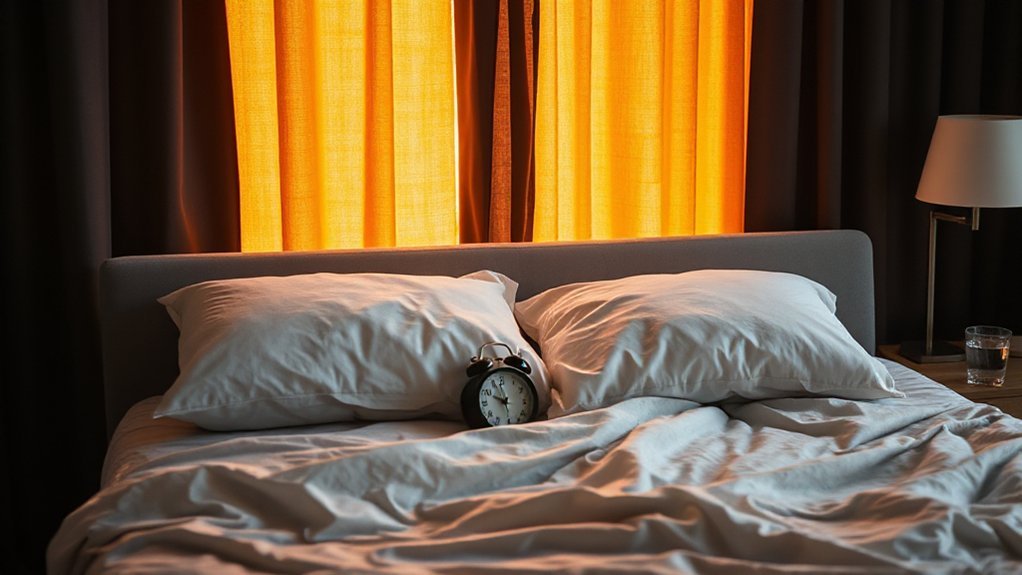
If you’re waking at 4 or 5 a.m. like clockwork, your body’s probably trained itself into that pattern—and the good news is you can retrain it. Start by locking in a consistent wake time and bedtime every single day, even weekends. You’re aiming for about 6–7 hours of sleep, which strengthens your circadian rhythm and stops those stubborn early-morning jolts awake.
Next, transform your bedroom into a sleep fortress. Cool temperature, blackout curtains, silence or white noise—these eliminate the light and comfort disruptions triggering your 4 a.m. restlessness. Comfort matters too, so invest in a solid mattress and pillows that actually support you.
If you’re still waking early, try sleep restriction: spend only as much time in bed as you’re actually sleeping. Once you hit 85% efficiency, add 15 minutes gradually. This consolidates sleep and squashes those premature wake-ups before they start.
Use Relaxation Techniques to Fall Back Asleep

You’ve set up your sleep environment like a pro—cool, dark, quiet—but your mind’s still firing at 4 a.m., won’t let you drift back off. Here’s the thing: you need relaxation techniques that actually work, and you need to practice them *now*, not just when panic hits at midnight.
Start with diaphragmatic breathing. Slow your breath to 4–6 per minute—inhale for 4–5 seconds, exhale for 6–8 seconds. This lowers your heart rate and signals sleepiness fast.
Diaphragmatic breathing at 4–6 breaths per minute—inhale 4–5 seconds, exhale 6–8—lowers heart rate and triggers sleepiness fast.
Next, try progressive muscle relaxation. Tense each muscle group at about 75% strength for ~5 seconds, then release. Notice the difference. Work from feet to face. Sounds simple? It is, and it works.
Or visualize a vivid, calming scene. Rich details matter—sights, sounds, smells, textures. This occupies your active mind, crowds out worries.
Practice these 15–20 minutes daily, not just bedtime. Your nervous system learns to respond automatically. When you wake up, combine breathing plus muscle work, then return to bed only when drowsy. No reinforcing wakefulness.
Wake Later by Controlling Light Exposure
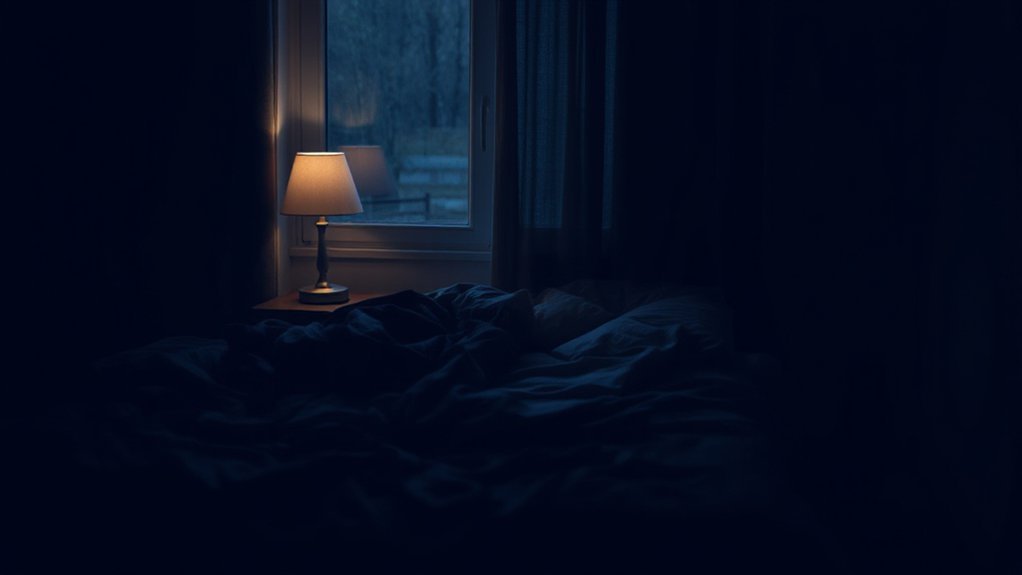
Your body’s internal clock runs on light—specifically, it’s obsessed with blue wavelengths around 460–480 nanometers, the stuff that screams “daytime” to your brain and shuts down melatonin production like flipping a switch. You’re waking early because light’s hijacking your schedule. Here’s how to take control back.
Block predawn light entirely with blackout curtains or an eye mask. That natural dawn? It’s triggering melatonin offset and an earlier wake time you didn’t ask for. Meanwhile, keep your bedroom dim during those last 1–2 hours before you want to rise. Use warm, red-spectrum bulbs indoors—think cozy, not clinical. And those blue-light filters? Wear them. Seriously. Even modest screen glow reduces melatonin and nudges you toward early waking.
| Strategy | Timing | Effect | Why It Works |
|---|---|---|---|
| Blackout curtains | Predawn | Blocks light signal | Prevents melatonin crash |
| Warm bulbs | 1–2 hrs before wake | Dims alertness | Low-lux preserves sleep |
| Amber glasses | Evening/early morning | Filters blue light | Protects melatonin |
| Late evening light | For phase delay | Shifts clock later | Evening light delays rhythm |
Should You Try Sleep Aids or Supplements?
When should you actually reach for a pill or powder to fix your sleep?
Here’s the honest truth: cognitive-behavioral therapy for insomnia—CBT-I—beats medications for lasting results. It rewires your relationship with sleep itself, not just masks the problem.
That said, short-term prescription sedative-hypnotics like zolpidem can help temporarily, but they carry real risks: next-day grogginess, falls, tolerance, dependence. Use them sparingly, under your doctor’s watch, for weeks only.
Melatonin might help if you’re waking too early. A modest dose (0.5–3 mg) taken 1–2 hours before your desired bedtime can shift your rhythm. Results vary though.
Skip the over-the-counter antihistamines and herbal supplements. Diphenhydramine, doxylamine, valerian? Limited evidence, daytime grogginess, potential harms—especially risky for older adults.
Here’s what matters most: talk to your clinician first. Check for medication interactions, sleep disorders like apnea, proper dosing, and an exit strategy. Don’t self-treat.
When to See a Sleep Specialist
Pills and behavioral tweaks can help, but they’re not magic—sometimes there’s a bigger problem lurking beneath those **4 a.m. wake-ups**. If you’ve tried solid sleep hygiene and strategies for 4–8 weeks without success, it’s time to call a sleep specialist. Don’t wait around hoping things improve on their own.
Don’t rely on pills and behavioral tweaks alone. If sleep hygiene hasn’t worked in 4–8 weeks, see a sleep specialist.
Here’s when you should definitely make that appointment:
- Persistent early awakenings that resist your best efforts at behavioral fixes and good sleep habits
- Daytime chaos—excessive sleepiness, fuzzy thinking, or accidentally nodding off during the day signals something serious
- Red-flag symptoms like loud snoring, gasping, leg discomfort, or frequent bathroom trips at night
- Underlying conditions such as depression, anxiety, chronic pain, or medication side effects that might be triggering your wake-ups
Your primary care doctor can connect you with a specialist. Bring a 1–2 week sleep diary to that first appointment—it’ll help them pinpoint exactly what’s sabotaging your sleep.
Frequently Asked Questions
How Do I Get My Body to Stop Waking up Early?
Your body’s waking you early? Here’s the fix: lock in a consistent bedtime and wake time—yes, even weekends. Cut caffeine by early afternoon, skip booze close to bed. Get bright light in the evening to shift your clock later, not earlier. Try CBT-I techniques: cognitive reframing, relaxation exercises, stimulus control. Limit bed time initially, then gradually extend it once you’re sleeping solidly. You’ve got this.
Why Do I Keep Waking up so Early?
You’re waking early because your body’s hitting multiple triggers at once. Maybe stress is spiking your cortisol at 4 a.m., or you’re catching caffeine’s tail end from yesterday afternoon. Could be your age shifting your natural rhythm earlier, sleep apnea fragmenting things, or even your bedroom’s too bright. Sometimes it’s simpler: irregular bedtimes, late screens, alcohol. Your nervous system’s basically getting primed to wake—and you’re not fighting back yet.
So
You’ve got the tools now—dark bedrooms, relaxation tricks, light control, maybe supplements. Here’s the thing: you can’t out-willpower a broken sleep schedule. As they say, “an ounce of prevention beats a pound of cure.” Start tonight. Dim those lights, stick to your routine, and give it two weeks before you panic. Your body’ll adjust. If it doesn’t? That’s when you call the specialist. You’re closer to better sleep than you think.







Leave a Comment