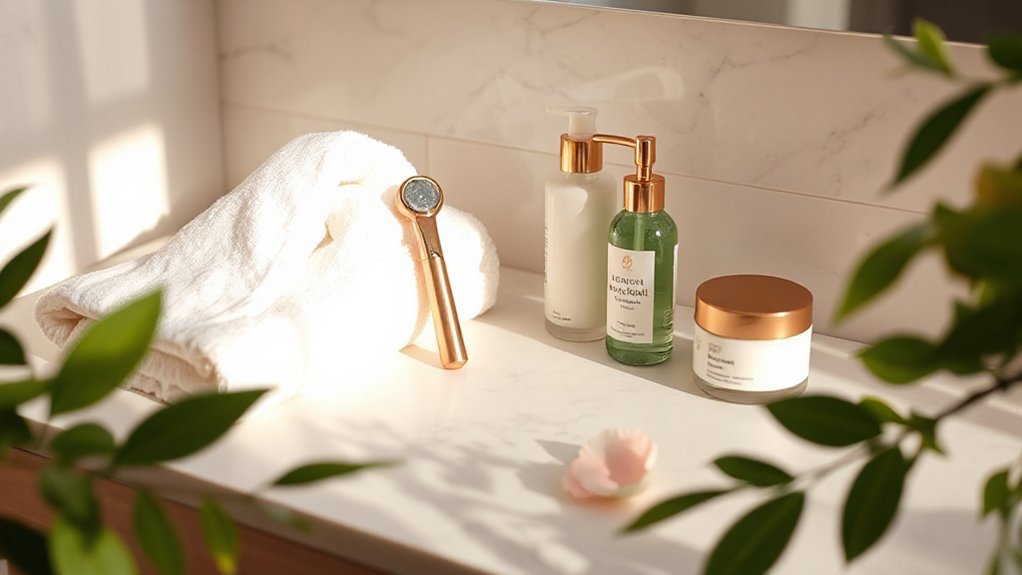

You don’t need ten products—you need three, used daily. Start mornings with a gentle cleanser, antioxidant serum, moisturizer with ceramides, then sunscreen SPF 30 minimum. Evenings? Cleanse again, apply a retinoid, seal with rich moisturizer. That’s it. Match textures to your skin type: gel serums for oily skin, creamy moisturizers for dry. Stick with this for eight to twelve weeks before expecting major shifts. Consistency compounds faster than complexity ever will, and there’s a whole framework behind why this particular order transforms skin.
Key Takeaways
- Simplify to three core steps: cleanse, moisturize with ceramides, and apply broad-spectrum SPF 30+ daily for protection.
- Layer products lightest-to-richest; apply retinoid nightly for cell turnover and collagen stimulation over moisturizer.
- Identify your skin type via cleansing test, then match textures: gel serums for oily, rich creams for dry.
- Avoid mixing potent actives like retinoids, acids, and vitamin C simultaneously; space treatments to prevent irritation.
- Consistency compounds results: daily sunscreen and modest nightly retinoid outperform sporadic expensive treatments over 8–12 weeks.
The Three Core Skincare Products That Work
You don’t need to complicate it. Three products—that’s genuinely all your skin needs to transform over time.
First, sunscreen. Daily broad-spectrum SPF 30 minimum, ideally mineral zinc, handles roughly 80% of aging prevention. It’s the foundation everything else builds on.
Second, a moisturizer with ceramides, omega fatty acids, or squalane. This seals hydration in, reduces water loss, and calms inflammation so your barrier can actually repair itself. Use it morning and night.
Third, a retinoid at night. Prescription strength or over-the-counter—pick one and stick with it. Retinoids increase cell turnover, fade fine lines and dark spots, and stimulate collagen production over months. That’s real, lasting change.
Apply lightest to richest: sunscreen morning, moisturizer anytime, retinoid evening. Consistency beats complexity every single time. One effective product from each category, used reliably, delivers results that complicated routines can’t touch.
Apply in the Right Order: Morning and Night
You’ve got your core trio down, but here’s the thing—the *order* matters just as much as the products themselves, because slapping them on randomly means your actives won’t penetrate properly and you’ll waste money on ingredients that can’t do their job. Your morning and evening routines aren’t identical; they’ve got different goals, different actives, and honestly, different strategies for protecting versus renewing your skin. Let’s break down exactly when and why you’re applying each step, because the sequence is what transforms a decent routine into one that actually *works*.
Morning Routine Sequencing
Because your skin’s ability to absorb products depends on layering them right, the order matters just as much as what you’re using. You’re fundamentally building a foundation that lets each ingredient do its job without competing for space on your skin.
Here’s your morning game plan:
- Cleanse first (or use micellar water if you’re dry) to remove overnight buildup
- Apply eye cream before serums so delicate under-eye skin gets targeted care
- Layer your antioxidant serum—vitamin C works beautifully on clean, dry skin to fight daytime free radicals
- Finish with moisturizer, then sunscreen—always sunscreen last, because it needs direct contact with skin to protect you
Wait 30–60 seconds between lightweight layers, longer for thicker creams. Then you’re ready for makeup. That’s it. Simple, effective, done.
Evening Routine Sequencing
While your morning routine preps skin for the day ahead, your evening routine is where the real renewal happens—and it all starts with a thorough cleanse. Double cleanse if you wore heavy makeup or sunscreen, removing every last pollutant so active treatments can actually work.
Next, apply eye contour products. Your under-eye area’s delicate, so it needs targeted ingredients before heavier layers block them. Then comes treatment serums—retinoids, peptides, vitamin C alternatives—layered from thinnest to thickest. Light formulas first, always. This gives actives direct access to skin.
Here’s the key: use stronger chemical exfoliants only 1–2 nights weekly, placing them after cleansing but before creams. Finish with a rich moisturizer or oil to seal everything in. Nighttime is repair mode. You’re literally rebuilding your skin while you sleep.
Customize Your Skincare Routine for Your Skin Type
You can’t just grab any product off the shelf and expect it to work—you’ve got to know your skin type first, whether that’s dry, oily, sensitive, or mature, because what hydrates one person’s face might clog another’s. Once you’ve nailed down your skin’s actual needs (not what you think they should be), you’ll adjust everything from your cleanser’s texture to your active ingredients, matching each step to what your skin’s actually asking for. Think of it like this: identifying your skin type is the foundation, picking the right product textures keeps things working smoothly, and connecting those products to your specific concerns—whether that’s breakouts, dryness, or fine lines—is what transforms a routine from random into genuinely effective.
Identifying Your Skin Type
Ever wonder why that expensive moisturizer your friend swears by leaves your face feeling like an oil slick?
Your skin’s unique needs demand a personalized approach. Here’s how you’ll crack your skin type code:
- The cleanser test: Wash gently, pat dry, wait an hour—tightness means dry skin, all-over shine suggests oily, T-zone shine indicates combination
- The blotting sheet method: Press across your face; oil only in the T-zone signals combination, everywhere means oily, little oil means dry or normal
- The acne pattern clue: Deep cystic breakouts often point to hormonal influences, while frequent whiteheads reveal congestion and excess oil
- The sensitivity check: Perform patch tests on your inner forearm before trying new actives—stinging or prolonged redness confirms reactive skin
Adjusting Products By Texture
Now that you’ve nailed down your skin type, here’s the thing: knowing what your skin needs doesn’t mean much if you’re slathering it with the wrong textures. Texture matters—a lot. It’s the difference between products that actually work and ones that sit on your skin like a greasy mess or get absorbed into thin air.
The secret? Layer from lightest to richest. Water-based serums and lotions go first, then creams, then oils or occlusives seal everything in. This order guarantees your actives penetrate deeply while heavier textures lock in moisture without blocking the good stuff.
| Skin Type | Best Textures |
|---|---|
| Oily/Acne-Prone | Gel serums, lightweight lotions, fluid sunscreens |
| Dry/Mature | Rich creams, oil-based cleansers |
| Sensitive | Creamy, fragrance-free formulations |
| Combination | Mix textures by zone |
| Normal | Versatile across all textures |
Match your texture to your skin type, and you’ll notice real changes within 4–6 weeks.
Matching Routines To Concerns
Once you’ve identified your skin type, the real work begins—because skin type is just the foundation. Your actual concerns? That’s where customization gets personal.
Here’s what you’re working with:
- Dry or mature skin: Swap harsh cleansers for oil-based ones, then layer a peptide serum under ceramide-rich moisturizers to rebuild your barrier
- Oily or acne-prone: Use gentle cleansers with BHA exfoliants to clarify pores, skip astringents that backfire, and add retinoids for real lesion reduction
- Sensitive skin: Keep it minimal—cleanser, barrier moisturizer, SPF—and pause most actives until inflammation settles
- All skin types: Daily broad-spectrum SPF 30+, exfoliate only 1–2 nights weekly, save potent actives for nighttime
This isn’t one-size-fits-all. You’re building a routine that listens to *your* skin’s actual needs, not what marketing tells you.
Common Mistakes That Derail Even Consistent Routines
You can follow a skincare routine religiously, but if you’re making certain foundational mistakes, you’re working against yourself—and honestly, it happens to the best of us.
Over-cleansing strips your skin’s natural oils, leaving you dehydrated and triggering rebound oiliness. Hot water and twice-daily washing? They’re sabotaging your barrier. Then there’s the complexity trap: a 12-step routine sounds impressive until you actually skip half of it because who has that kind of time?
Here’s the real deal: you’re skipping sunscreen (SPF 30+ daily) and undermining everything else—80% of aging comes from cumulative sun exposure. Mixing potent actives without spacing? Retinoids, acids, vitamin C together equal irritation and flares. And that makeup wipe habit? It’s leaving residues that clog pores and block your treatments from working.
Keep it simple, consistent, protected. That’s the formula that actually wins.
How Long Until You See Results
How patient do you really need to be?
Here’s the truth: your skin’s timeline depends on what you’re actually asking it to do.
- One week in: You’ll notice calmer, plumper skin once you’ve simplified your routine and supported your barrier properly
- Four to six weeks: Actives like retinoids and chemical exfoliants start showing real texture and tone changes—this is your skin cycle reset
- Eight to twelve weeks: Major improvements emerge, like an 81% boost in antioxidant defenses or 70% less redness with consistent use
- Spot treatments: Some formulations work faster; targeted vitamin C serums, for instance, showed dark spot improvement in just one week
Here’s what matters most: stick with your regimen for at least one full skin cycle before deciding it’s not working. Your skin type, past damage, and how diligently you apply products all factor in. Individual variation’s real. If you’re chasing faster or stronger results, that’s when you chat with a clinician about next-level options.
Why Consistency Beats Perfection
Most people get this backward: they chase the perfect routine once a month, then abandon it, expecting their skin to transform. That’s not how skin works.
Here’s the truth: you’ll see real change from showing up consistently, not from occasional heroic efforts. Daily sunscreen beats the fanciest serum used sporadically. A modest retinoid applied every night outperforms expensive treatments you forget about.
Daily sunscreen beats the fanciest serum used sporadically. Consistency compounds into visible improvement; occasional heroic efforts fade fast.
Why? Your skin responds to cumulative effort. Those small daily habits—cleanse gently, apply SPF, moisturize—compound over weeks and months into visible improvement. Meanwhile, that flawless routine you follow for three days? It fades fast once you stop.
Simplify your approach. Protect, support, repair—that’s it. Three core steps you’ll actually stick with. Your skin doesn’t need complexity; it needs reliability. Boring consistency wins every single time.
Frequently Asked Questions
What Is the Best Skincare Routine Ever?
You’ve got this: cleanse gently, then moisturize to lock in hydration and protect your barrier—that’s your foundation. Layer a broad-spectrum SPF 30+ every single morning; it prevents up to 80% of visible aging. At night, add one active ingredient (retinoid or peptide serum) to drive real change. Keep it simple, stick with it consistently, and you’ll see measurable improvements in four to six weeks.
What Is the Most Important Skin Care Routine?
Sunscreen’s your foundation—like building a house on rock instead of sand. You’ve got to apply SPF 30+ daily, every single day, because sun damage causes 80% of aging. Pair it with a ceramide moisturizer at night and a retinoid for renewal. That’s it. Three products, done consistently, beat any fancy ten-step routine you’ll abandon in weeks. Stick with what works.
So
Your skin’s a garden you’re tending, not a destination you’re rushing toward. You’ve got your tools—the core products, the order, the routine that fits *you*. You’re planting seeds of consistency, pulling weeds of bad habits. Growth takes time, patience, repetition. So stick with it. Show up for your skin tomorrow like you did today. That’s how you win.







Leave a Comment