

You’re hemorrhaging thirty minutes to chaos that doesn’t have to happen—and here’s the truth: it starts the night before. Set a consistent bedtime and wake time (yes, weekends too), then prep everything: lay out clothes, pack lunches, create a launch-pad station by the door. Use an age-appropriate morning checklist, start with two minutes of connection and affirmations, and tie rewards to completion. You’ll transform mornings from frantic to functional, and there’s actually much more strategy behind making this stick long-term.
Key Takeaways
- Set a consistent bedtime and wake time, working backward from your fixed wake time to ensure 9–11 hours of sleep.
- Prepare the night before: lay out clothes, pack lunches, and create a launch pad by the door with all essentials.
- Use age-appropriate morning routine charts—picture charts for young kids, written checklists for elementary, and minimal systems for high schoolers.
- Start mornings with 2–5 minutes of physical connection and positive affirmations to boost mood and motivation before the day begins.
- Build a family command center with color-coded calendars, checklists, and reward systems tied to routine completion and weekly check-ins.
Set a Consistent Bedtime and Wake Time (Even Weekends)

Because your child’s entire morning hinges on how well they slept the night before, getting bedtime right is non-negotiable. Here’s the thing: you’ve got to work backward from your fixed wake time. If your kid needs to wake at 7 a.m. and they’re 10 years old, they need 9–11 hours of sleep—so bedtime lands somewhere between 8 and 10 p.m. Simple math, huge payoff.
But here’s where most families slip up. You nail it on school nights, then Saturday rolls around and everything goes sideways. That’s social jetlag talking, and it wreaks havoc on their circadian rhythm. Keep wake times within 30–60 minutes of your weekday schedule, even weekends. Consistency teaches your child’s body to shift its internal clock naturally, so waking feels easier and alertness improves without constant nagging.
Put bedtimes on your family calendar—treat them like doctor’s appointments, non-negotiable. That structure? It works.
Prep Your Morning Routine the Night Before

While your kid’s sleeping soundly, you’re setting up tomorrow’s win—and that’s where the magic happens.
Here’s the thing: night-before prep crushes morning chaos. Start by laying out complete outfits—socks, shoes, accessories included—so you skip the “I have nothing to wear” debate. Pack lunches together or set a firm 7:00 AM deadline; kids either prep them or you’re buying at school. No exceptions.
Create a “launch pad” by your door. Backpacks, permission slips, homework, supplies—everything lives there, ready to grab. Set up a grab-and-go breakfast station with overnight oats, yogurt, or heat-and-serve options so mornings aren’t about cooking.
Most importantly? Build a visual checklist together. A laminated chart, whiteboard, labeled bins—whatever works. Walk through it the night before. This ritual builds independence while confirming nothing’s forgotten.
You’re not just prepping logistics. You’re teaching your kid ownership and building the confidence that comes with being ready.
Choose a Morning Routine Chart for Your Child’s Age
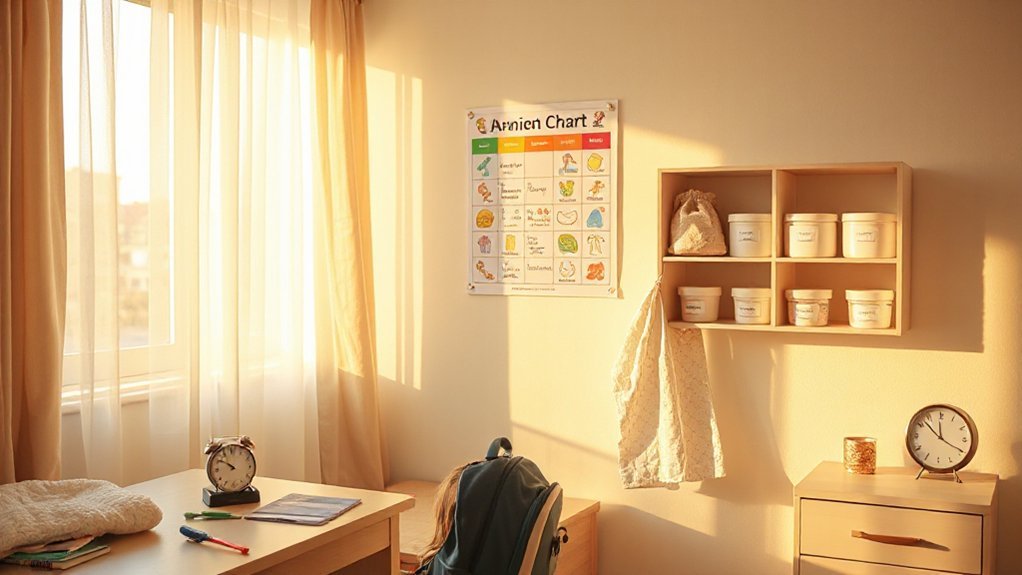
Now comes the part where you actually make that checklist—and here’s your reality check: one-size-fits-all doesn’t work.
Your kindergartener needs pictures and stickers. Your middle schooler needs control. Your high schooler needs minimal friction. Match the chart to their developmental stage, and you’ve already won half the battle.
Here’s what works:
- Preschool–K: Use laminated picture charts with velcro pieces and sticker rewards so non-readers follow steps independently
- 1st–5th grade: Create a simple written checklist (6–8 items) posted on the bedroom door for daily checkmarks
- 6th–9th grade: Build a customizable chart letting teens reorder tasks, boosting ownership and executive-function skills
- High school: Go minimal—a phone alarm plus a 4–6 item checklist app prevents overwhelm and builds independence
For kids with developmental delays, pair highly visual sequence charts with consistent placement and rehearsal. Laminate everything for durability.
The goal? A system they’ll actually use, not one gathering dust.
Start Your Morning With Connection and Affirmations
How many mornings do you rush through goodbyes and wonder why your kid’s already frustrated before the car door closes?
Start different. Spend 2–5 minutes connecting—really connecting. Share a long hug, take deep breaths together, hold hands walking to the car. This creates immediate calm, not chaos.
Exchange one positive statement each: “I’m proud of you” lands different than silence. Then share one thing you’re both looking forward to. Optimism spreads.
Practice short affirmations daily—”I’m strong. I’m capable.” Repetition builds self-esteem, reduces anxiety. Here’s the thing: let your kid pick or contribute affirmations. They’ll own the messages more when they choose them.
Play a 2–5 minute family playlist. Requestable songs boost mood, prompt movement, make affirmations feel fun and ritualized, not like another task.
Connection first. Everything else follows easier.
Create a Family Command Center and Use Rewards
Chaos loses its grip when everyone knows what’s happening—and that’s exactly what a family command center does. You create a hub that transforms morning madness into manageable flow. Here’s how:
- Post a color-coded wall calendar with each child’s activities visible, plus a whiteboard for daily must-dos and labeled inbox slots for permission slips and homework
- Build a launch-pad station with hooks for backpacks, trays for keys and wallets, and containers holding spare masks, chargers, and essentials within arm’s reach
- Display laminated checklists—picture routines for younger kids, writable checklists for older ones—so they self-manage and mark completion independently
- Tie rewards to completion: daily stickers or screen-time minutes, plus weekly points charts redeemable for bigger privileges
Here’s the secret: consistency works. Hold weekly family check-ins at your command center. Review calendars, reset tallies, refill supplies, adjust systems. You’re not just organizing—you’re building accountability and ownership that sticks.
Frequently Asked Questions
What Is the Perfect School Morning Routine?
You’ll nail mornings by setting one consistent wake time—yes, weekends too—so your body actually cooperates. Work backward from that to guarantee enough sleep: you need 9–11 hours if you’re younger, 8–10 if you’re a teen. Do prep the night before: pack lunches, lay out complete outfits, stage backpacks. Then structure morning into timed blocks with a visual checklist. End with a quick connection—a hug, affirmation—before you dash out informed and calm.
So
You’ve got this. When you stick with these strategies—consistent sleep, night-before prep, age-matched charts, morning connection, and that command center—you’re not just streamlining mornings. Studies show kids with structured routines score 15% higher on academic performance. That’s real. Your effort transforms rushed chaos into calm momentum, setting your child up for success before they even leave home. You’re building something that matters.






Leave a Comment