

Your morning routine needs exactly four things: a gentle cleanser (micellar water works), an antioxidant serum like vitamin C, a lightweight moisturizer, and SPF 30+ as your final step. That’s it. Five minutes, max. The secret? Less really is more—fewer products mean your skin barrier actually recovers instead of drowning in actives. Consistency beats complexity every single time. Here’s what changes everything when you nail each step.
Key Takeaways
- Cleanse gently with micellar water or oil-to-foam cleanser to remove overnight oils without stripping skin.
- Apply antioxidant serum (vitamin C or peptides) immediately after cleansing for protection and repair benefits.
- Use a lightweight moisturizer with ceramides and hyaluronic acid to seal serums and strengthen barrier.
- Apply broad-spectrum SPF 30+ as the final step after moisturizer fully absorbs for photoaging prevention.
- Keep routine to five minutes with four essentials: cleanser, serum, moisturizer, and sunscreen for consistency.
Support Your Skin Barrier: Why Less Is More

When you’re standing in front of your bathroom mirror with a lineup of serums, essences, and treatments that could rival a small pharmacy, here’s the truth: you’re probably doing more harm than good. Your skin barrier—that protective layer keeping moisture in and irritants out—gets overwhelmed by too many products. Dermatologists recommend a minimal approach: cleanser, serum, moisturizer, SPF. That’s it. Fewer than five products actually work better because you’re not stacking harsh actives that trigger dryness, breakouts, and excess oil. One week of simplifying? You’ll notice plumper, softer skin. One year? Sustained health. Start with a gentle cleanser, apply thin layers from thinnest to thickest, and give each product time to absorb. Your skin doesn’t need rescuing—it needs patience and space to recover.
The Four Essentials Every Morning Routine Needs
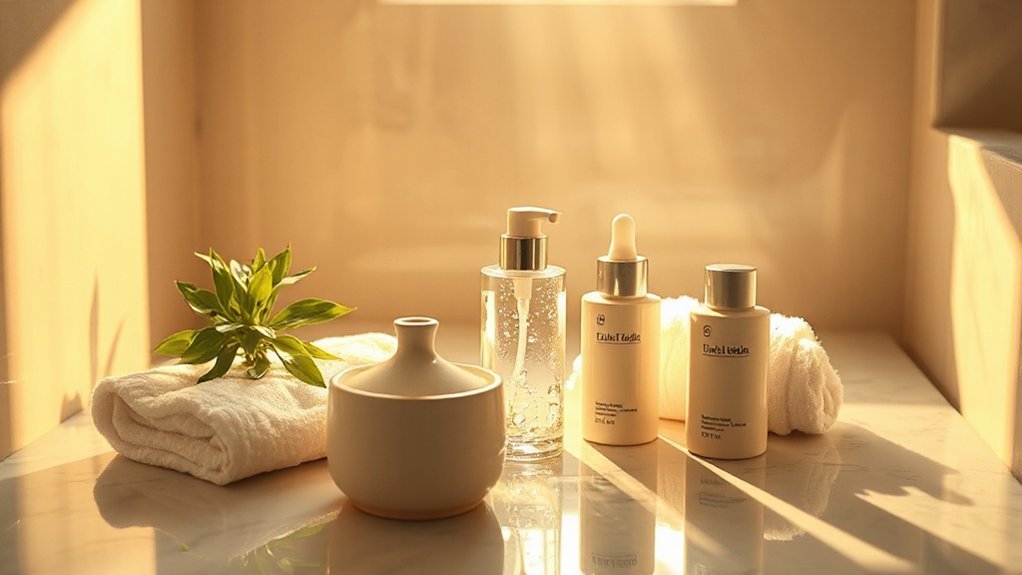
Now that you’ve cleared the clutter, let’s talk about what actually belongs in your morning lineup. You need four non-negotiables: cleanser, serum, moisturizer, and SPF. That’s it. Each one serves a specific purpose, working together to protect and prep your skin.
| Step | Product Type | Why It Matters |
|---|---|---|
| 1 | Gentle Cleanser or Micellar Water | Removes overnight oils without stripping your barrier |
| 2 | Antioxidant Serum (Vitamin C or Peptide) | Combats environmental damage while skin’s receptive |
| 3 | Lightweight Moisturizer | Seals hydration and strengthens your skin’s defense |
Skip the full water wash—it’s harsh. Use micellar water instead; Bioderma Sensibio H2O works beautifully. Apply your serum to damp skin for better absorption. Then smooth on that moisturizer, letting it settle before sunscreen. Finish with broad-spectrum SPF 30+, applied as your final layer. This routine takes five minutes, protects everything that matters, and honestly? Your skin will thank you.
Cleanser: Remove Overnight Oils Without Stripping

Your skin spent the night rebuilding itself—and it left behind a layer of natural oils in the process. You need to remove that buildup without stripping away what keeps your barrier healthy.
Skip the harsh foaming cleansers. Instead, reach for a gentle formula: micellar water on a cotton round, or an oil-to-foam cleanser packed with squalane and niacinamide. Think La Roche-Posay Lipikar AP+ or Bioderma Sensibio H2O. These lift overnight oils without that tight, uncomfortable feeling.
The trick? Keep your morning cleanse minimal. No double-cleansing here—that’s for evening when you’ve worn makeup. Look for hydrating ingredients like glycerin, hyaluronic acid, and aloe instead. A balanced cleanser does double duty: it removes what you don’t need while soothing inflammation and protecting your natural oils. That protection matters. Skip it, and you’ll trigger rebound oiliness and breakouts. Gentle wins every time.
Serum: Boost Radiance and Protection With the Right Active
After cleansing, you’re ready for a serum that’ll actually move the needle on radiance and protection—think vitamin C formulations like SkinCeuticals C E Ferulic or THD-based options that pack serious antioxidant power without the irritation. You’ll apply this immediately after your cleanser (and before anything thicker), following that thin-to-thick rule, which means it gets to work fighting environmental stressors and photoaging while prepping your skin for what comes next. Here’s the thing: if you’re already using other active repair serums, stick to one antioxidant plus one repair product max, because layering too many actives will backfire and actually compromise your results.
Brightening Serums For Radiance
What’s the secret to that coveted glass-skin glow you see everywhere? Brightening serums with antioxidants like vitamin C. You’ll want to apply them in the morning—they protect against UV damage and pollution while boosting radiance. Look for stable forms: THD vitamin C or L-ascorbic acid formulas like SkinCeuticals C E Ferulic, which tackle uneven tone and photoaging. Apply after thinner serums, before moisturizer and SPF. Here’s the thing: don’t layer too many actives. Stick to one brightening booster in your AM routine. If your skin’s sensitive, choose gentler stabilized derivatives and pair them with hydration, hyaluronic acid especially, plus daily broad-spectrum SPF. This prevents rebound pigmentation and keeps your skin actually happy, not stressed.
Active Ingredients And Protection
Because morning serums are where radiance actually happens, picking the right active ingredient is everything—and it’s simpler than you’d think. You’re not building a chemistry lab; you’re building a shield.
Here’s what actually works:
- Choose one antioxidant powerhouse—vitamin C (THD or L-ascorbic acid like SkinCeuticals C E Ferulic) neutralizes free radicals from UV and pollution while boosting glow
- Add a repair serum sparingly—DNA or peptide-focused products support skin resilience without overwhelming your barrier
- Layer thinnest to thickest, applying serums before moisturizer for maximum absorption
The catch? Don’t stack multiple actives. Vitamin C does its job best alone. Then—and this matters—always finish with broad-spectrum SPF 30+. Your antioxidants complement sunscreen; they’ll never replace it. Protection and radiance work together, not separately.
Layering Serums With Moisturizers
Layering your serums correctly transforms them from isolated treatments into a coordinated defense system—and yes, order actually matters here. You’re building from thinnest to thickest: start with hydrating hyaluronic acid to attract moisture, then layer your vitamin C antioxidant for radiance and protection. Follow with any repair serums if you’re using them. Here’s the thing—each product needs those few seconds to absorb before you add the next one. Otherwise, you’ll get pilling and wasted ingredients. Once your serums have settled, seal everything with a lightweight moisturizer. This locks in hydration and preps your skin for sunscreen. Think of it like building a shield, layer by intentional layer. Timing and sequence? They’re your secret weapons for maximum results.
Moisturizer: Lock in Hydration and Repair Your Barrier
After you’ve layered your serums and essences, it’s time to seal the deal—and that’s exactly what your moisturizer does. This step locks in everything you’ve applied while fortifying your skin barrier with ingredients your skin actually needs to thrive.
Here’s what makes this essential:
- Barrier-supporting ingredients matter—ceramides, hyaluronic acid, niacinamide, and beta-glucan actively repair and protect your skin’s outermost layer.
- Texture is everything for mornings—lightweight, fast-absorbing formulas (think water-based gels or “water creams”) layer seamlessly under sunscreen without feeling heavy.
- Match your skin type—oily skin wants something feather-light; dry skin craves richer, lipid-replenishing creams that actually restore function instead of stripping what little moisture you’ve got.
Wait for each layer to absorb before applying your moisturizer. This prevents pilling and guarantees deep penetration. Whether you’re reaching for an affordable option with natural moisturizing factors or a luxe variant with peptides and vitamins, prioritize formulations that genuinely nourish—not just coat—your complexion.
Sunscreen: Your Non-Negotiable UV Defense
What’s the point of all that hydration and repair work if you’re going to let the sun undo it all by noon?
Here’s the truth: sunscreen isn’t optional—it’s your entire routine’s bodyguard. Apply a broad-spectrum SPF 30 or higher (SPF 50 or 60 work better) as your final morning step, after your moisturizer’s fully absorbed. This prevents photoaging, dark spots, and UV damage that’ll erase weeks of skincare progress.
Sunscreen is your skincare routine’s bodyguard—apply SPF 30+ daily to prevent photoaging and undo weeks of progress.
Pick a formula that actually works for you. Tinted mineral sunscreens give you an even finish, while lightweight hydrating ones often contain niacinamide or hyaluronic acid for extra protection. SkinCeuticals Physical Fusion UV Defense SPF 50 or La Roche-Posay Anthelios Mineral Tinted SPF 50 are solid choices.
But here’s what matters most: reapply throughout the day when you’re outside. Pair sunscreen with hats or UPF clothing. Consistency wins. Your future skin will thank you.
Frequently Asked Questions
What Is the Best Skin Care Routine in the Morning?
Your best morning routine? Keep it simple. Sweep your face with micellar water—no harsh scrubbing—then apply one targeted serum: vitamin C or peptides. Layer thin to thick: serum, hydrating gel, lightweight moisturizer. Let each step sink in. Seal everything with broad-spectrum SPF 30+. That’s it. Consistency beats complexity, and sunscreen? Non-negotiable. You’re protecting your skin’s future right now.
So
You’ve got this. Your morning routine’s not complicated—it’s actually four steps that work. Here’s the thing: dermatologists report that 60% of people skip sunscreen daily, which means you’re already winning if you’re applying it. Cleanser, serum, moisturizer, sunscreen. That’s your formula. Your skin barrier’s counting on consistency, not complexity. Stick with it, and you’ll notice the difference.







Leave a Comment