

Waking at 3 or 4 a.m. isn’t a personal failing—it’s your body signaling something fixable. Age shifts your circadian rhythm earlier, medications pile up side effects, and nocturia hits 80% of older adults. Your bedroom might be too warm, your schedule inconsistent, or sleep apnea‘s disrupting your rest. Start with quick wins: cool the room to 60–67°F, lock in consistent bedtimes, and catch morning light within an hour of waking. Track patterns for a week—note bathroom trips, snoring, restless legs, mood shifts—because those clues point straight toward solutions your doctor can prescribe.
Key Takeaways
- Age-related circadian rhythm shifts and lower melatonin levels are primary causes of early-morning waking in older adults.
- Keep your bedroom cool (60–67°F), maintain consistent sleep times, and get 20–30 minutes of morning light to reset your circadian rhythm.
- Track sleep patterns for one to two weeks, noting bedtime, awakenings, and daytime factors to identify treatable underlying causes.
- Practice progressive muscle relaxation, diaphragmatic breathing, or cognitive techniques when awake at night to reduce arousal and improve sleep consolidation.
- See a sleep specialist if early awakenings persist after self-management or if you experience snoring, gasping, or frequent nocturia.
Why You Wake Up Too Early: Common Causes and Triggers
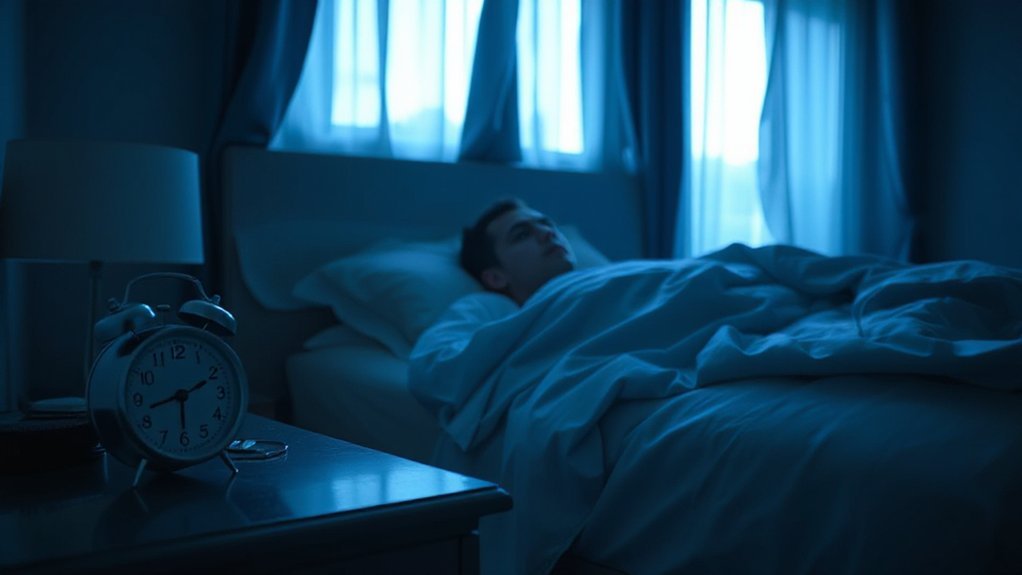
If you’re waking at 3 or 4 a.m. and can’t fall back asleep, you’re not alone—and it’s probably not just bad luck. Your body’s changing. As you age, your melatonin dips and your circadian rhythm shifts earlier, naturally fragmenting sleep. You’re waking three to four times nightly now, which feels relentless.
But it’s not only biology. Medical culprits pile up: nocturia (that midnight bathroom sprint affecting 80% of older adults), medications—you’re likely taking five or more—chronic pain, depression, even sleep disorders like sleep apnea or restless legs syndrome. Your mind’s playing tricks too. Stress, anxiety, late naps, evening alcohol, even conditioned awakenings from past nights—they all sabotage your return to sleep.
Then there’s your environment. Streetlights creeping through blinds, a partner’s snoring, room temperature fluctuations, and the timing itself: REM sleep, your lightest stage, often hits around 3 a.m. Environmental noise and light make arousal inevitable. You’re not broken—you’re simply dealing with multiple, overlapping triggers that deserve attention.
Quick Wins: Cool Bedroom, Consistent Bedtimes, and Morning Light

You’ve got the causes pinned down—now it’s time to act. Three simple shifts can reshape your sleep and keep you from jolting awake at 3 a.m. Here’s what works:
Three simple shifts can reshape your sleep and stop those 3 a.m. wake-ups for good.
- Cool your bedroom to 60–67°F (15.5–19.5°C) — your body needs this temperature drop to sleep deeply and stay asleep.
- Lock in a consistent sleep schedule — same bedtime, same wake time, every single day, within 15–30 minutes. Yes, weekends too.
- Catch 20–30 minutes of bright morning light — ideally outdoors within one hour of waking, or use a 2,500–10,000 lux light box.
- Dim lights and ditch screens 60 minutes before bed — this protects melatonin and makes falling back asleep easier.
Stack these three together, and you’ll notice faster progress. Early awakenings fade. Your circadian rhythm strengthens. That’s the real power here—not doing everything, but doing the right things in sync.
Track Your Sleep Patterns With a One-Week Diary

Putting pen to paper—or fingers to screen—beats guessing about what’s actually happening during your nights.
A one-week sleep diary transforms vague complaints into real data. You’ll record bedtime, lights out, estimated sleep onset, any awakenings, and your final wake time. That’s your foundation. But here’s where it gets useful: note what you actually did that day. When’d you exercise? Did you hit caffeine after lunch? How much alcohol, and when? These details matter.
Each morning, rate your sleep quality and daytime tiredness on a simple 0–10 scale. You’re connecting dots between night sleep and how you function the next day. Calculate your sleep efficiency too—total sleep divided by time in bed, times 100. Aim for 85% as your target.
Flag anything unusual: travel, stress, nocturia, medications. External factors trigger early waking more often than you’d think. One week gives you patterns. Two weeks? Even better. You’re building your own sleep blueprint.
Use Relaxation and Cognitive Techniques to Stay Asleep
When you’re lying awake at 3 a.m., your mind racing and body tense, you need tools that actually work—and that’s where relaxation techniques, meditation, and cognitive strategies come in. You’ve got solid options: progressive muscle relaxation (tensing and releasing muscle groups from your feet up), slow diaphragmatic breathing at 4–6 breaths per minute, or visualization to calm your nervous system, all of which you can practice for 15–20 minutes daily and again if you wake at night. But here’s the kicker—pairing these physical techniques with cognitive work, like reframing catastrophic thoughts about lost sleep or using stimulus control (staying out of bed after ~15–20 minutes awake), breaks the worry-wakefulness cycle that keeps so many people trapped.
Progressive Muscle Relaxation Techniques
Because your body and mind are deeply connected, tensing and releasing your muscles can actually quiet the restless arousal that jolts you awake at 5 a.m.—and that’s where progressive muscle relaxation (PMR) comes in.
Here’s your game plan:
- Practice 15–20 minutes daily during daytime hours so you’ve got the skill locked in
- When you wake early, cycle through 4–6 major muscle groups—feet, calves, thighs, torso, arms, face
- Tense each group for a few seconds, then release slowly while breathing deeply
- Pair this somatic work with neutral thoughts (“My body’s resting; sleep will return”) to combat catastrophic thinking
PMR targets physical tension rather than racing thoughts. Combined with cognitive shifts, you’ll drift back to sleep faster than you’d expect. That’s the magic here.
Meditation and Visualization Methods
Progressive muscle relaxation quiets your body, sure—but your mind’s another story. That’s where meditation and visualization step in. Here’s the thing: when you’re lying awake at 3 a.m., spiraling thoughts are your real enemy. Try this instead. Pick a specific, calming scene—a quiet beach works great—and fill it with sensory details. What do you see? Hear? Smell? Move through that scene mentally for 5–15 minutes. Your brain can’t worry and visualize simultaneously; you’re basically hijacking your own attention. If you’re still awake after 15–20 minutes, get up. Do a brief meditation in dim light rather than torturing yourself in bed. Practice daily for 15–20 minutes to build the habit. Soon, you’ll drift back naturally.
Cognitive Behavioral Therapy Strategies
Here’s your game plan:
- Catch the thought: Notice when you’re catastrophizing about sleep loss
- Question it: Is 7 hours really a disaster? What evidence proves that?
- Replace it: “I’ve handled tired days before. My body recovers”
- Practice coping thoughts: Repeat them when anxiety spikes at 3 a.m.
You’re retraining your brain, literally rewiring how you respond to wakefulness. That’s powerful work.
Know When a Sleep Diary Reveals a Treatable Sleep Disorder
What’s really happening during those restless nights? Your sleep diary holds clues to treatable conditions you might not suspect. If you’re waking repeatedly with loud snoring or gasping, obstructive sleep apnea could be the culprit—a sleep study can confirm it. Noticing an irresistible urge to move your legs, especially when you’re resting? That’s restless legs syndrome talking, and it’s absolutely manageable. Multiple bathroom trips documented each night? Nocturia from underlying medical causes might be sabotaging your sleep. Here’s the key: track your wake times religiously. A consistent 3–4 a.m. awakening paired with mood changes could signal circadian disruption or depression. Calculate your sleep efficiency too—if it’s consistently below 85%, insomnia responding to CBT-I or sleep restriction might be your answer. Your diary isn’t just a record; it’s a diagnostic tool. Bring these patterns to your doctor.
Getting Help From a Sleep Doctor When DIY Isn’t Enough
When you’ve tracked your sleep for weeks, tried the standard fixes, and you’re still jolting awake at 3 a.m. or dragging through your days, it’s time to stop troubleshooting alone.
A sleep specialist brings real expertise. They’ll dig deeper than you can solo, reviewing medications, medical history, and psychiatric factors that might be sabotaging your rest. Here’s what to expect:
- A detailed conversation about your sleep patterns and daytime struggles
- Questionnaires like the Epworth Sleepiness Scale to measure your tiredness objectively
- Possibly an overnight sleep study or at-home apnea test if sleep apnea, restless legs, or nocturia seems likely
- A personalized treatment plan—maybe CBT-I, light therapy, or medication when warranted
The goal? Move beyond guessing. Your doctor can prescribe sleep restriction tailored to you, coordinate care for comorbid conditions, and actually fix what’s keeping you awake. You deserve better than exhaustion.
Frequently Asked Questions
How Do I Stop Waking up at 5am?
When you wake at 5 a.m., wait 15–20 minutes first. If sleep won’t come back, get up—don’t lie there fighting it. Do something boring in dim light: read, breathe deeply, stretch quietly. Your brain’s learning that 5 a.m. means “stay awake,” so you’re actually breaking that habit. Also, keep consistent wake and bedtimes, avoid caffeine after 1 p.m., and make sure your bedroom stays cool and dark. Stick with it; persistence works.
What Does It Mean if You Wake up Between 3 and 5 Am?
Waking between 3 and 5 a.m. usually means you’re hitting REM sleep—the lighter stage where you’re more likely to surface. It’s often conditioned, too: your body remembers past interruptions like old infant care or pain, so it wakes you on schedule even now. Nocturia, hot flashes, anxiety, or medications frequently trigger it. Environmental factors—streetlights, late caffeine, irregular sleep—pile on. If it’s consistent and wrecking your days, you’ve got treatable causes worth exploring.
So
You’ve got the tools now—think of your sleep like a garden you’re tending. Cool temps, consistent schedules, morning light: they’re your seeds. Track patterns, try relaxation techniques, notice what blooms and what wilts. If you’re still waking at 3 a.m. despite your best efforts? That’s when you call in the expert. You’re not failing; you’re listening to what your body needs. Sometimes DIY isn’t enough, and that’s okay.







Leave a Comment