
Vitamin C serum’s your secret weapon for brightening dark spots, firming skin, and fighting free radicals from UV and pollution—but here’s the catch: you need the right formula and storage setup. L-ascorbic acid hits hardest at 10–20%, though gentler derivatives work better for sensitive skin. Apply it mornings under sunscreen, avoid mixing with retinol or strong acids, and keep it in an opaque, airtight bottle away from heat. Oxidation kills effectiveness fast, so watch for yellowing. We’ll break down which formulas actually work for your skin type and budget.
Key Takeaways
- Vitamin C serums neutralize free radicals, brighten skin by reducing hyperpigmentation, and support collagen production for firmer skin.
- L-ascorbic acid is most potent but unstable; gentler derivatives like sodium ascorbyl phosphate offer stability with slower results.
- Store in opaque, airtight containers at 15–25°C; yellowing indicates oxidation and reduced effectiveness within six weeks of opening.
- Choose formulations by skin type: sensitive skin needs diluted forms (~10–12%), oily skin benefits from lightweight gels, dry skin needs hydrating ingredients.
- Apply vitamin C in AM before sunscreen; avoid combining with retinol or strong acids in the same routine to prevent irritation.
What Vitamin C Serum Actually Does for Your Skin?
Neutralizing free radicals—that’s the core job vitamin C serum tackles for your skin, and it does it well. You’re constantly under attack from UV rays, pollution, and smoking, all of which create oxidative damage that dulls your complexion. Vitamin C steps in as your antioxidant bodyguard, sweeping up those free radicals before they wreak havoc.
But here’s where it gets interesting: it brightens your skin and tackles hyperpigmentation by actually slowing down melanin production. You’ll likely notice a more even tone within weeks of regular use. Then there’s collagen—vitamin C stimulates it, softening fine lines and boosting firmness gradually over time. Think of it as preventative maintenance rather than a miracle worker. Applied mornings under sunscreen, it amplifies your SPF protection too. You’re not reversing years overnight, but you’re genuinely investing in clearer, firmer skin.
Stability and Packaging: Why They’re Deal-Breakers?
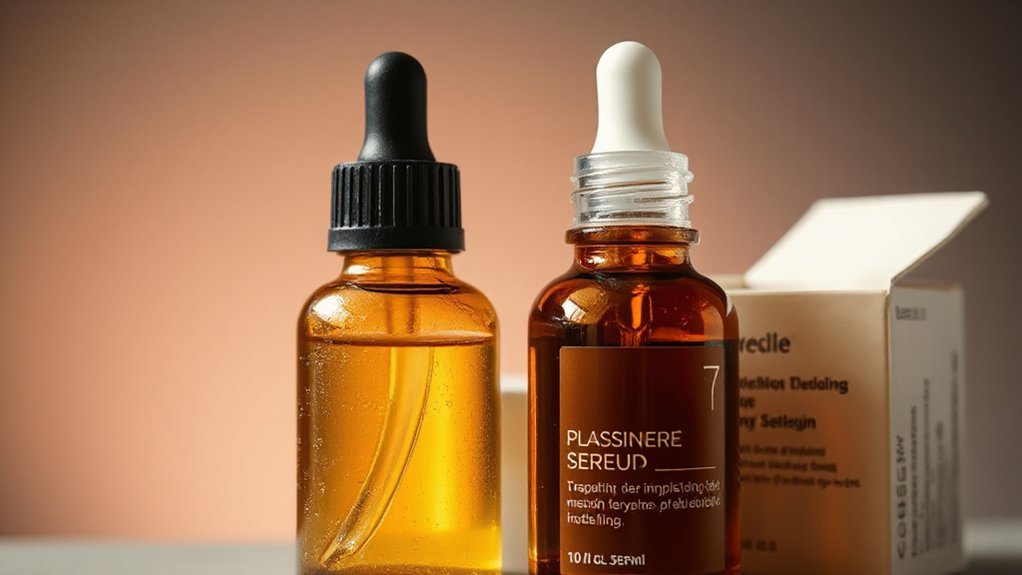
Here’s what actually protects your investment:
- Opaque, airtight containers (pump bottles or aluminum tubes) that block light and seal out oxygen
- Stabilizer combos like vitamin E and ferulic acid paired with low pH formulas under 3.5
- Proper storage in cool, dry spaces between 15–25°C
That yellowing or browning you spot? Oxidation happening. Reduced effectiveness follows. Classic L‑ascorbic acid serums last roughly six weeks with twice‑daily use—that’s your window.
More stable derivatives like ascorbyl glucoside or sodium ascorbyl phosphate? They’re more forgiving. Less dependent on fortress-level packaging. But they’re also gentler, sometimes slower-acting.
The real talk: you’re not just buying serum. You’re buying preservation science.
Choosing Vitamin C by Skin Type and Budget?
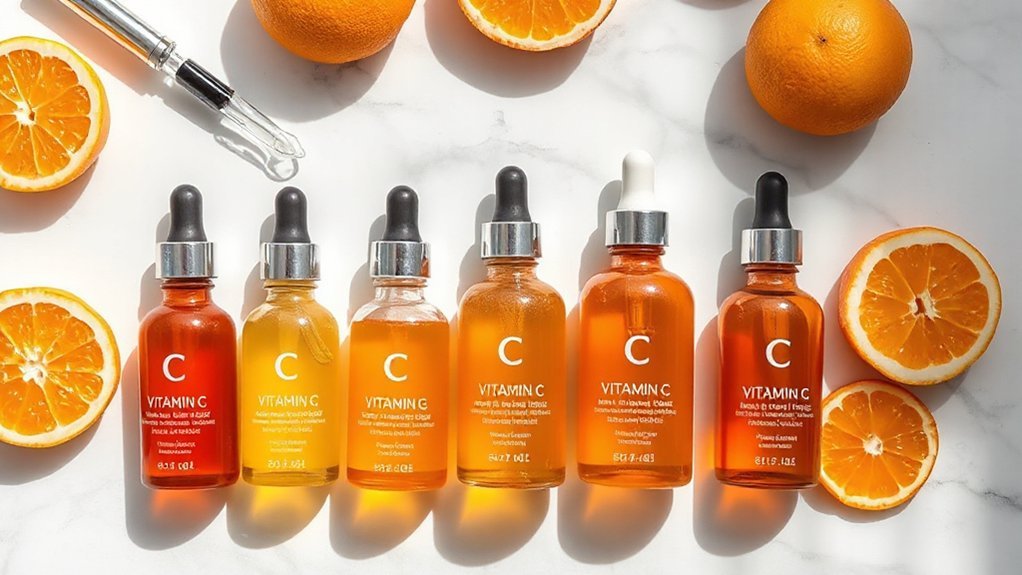
Because your skin’s needs aren’t one-size-fits-all, neither should your vitamin C pick be. If you’ve got sensitive skin, reach for gentler derivatives like sodium ascorbyl phosphate or diluted L-ascorbic acid around 10–12%—Naturium’s your friend here. Dry skin? Grab creamier formulations with THD ascorbate, squalane, and hyaluronic acid that pull double duty as moisturizer. Oily and acne-prone? Go lightweight gel serums with salicylic acid mixed in; La Roche-Posay’s 12% option keeps things sheer. Combination skin benefits from mid-weight gel-liquid hybrids with stable derivatives and balancing actives like niacinamide. Now, budget-wise: you’ll find solid L-ascorbic acid combos at drugstore prices (Timeless sits around $26–$28), whereas SkinCeuticals commands $180 per ounce. Both work. Pick what fits your wallet and your skin’s actual personality.
Six Serums: Budget Wins, Luxury Options, and Sensitive-Skin Picks
So you’ve narrowed down your skin type and budget range—now comes the fun part: actually finding a serum that delivers.
You’ve got solid options across every price point and skin concern. Here’s what really works:
- Luxury winner: SkinCeuticals C E Ferulic (15% L-ascorbic acid) firms and brightens beautifully, but you’re investing over $180 per ounce—and yeah, it’s sticky sometimes with a polarizing scent.
- Budget breakthrough: Timeless 20% C + E + Ferulic absorbs fast at just $26–$28, though sensitive skin might find it tingly.
- Sensitive-skin hero: Naturium Vitamin C Complex glides on gentle and non-irritating, with zero stickiness.
For dry skin, Sunday Riley’s C.E.O. wraps your face in hydrating luxury around $85. Combination skin leans Olay Vitamin C + Peptide 24, while oily skin thrives with La Roche-Posay’s Vitamin C12 gel. Each tackles brightness differently—pick yours.
How to Layer Vitamin C With Other Actives?
What makes vitamin C so powerful—and so finicky—is that it plays best with certain teammates and absolutely clashes with others. Skip layering vitamin C with strong exfoliating acids (AHAs, BHAs, PHAs) or retinol the same morning; instead, use vitamin C in your AM routine and save acids or retinol for PM, or alternate nights entirely. Your skin will thank you. That said, vitamin C genuinely loves niacinamide and hydrating humectants like hyaluronic acid and glycerin—these pairings actually calm irritation and smooth texture. When you do layer, go thinnest to thickest, waiting 30–60 seconds between products (up to 10 minutes for peptides). Choose your vitamin C form wisely: L‑ascorbic acid hits hard, while derivatives like sodium ascorbyl phosphate or THD ascorbate work gentler for sensitive skin. Simple strategy, major results.
Frequently Asked Questions
What Does the Vitamin C Serum Do?
Your vitamin C serum acts as a powerful antioxidant, neutralizing free radicals from sun damage and pollution that dull your skin. It brightens your complexion, fades dark spots by controlling melanin, and stimulates collagen production to soften fine lines and firm things up. You’re effectively getting preventative anti-aging protection that enhances your sunscreen’s effectiveness when you apply it mornings before moisturizer. Results? Radiance within weeks.
What Is the Best Vitamin C Serum?
The best vitamin C serum? It depends on *you*—and here’s why: studies show 15–20% L-ascorbic acid works hardest, but sensitive skin needs gentler derivatives instead. SkinCeuticals C E Ferulic leads (pricey, though), while Timeless offers quality on a budget. Start with sodium ascorbyl phosphate if you’re new—it won’t sting. Pair whatever you pick with morning sunscreen; you’re preventing damage, not erasing it.
Is It OK to Use Vitamin C Serum Every Day?
Yeah, you can use vitamin C serum daily—that’s actually the sweet spot for results. Apply it every morning after cleansing, before moisturizer and sunscreen. It’s preventative, so you’re building protection against damage and dullness over time. If your skin’s sensitive, ease in with two or three times weekly first, then ramp up. Just skip retinol and strong acids in your morning routine; save those for night.
Can Vitamin C Remove Age Spots?
Vitamin C can lighten age spots—think of it as a dimmer switch, not an off button. You’ll likely see real fading after 4–8 weeks with consistent daily use. The catch? It works best on mild discoloration. Deep, stubborn spots might need professional treatments like lasers or peels. Pair your serum with vitamin E and ferulic acid for stronger results, always follow with sunscreen.
So
You’ve got the roadmap now—vitamin C isn’t magic, but it’s genuinely transformative when you pick the right formula for your skin. Think of it like this: a stabilized serum, layered thoughtfully, works quietly to brighten, firm, and protect. You’ll notice that glow creeping in over weeks. So grab what fits your budget and skin type, apply it consistently, and watch your complexion shift. That’s the real power here.







Leave a Comment