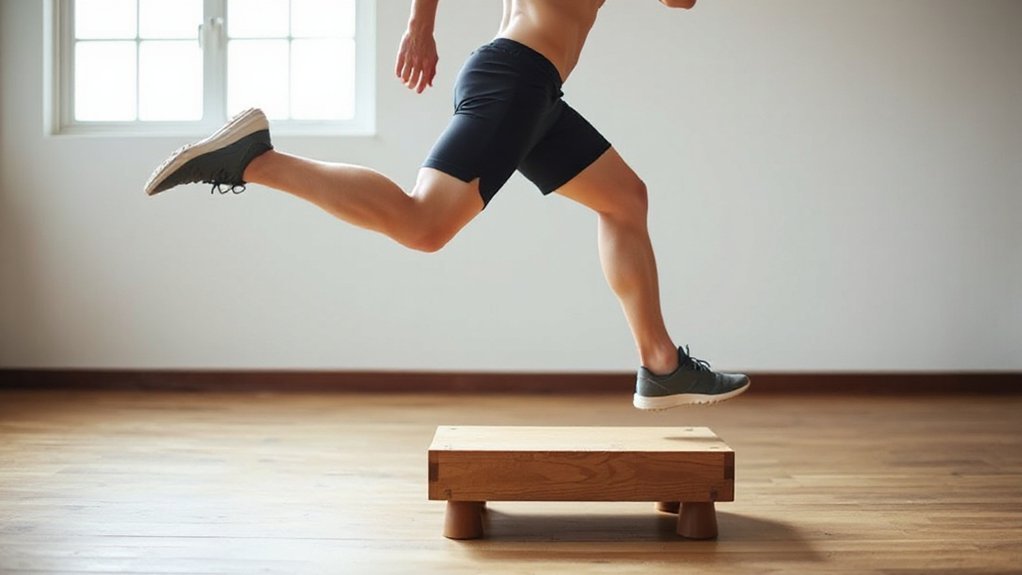

Step-ups are a game-changer for single-leg strength—they hammer your quads, glutes, and hamstrings while building serious core stability. Start with a 6–12 inch platform, plant your lead foot fully, then drive through your heel to stand tall. Keep your chest up, back straight, and lower leg relaxed; it’s just along for the ride. Control your descent over 2–3 seconds—that’s where real muscle gets built. Master bodyweight reps first, then add dumbbells or go explosive. There’s way more nuance to nailing these properly.
Key Takeaways
- Plant your entire lead foot on the step and drive through your heel to engage hip and knee muscles effectively.
- Use a 6–12 inch platform with a non-slip, stable surface; beginners should start at 6 inches until form solidifies.
- Control your descent over 2–3 seconds to maximize muscle engagement and reduce injury risk during the lowering phase.
- Progress to added load only after performing 10–12 bodyweight step-ups per leg with flawless form and full control.
- Maintain upright posture with knees tracking over toes; stop progression immediately if your torso leans or form breaks.
Choose Your Step-Up Height and Equipment
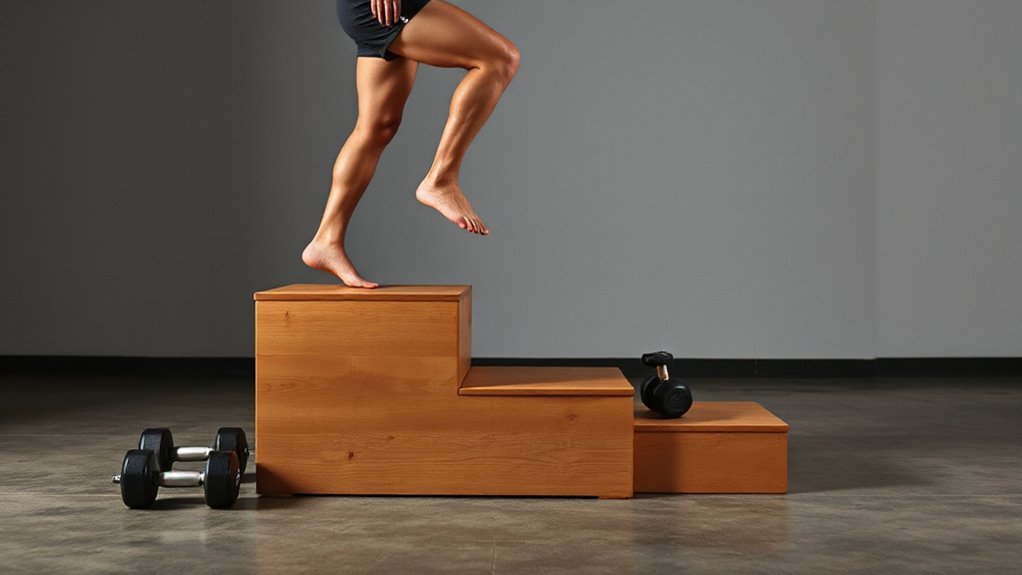
Getting the right step matters more than you’d think—it’s the foundation that determines whether you’re building strength or just going through the motions.
Start with a stable platform: a 6–12 inch step stool, plyo box, or bench. When your lead foot lands, your front knee should hit roughly 90°. If you’re new to step-ups, go low—use a 6-inch step or your bottom stair. Keep it there until your form locks in solid and your whole foot plants cleanly.
Why? Because height isn’t your first goal. Stability and technique are. Once you’ve nailed those, you can push higher. Even a 6-inch bump-up cranks the demand on your glutes and hamstrings substantially.
For strength work, embrace higher steps with weights—dumbbells, kettlebells, or a loaded bar. For cardio, dial back the height and speed up your pace instead. Always choose non-slip, rock-solid surfaces. Wobbly stools? Skip them. Your knees’ll thank you.
Master Basic Step-Up Form in 3 Steps
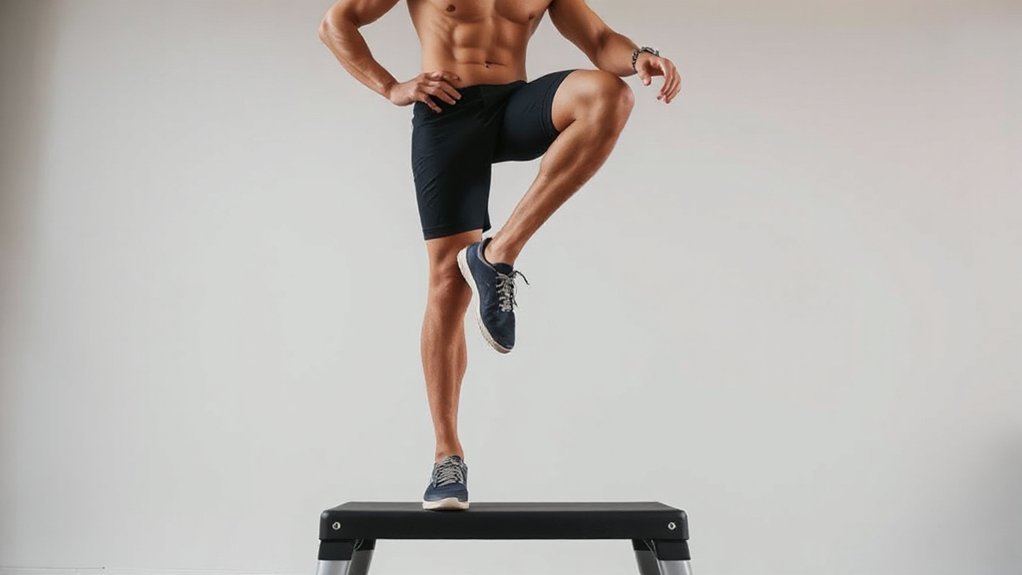
Now that you’ve got your step height locked in, it’s time to nail the movement itself—because the best equipment won’t save sloppy form. Here’s what separates solid reps from ones that’ll wreck your joints and tank your gains.
The best equipment won’t save sloppy form—nail your movement first to protect your joints and maximize gains.
The three-step formula:
- Plant and drive. Stand facing your step, lead foot forward, chest tall, core tight. Press your entire lead foot into the step, driving through your heel to straighten your hip and knee. Your trailing leg? That’s just there for balance, not power—don’t cheat by pushing off it.
- Lock out at the top. Bring your trailing foot up to meet your lead foot. Fully straighten your standing leg before you move. This is where you own the moment.
- Control the descent. Step down first with your lead foot, taking two to three seconds on the way down. Slow eccentric work protects your knees and maximizes muscle engagement.
Keep your back straight, knees tracking over toes. When form breaks down, lower the height—that’s strength, not weakness.
Avoid These 5 Step-Up Mistakes
Five common mistakes’ll derail your step-up progress faster than you’d think—and most of them come down to cutting corners on form. You’re not alone if you’ve caught yourself doing these, but recognizing them now means you’ll build strength smarter and safer.
| Mistake | Why It Fails |
|---|---|
| Partial foot contact (toes/heel only) | Destabilizes you; reduces force transfer through quads/glutes |
| Pushing off the trailing leg | Shifts load away from working muscles; weakens the movement |
| Steps too high | Cranks up difficulty; tangles your balance and form |
| Spinal rounding or forward lean | Strains your low back; kills hip/knee mechanics |
| Rushing descents | Fatigue takes over; injury risk spikes fast |
Plant your whole lead foot flat. Drive through that heel—not your back leg. Keep your step modest: aim for 90° knee angles. Brace your core, stay upright. Descend slow and controlled. These tweaks transform your workout from mediocre into genuinely effective.
Step Up Your Workload: 7 Variations for Every Goal
Once you’ve nailed the basics and ditched those form killers, you’re ready to challenge yourself—and that’s where variations come in. Different goals demand different approaches, so let’s match your ambition to the right move.
Here’s what you’ve got at your disposal:
- Build muscle fast: Grab dumbbells or a kettlebell in goblet position, then nail ~10 reps per leg. Stay on one leg longer to torch that muscle, creating the fatigue you need for real growth.
- Chase power and explosiveness: Go plyometric-style with low-box explosive stepups, no weight needed. Your legs’ll fire like rockets, and your balance’ll sharpen too.
- Lift heavy: Load a barbell across your upper back or climb higher boxes. Stick with 8–10 reps, progressing carefully—even 6 inches changes everything.
Pick your weapon. Own your goal. You’ve got this.
Build Strength or Power: When to Add Load or Explosiveness
How do you know when you’re ready to stop coasting and start pushing harder—with load, with speed, or both?
Here’s the honest truth: once you nail 10–12 strict bodyweight step-ups per side with flawless form, you’ve earned the right to escalate. For strength, grab dumbbells, a kettlebell, or load a barbell across your upper back, then drop to heavy sets of 2–5 reps. Want muscle growth instead? Stick with 8–12 reps, using goblet holds or dumbbells to fatigue each leg thoroughly before switching.
Ready for power? Skip the weights entirely. Plyometric step-ups demand explosiveness—small box, knee height, maximum upward force, zero added load. This trains speed and sport-specific athleticism.
Here’s the catch: don’t chase intensity if your form crumbles. Keep that torso upright, knees tracking over toes, eccentric control locked in. The moment balance wavers or posture breaks, you’ve hit your ceiling. Progress smart, not reckless.
Frequently Asked Questions
Are Step-Ups Good for Knee Rehab?
Yeah, step-ups are genuinely solid for knee rehab. You’re strengthening your quads, glutes, and hamstrings—the muscles that actually stabilize your knee. What makes ’em great? They’re low-impact, mimic real-life movements like climbing stairs, and demand way less spinal stress than heavy squats. Start low, nail your form, drive through your heel, keep your torso upright, then gradually progress. Just watch for joint pain, not muscle fatigue.
Are Step-Ups Actually Effective?
Yeah, step-ups work. You’re building leg strength, boosting your glutes and quads—real functional gains that carry over to stairs, hiking, daily life. Want proof? Try continuous ones for two minutes; your heart rate climbs like you’re actually climbing stairs, which matters for fitness. Add dumbbells or raise the box, the demand increases. They’re legitimate, especially for single-leg balance and core stability you can’t fake.
So
You’ve got the tools now—pick your height, nail your form, sidestep those common pitches, and progress strategically. Here’s what matters: studies show step-ups activate your glutes up to 1.3 times more than flat-ground squats. That’s serious lower-body bang for your buck. Whether you’re building strength or power, you’re investing in legs that’ll carry you through life. Start today, stay consistent, and you’ll feel the difference.







Leave a Comment