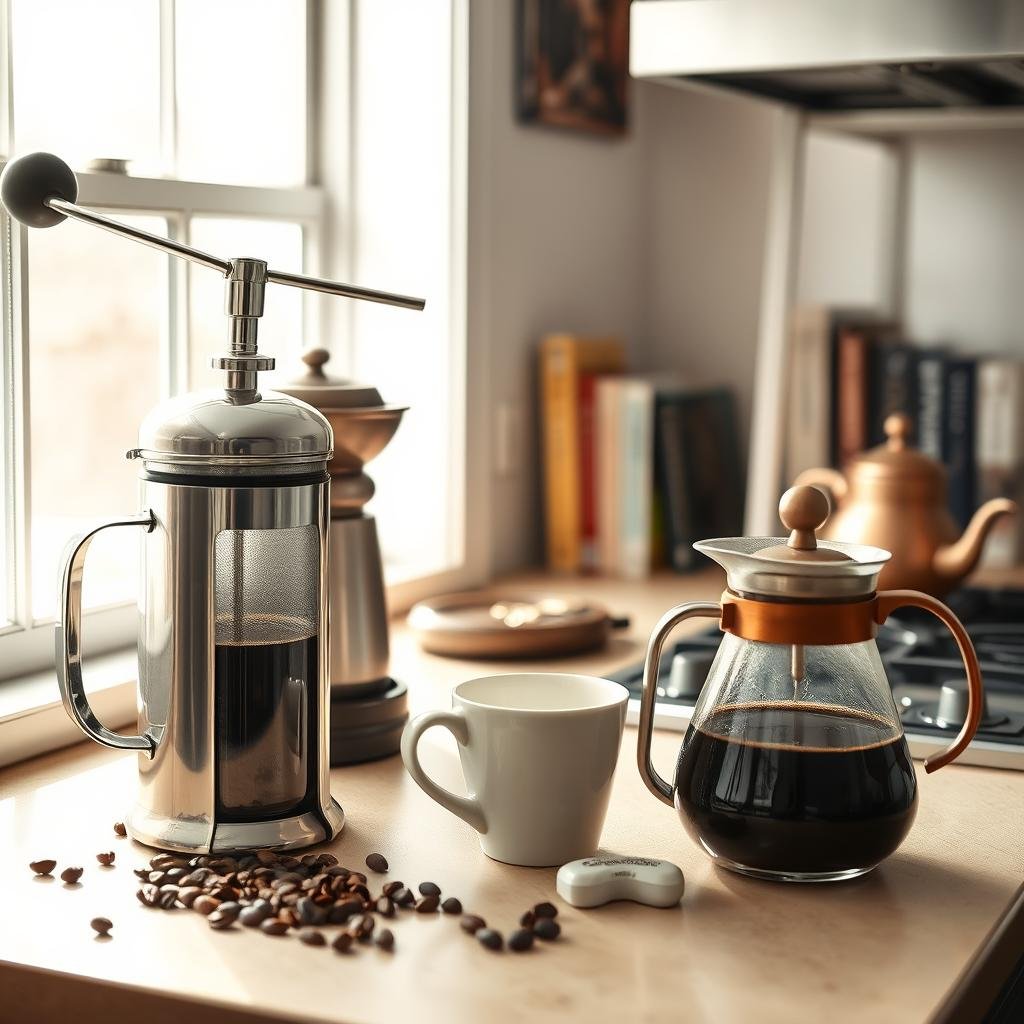

Welcome to our Ultimate Brewing Guide. We’ll embark on a journey to master coffee making. This includes using a French press and an espresso machine. We’ll learn about the best coffee beans and brewing practices. This will help us make our coffee experience better. Let’s explore the world of coffee together. We’ll improve our skills and add a personal touch to make our coffee outstanding.
Key Takeaways
- Explore different brewing methods to enhance taste.
- Discover the significance of high-quality coffee beans.
- Learn essential techniques to brew the perfect cup.
- Embrace personal touches that elevate your coffee.
- Understand the equipment needed for various brewing styles.
Introduction to Coffee Making
Making coffee is an art that’s been perfected over centuries. Each cup connects us to rich traditions and various cultures. Whether in Italy’s busy cafés or Colombia’s quiet coffee farms, every sip brings us closer to a global love for coffee.
Starting with the right ingredients is key to great coffee. The quality of the beans shapes the flavor of your drink. By understanding and focusing on the brewing steps, we turn a regular cup into something amazing. This knowledge is useful for both beginners and expert baristas, making our coffee experience better.
Understanding Coffee Beans
Coffee is not just about waking up; it’s an adventure in taste. We need to know the different coffee beans to fully enjoy our coffee. Each bean type has its own special taste that changes our coffee experience. Let’s look at the four main coffee bean types and their flavors.
The Different Types of Coffee Beans
Coffee beans come in four key varieties, each with unique qualities:
- Arabica: Offers a smooth, mild taste and is known for its aromatic features. Around 60-70% of the world’s coffee comes from Arabica beans.
- Robusta: Gives a stronger, more bitter taste than Arabica, with hints of nutty or chocolate undertones. It has more caffeine and is great for espresso.
- Liberica: Liberica beans provide a distinct floral and fruity flavor. They’re less common and can have a woody or smoky taste.
- Excelsa: Considered a type of Liberica, Excelsa adds a tangy flavor to blends, offering complex taste notes.
What Flavor Profiles to Look For
Knowing about coffee flavors makes our coffee taste better. The bean’s origin, how it’s processed, and how we make our coffee impact its flavor. Here’s what we should think about:
- Origins: Beans from various places have different flavors. For example, beans from Latin America might taste fruity, while African beans can taste earthy.
- Processing Methods: How the bean is processed can change its sweetness and acidity, leading to unique flavors.
- Brewing Techniques: The way we make our coffee, like using a French press or an espresso machine, affects the flavor we get.
Choosing the right coffee beans and knowing their flavors leads us to the best coffee experience.
Essential Coffee Making Equipment
To make great coffee, we need the best tools. Good equipment helps us get the flavor and experience we want. We’ll look at some key items to have, like the French press, espresso machines, and grinders.
French Press: The Classic Choice
The French press is a favorite for many. It lets us bring out deep flavors from the coffee grounds. This is great for those who love strong coffee. In our French press guide, we suggest a coarser grind. This stops the coffee from getting gritty. You can start with one part coffee to fifteen parts water, and adjust to taste.
Espresso Machine: A Barista’s Best Friend
Getting an espresso machine takes your coffee up a notch. It’s important to look at certain features when choosing one. Find machines that let you control the temperature, keep pressure consistent, and are easy to clean. Our espresso machine tips make it easier to use these machines. They help you make a great espresso shot.
Grinders: Why Grind Matters
A good grinder makes a big difference in flavor. The size of the grind changes how our coffee tastes. Different ways of making coffee need different grind sizes. Use coarser grinds for French press and finer ones for espresso. A burr grinder gives even grinds for a better cup every time.
How to Brew the Perfect Cup
To make an excellent cup of coffee, we need to think about a few key things. These steps help us make coffee that tastes just how we like it. First, we pick the right amount of coffee and water. A good rule is using two tablespoons of ground coffee for every six ounces of water. This is a great place to start, but feel free to change it to suit your taste.
Water temperature is crucial for bringing out the best flavor. We should keep the water between 195°F and 205°F. If the water’s too hot, it could ruin the coffee. Water that’s not hot enough won’t get all the good flavors out.
The amount of time we let the coffee brew also changes how it tastes. Each way of making coffee, like using a French press or a dripper, takes a different amount of time. For instance, French press takes about four minutes, and pour-over takes about three to four minutes. Tweaking the brew time helps us get the coffee just right.
We should try out different things to see what we like best. Trying new beans, adjusting how we make our coffee, and learning from each cup will help us find our perfect brew.
| Factor | Recommended Range | Notes |
|---|---|---|
| Coffee-to-Water Ratio | 1:15 to 1:18 | Adjust based on strength preference |
| Water Temperature | 195°F – 205°F | Avoid boiling water to prevent scorching |
| Brewing Time | 3 – 4 minutes (varies by method) | Experiment with different brews for flavor |
The French Press: Step-by-Step Guide
Understanding the fundamentals of French press brewing can make our coffee taste amazing. This guide will cover the key steps, starting with choosing the right coffee grounds. The grind size and quality of the coffee beans are crucial for getting the best flavor.
Selecting the Right Coffee Grounds
For the best French press coffee, use coarsely ground coffee. A grind size like sea salt lets the coffee extract well without getting bitter. Aim for a coffee-to-water ratio of 1:15, which is one ounce of coffee for every 15 ounces of water. Below is a summary of ideal grind sizes:
| Grind Size | Description | Best Use |
|---|---|---|
| Coarse | Similar to sea salt | French press, cold brew |
| Medium | Granulated sugar | Pour over, drip coffee |
| Fine | Table salt | Espresso, AeroPress |
Mastering the Brewing Process
We’ve picked the right coffee grounds. Now, let’s get into brewing. Start by heating water to about 200°F, just under boiling. Pour the hot water over the grounds evenly. Let it steep for around four minutes.
After steeping, press the plunger down gently. This separates the brewed coffee from the grounds. Following these simple steps will help bring out the rich flavors of French press coffee. Avoiding common mistakes like using fine grounds or steeping too long is key to a great cup.
Espresso: An Art to Perfect
In the coffee world, espresso is a unique and complex art. As we start this journey, it’s crucial to understand espresso brewing. Paying attention to the machine and brewing methods is key for great espresso.
Choosing the Right Machine
First, finding the right espresso machine is essential. The market has many types, each with features for different brewing styles. Here’s what to consider when choosing:
- Boiler Type: Options like single boiler, double boiler, or heat exchanger affect temperature stability and efficiency.
- Pressure Capabilities: Look for machines with 9 bars of pressure for the best extraction.
- Size and Build Quality: Think about kitchen space and wanting a machine that lasts.
- Ease of Use: User-friendly controls are important, especially for beginners.
Techniques for Perfect Extraction
To perfect espresso, mastering key techniques is crucial. Each part is vital for a rich, flavorful shot.
- Tamping: Evenly tamp the coffee grounds to ensure balanced extraction.
- Water Temperature: Keep water between 195°F and 205°F for the best flavor.
- Brew Time: Aim for a 25 to 30-second brew time for optimal taste.
By focusing on these critical areas, our espresso will greatly improve. The right machine and precise techniques can elevate our espresso-making craft.
| Feature | Single Boiler | Double Boiler | Heat Exchanger |
|---|---|---|---|
| Temperature Stability | Variable | High | Medium |
| Simultaneous Brewing | No | Yes | Yes |
| Ideal for | Home Use | Cafés | Enthusiasts |
Pour Over Coffee: A Delicate Approach
Pour over coffee mixes simplicity with complexity beautifully. It lets us dive into our coffee beans’ deep flavors. By mastering pour over methods, our morning routine becomes an art. To brew successfully, we must have the right equipment.
Equipment Needed
Let’s look at what we need to start brewing pour over coffee:
- Drip cone (such as Hario V60 or Chemex)
- Coffee filter (choose natural or bleached)
- Freshly roasted coffee beans
- Electric or manual kettle for controlled pouring
- Scale for measuring coffee and water
- Thermometer to check water temperature
Step-by-Step Brewing Process
We have our tools, so let’s learn the steps to make pour over coffee:
- Measure the perfect coffee-to-water ratio. A good start is 1:16.
- Heat water to between 195°F and 205°F. Too hot or cold affects flavor.
- Put the filter in the drip cone and rinse it. This warms up the brewer.
- Add coffee grounds to the filter, spreading them evenly.
- Start pouring water in circles, from center to edge. This soaks the coffee well.
- Wait for 30 seconds to let the coffee bloom. This enhances the taste.
- Keep pouring water slowly, aiming for 3 to 4 minutes of brew time.
Using these techniques gives us vibrant coffee, full of our beans’ unique traits. Pour over brewing is meditative and fun. It makes us appreciate every sip.
Brewing Techniques from Around the World
Every culture has its own way of making coffee, adding to the world’s flavor and traditions. Exploring these techniques deepens our coffee knowledge and introduces us to different international coffee styles.
*Turkish coffee* is a distinctive method where finely ground coffee simmers with water in a cezve. This strong and rich brew is often flavored with *cardamom* or a bit of sugar, reflecting centuries of tradition.
In the east, *Vietnamese drip coffee* stands out. It’s made using a metal drip filter, where hot water slowly passes through coffee grounds. It’s usually served with condensed milk, mixing strength with sweetness and showing Vietnam’s coffee approach.
Then there’s the *Italian moka pot*, another unique brewing style. This stovetop device makes coffee similar to espresso but is simpler to use. It brews coffee at the perfect temperature, offering a great taste that highlights Italian coffee culture.
Learning about these global coffee brewing methods enhances our coffee habits and connects us to the world’s rich histories and traditions. Let’s embrace these artistic practices in our coffee-making rituals.
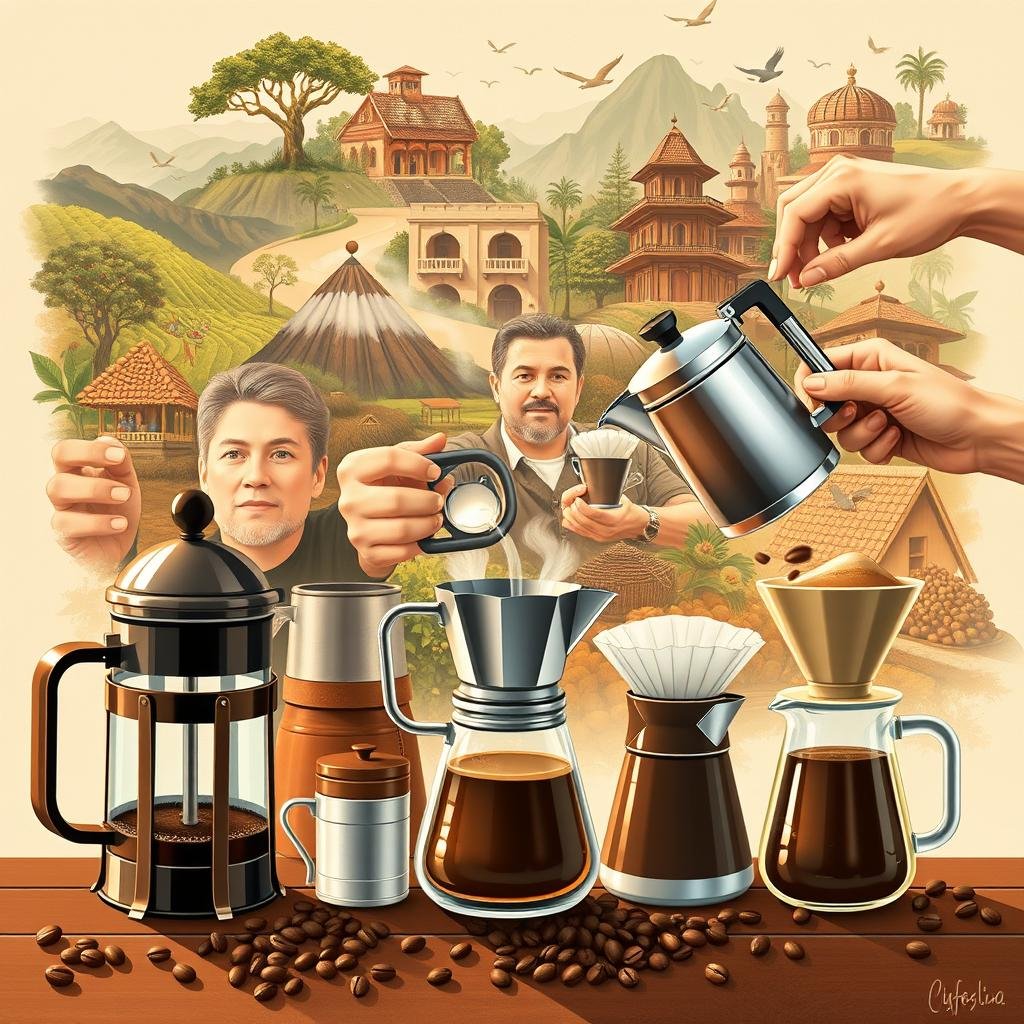
How to Make Coffee: The Ultimate Brewing Guide
As we wrap up our coffee making guide, let’s share some key tips. To make great coffee, it’s not just about the recipe. You need to know your coffee, practice your skills, and be ready to try new things. By trying different ways to brew, like the French press or espresso, you can make your coffee taste even better.
To make each cup special, focus on the small things. Use fresh beans, get the water temperature right, and time your brew well. These things can change how your coffee tastes. Our guide encourages you to experiment and find what you like best. Keeping track of how you make your coffee helps you get better over time.
Here’s a quick look at some brewing methods and what you need for each:
| Brewing Method | Key Components | Flavor Notes |
|---|---|---|
| French Press | Coarse grind, steeping time 4 minutes | Rich, full-bodied |
| Espresso | Fine grind, pressure brewing | Bold, intense |
| Poor Over | Medium grind, controlled pour | Crisp, delicate |
| Aeropress | Medium-fine grind, fast brewing | Balanced, smooth |
We hope this guide inspires you to dive into the coffee world with excitement. Keep practicing and paying attention to the little things. That way, you can improve your coffee skills and enjoy each cup’s deep flavor.
Tips for Enhancing Your Coffee Experience
Want a better coffee experience? Pay attention to certain key factors. Water quality, for instance, is crucial. It affects how your coffee tastes. Choose the right water and coffee, and you’re on your way to a great cup.
The Importance of Water Quality
Filtered water can make your coffee better. Tap water might have things that change the coffee’s taste. Use filtered water for a cleaner, richer flavor. It lets the coffee’s real taste shine.
Experimenting with Brew Times and Ratios
Trying different things can enhance flavor. Change how long you brew or the coffee-water mix. Small tweaks might reveal new, exciting tastes. Here are some ratios to start with:
| Brew Method | Coffee to Water Ratio | Suggested Brew Time |
|---|---|---|
| French Press | 1:15 | 4 minutes |
| Espresso | 1:2 | 25-30 seconds |
| Pour Over | 1:16 | 3-4 minutes |
Embrace these tips for a better coffee journey. Tinkering with water and how you brew can transform your coffee. Every cup is a chance to find something new and wonderful.
Common Mistakes to Avoid
When it comes to brewing coffee, spotting common mistakes is key. A lot of us miss important steps that can ruin our drink. By knowing these issues, we can dodge brewing blunders that mess with our coffee joy.
Using the wrong grind size is a big mistake. Too coarse and your coffee will be weak. If it’s too fine, your coffee might taste bitter. It’s important to try different grind sizes to match our brewing way. This helps us get the best flavor.
Another thing we often get wrong is water temperature. Water that’s too hot can burn our coffee grounds. But, if it’s too cool, it won’t bring out enough flavor. The sweet spot for water temperature is between 195°F and 205°F.
Not cleaning our equipment is another slip-up. Old residue can change the taste of our coffee. It’s crucial to keep our gear clean. Making sure our tools are spotless lets us enjoy our coffee’s true flavor and quality.
Brewing time is also key to good coffee. Every brewing method has its own timing. Ignoring this can spoil the coffee’s taste. By sticking to the right brew times, our coffee will taste richer and more complex.
Fixing these common coffee brewing errors can make our coffee better. Let’s use what we’ve learned to make every cup outstanding.
Conclusion
Through our coffee journey, we’ve learned key lessons to make our coffee special. We found out how the types of beans and brewing ways impact our drink. Trying different methods like the French press or espresso changes the taste and experience.
Now, as we think about all we’ve learned, let’s get excited for what comes next. The coffee world is huge, with so many tastes and new ways to brew waiting for us. By sharing what we know, we create a community that loves learning and growing together.
Let’s keep diving into coffee culture, making every brewing moment unique. As we improve our coffee skills, we’ll also inspire others. Here’s to enjoying every cup. Happy brewing!
FAQ
What is the best method to brew the perfect cup of coffee?
Finding the perfect cup relies on personal taste. Try out methods like French press, espresso, or pour-over. Each has its special steps to bring out different flavors.
How important is the grind size in coffee making?
Grind size is key in getting the best flavor. Coarse grinds work great for French press, and fine grinds are best for espresso. Playing with grind sizes can improve your coffee.
Why is water temperature crucial in brewing coffee?
The right water temperature makes a big difference. Aim for between 195°F and 205°F. Too hot or too cold water can ruin the taste.
How can we enhance our coffee drinking experience?
Better coffee comes from paying attention to details. Use filtered water, tweak brew times, and get the coffee-to-water ratio right. Small changes can make a big difference.
What are common mistakes to avoid when brewing coffee?
Avoid these common errors for better coffee: using the wrong grind, not cleaning gear, and ignoring bean quality. Fixing these can drastically improve your cup.
How do I know if I’m using the right coffee beans?
Pick beans that suit your taste, considering their origin and roast. Try different types like Arabica or Robusta to find your favorite.
Is it necessary to invest in coffee making equipment?
Good equipment isn’t required, but it helps. Investing in a decent grinder, espresso machine, or French press can consistently make your coffee better.
Leave a Comment