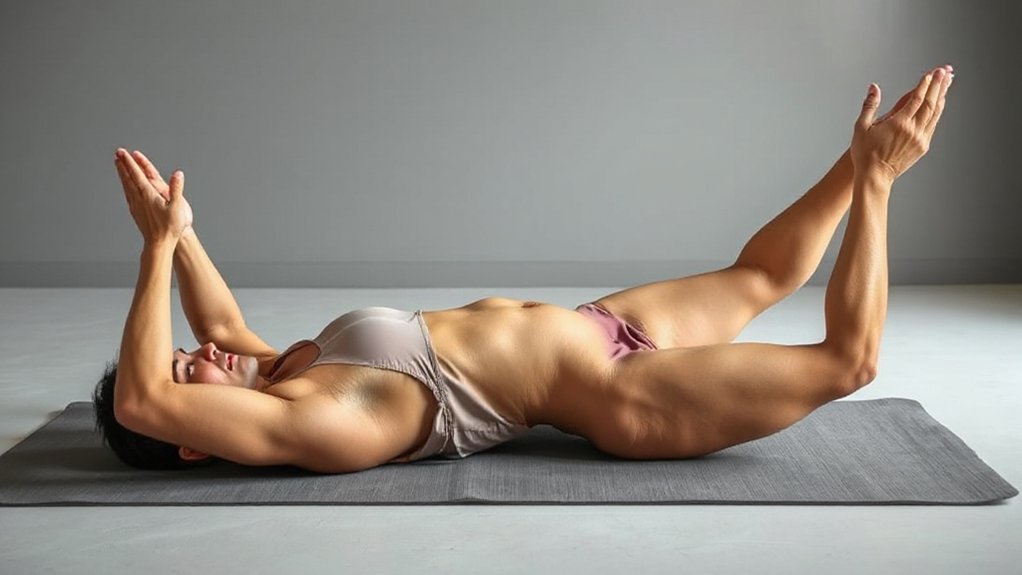

Dead bugs train your deep core muscles—transversus abdominis, obliques, pelvic floor—without folding your spine like crunches do. You’re lying on your back, knees bent at ninety degrees, then slowly lowering opposite arm and leg while keeping your lower back glued to the floor. It sounds simple, but it rewires your nervous system for better posture and neutral spine stability. The real magic? It transfers directly to standing posture and plank strength. There’s more to nail the form.
Key Takeaways
- Dead bug exercises train deep core stabilizers and spine stability through controlled opposite arm-and-leg movements in a supine tabletop position.
- Maintain a neutral spine by pressing your lower back firmly into the floor throughout the entire movement without allowing any arch.
- Move deliberately at 3–4 seconds per repetition, prioritizing control and stability over speed to maximize core engagement and prevent momentum.
- The exercise activates transverse abdominis, obliques, and hip flexors to improve posture and reduce reliance on repetitive spinal flexion movements.
- Dead bugs retrain neutral pelvic positioning and neuromotor control that transfer directly to maintaining proper alignment during planks and daily posture.
What Is a Dead Bug: and Why Your Core Needs It?
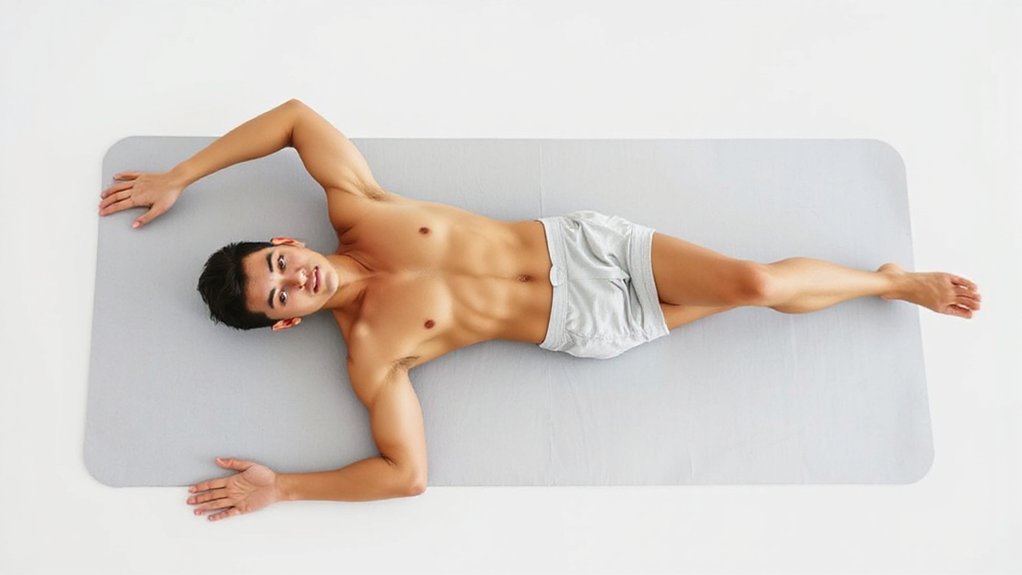
Ever wonder why your lower back hurts during sit-ups but feels fine during a dead bug?
Here’s the deal: the dead bug trains your core differently. You’re lying on your back, knees bent in tabletop position, arms reaching up. Then you slowly lower the opposite arm and leg in a controlled cross-crawl pattern while keeping your lower back pressed firmly into the floor. No spinal flexion. No repetitive crunching. Just smart, sustainable core work.
This exercise hits your deep stabilizers—the transversus abdominis, rectus abdominis, and obliques—the muscles that actually protect your spine. Unlike sit-ups that compress your lumbar discs, dead bugs preserve your spinal position entirely. You’re teaching your body to maintain neutral alignment while moving dynamically, which means less pain and better results.
Plus, you’re building proprioception and neuromotor coordination through that cross-crawl pattern. Your gait improves. Your posture sharpens. Your upright core control strengthens. That’s why your core genuinely needs this exercise.
How to Perform a Dead Bug With Perfect Form
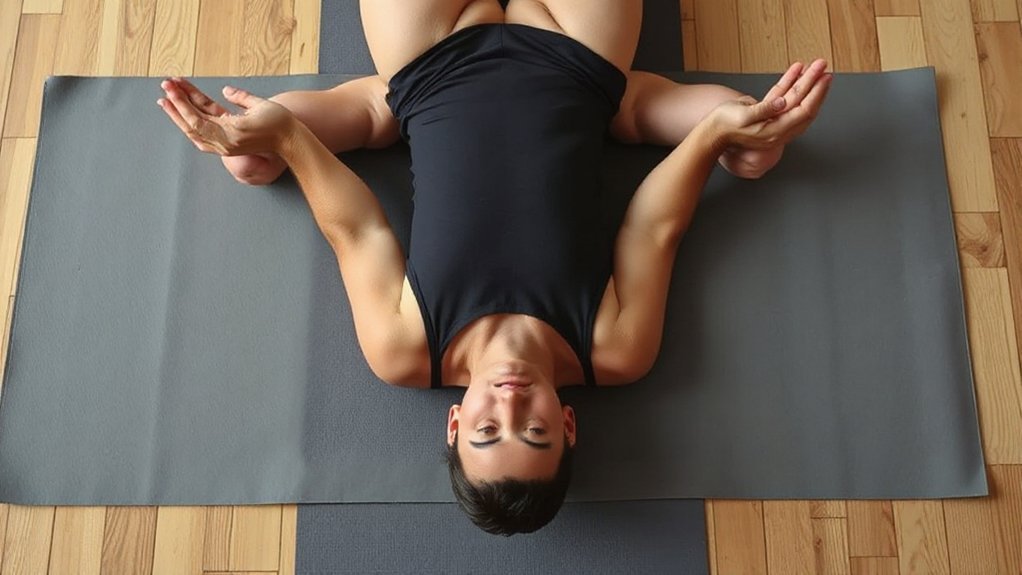
Start by lying flat on your back, hips and knees bent at 90 degrees—think tabletop position. Press your arms straight up toward the ceiling, aligned with your shoulders. Here’s the critical part: press your lower back gently into the floor. That’s your neutral spine, your anchor point.
Now move through this sequence:
- Exhale slowly as you extend your right arm overhead while lowering your left leg toward the floor
- Keep that lower back glued down—the instant it lifts, you’ve gone too far
- Inhale to return both limbs to start position
- Repeat on the opposite side, alternating arm and leg
Move deliberately, breathe continuously, and resist the urge to rush. You’re building stability here, not speed. Control beats momentum every single time.
4 Mistakes That Sabotage Your Dead Bug
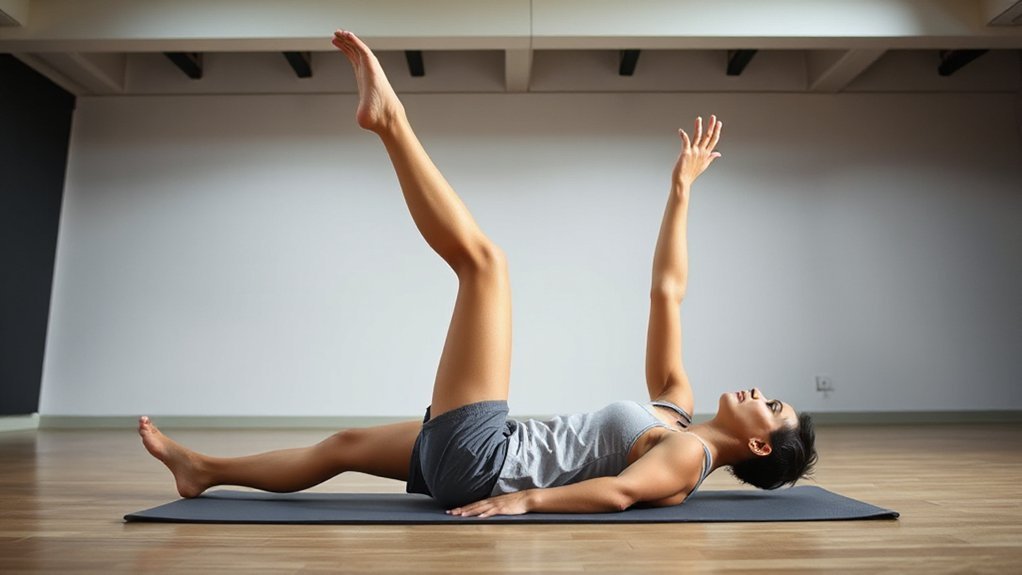
Even with the best intentions, you can easily slip into form-breaking habits that turn your dead bug into a spine-compromising mess.
Here’s the thing: your lower back wants to arch. It just does. You’ll feel that gap between your lumbar spine and the mat—that’s your cue to tilt your pelvis back and press down hard. Same goes for rushing. Fast limb swings wreck everything, sacrificing control and letting your hip flexors take over. Slow it down to 3–4 seconds per lower.
Then there’s the breathing trap. Hold your breath, and you’ve lost your core coordination before you’ve even started. Exhale as you lower that opposite arm and leg, breathe in to reset—rhythm matters.
And don’t lower your leg so far that it touches down. Keep contact with your lumbar spine on the mat, always.
Finally, move your opposite arm and leg together—not the same side. That synchronized mistake cranks rotational shear right into your spine.
What Muscles Does a Dead Bug Actually Work?
When you nail that form—pelvis tilted, breathing steady, opposite limbs moving in sync—you’re not just avoiding spine damage; you’re lighting up a whole network of muscles that most people don’t even realize are firing.
Your core isn’t just one muscle. It’s a team effort:
- Transverse abdominis (your deepest abdominal layer) stays engaged, keeping your lower back glued to the floor and stabilizing your spine throughout the movement
- Rectus abdominis resists anterior trunk movement as you lower your limbs, building anterior core control without repetitive spinal flexion
- Internal and external obliques work overtime as anti-rotation muscles, preventing unwanted twisting during that cross-crawl pattern
- Hip flexors and shoulder stabilizers activate during the return phase, controlling your limbs’ movement back toward tabletop position
Your pelvic floor and lumbar extensors co-contract with your abdominal wall too, maintaining pelvic position and spinal alignment. That’s thorough core engagement—the kind that actually translates to real-world strength.
Key Benefits: Better Posture and Spine Stability
Your spine doesn’t ask for much—just neutral alignment, decent support, and a break from constant forward slouching. The dead bug delivers exactly that.
When you press your lower back to the floor and move opposite limbs in controlled patterns, you’re training your core to stabilize without spinal flexion. Your transverse abdominis and obliques activate, creating intra-abdominal pressure that protects your discs during everyday movement. No crunching, no strain, just smart reinforcement.
This matters because slouching tilts your pelvis forward, arching your lower back and inviting pain. Dead bugs retrain neutral positioning, breaking that habit before it worsens. You’re effectively teaching your body what good posture feels like from the inside out.
The neuromotor control you build transfers directly upward. Practice supine, progress to planks, and suddenly maintaining upright posture feels effortless. Your spine finally gets the support system it’s been waiting for.
Frequently Asked Questions
How Do I Strengthen My Core After 70?
The supine dead bug’s your best bet—seriously. You’ll lie on your back, knees bent, feet flat, then slowly move opposite arms and legs while keeping your lower back pressed down. Do 8–12 controlled reps per side, a few times weekly. It’s gentle, spine-safe, and builds deep core strength without the wear and tear. Progress gradually, breathe steadily, and you’ll feel the difference.
So
You’ve got this. Master the dead bug, and you’re not just strengthening your core—you’re building the foundation for better posture, spine stability, and a body that actually works *with* you, not against you. Stop sabotaging yourself with sloppy form. Practice these movements consistently, nail those fundamentals, and watch how everything else clicks into place. Your stronger, healthier self is waiting.







Leave a Comment