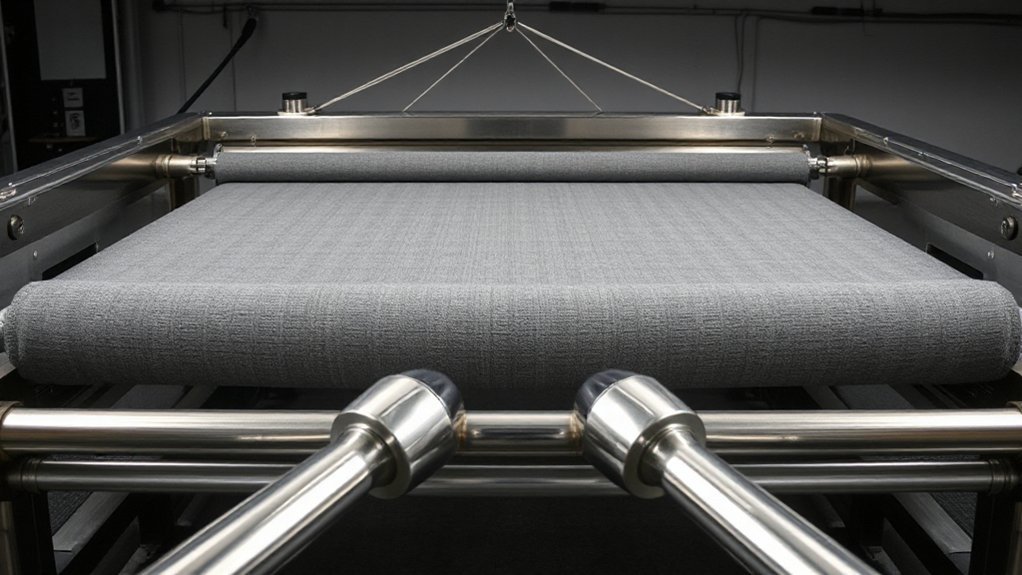

A stretching machine cradles your body with padded supports while you control the angle—no jerky movements, no guessing. You adjust it via wheels or hand cranks to reach deeper stretches safely, then hold at your end-range to build flexibility. Models range from $30 budget basics to premium $400+ units with digital feedback tracking your progress week to week. Whether you’re prepping for splits or recovering after training, you’ll get measurable gains without the injury risk of floor work. There’s plenty more to explore about finding your perfect fit.
Key Takeaways
- Stretching machines use padded supports and adjustable angles (0–240°) to guide controlled, progressive stretches safely.
- Models range from budget home units ($30–$170) to commercial premium machines ($400–$3,300+) by capacity and features.
- Leg machines target splits and hip mobility; full-body trainers address lower back, shoulders, and hip extensors.
- Built-in feedback systems document measurable range-of-motion improvements over weeks or months of consistent use.
- Start conservatively with angle settings, check load ratings, and log maximum safe angles to prevent injury.
What Is a Stretching Machine and How Does It Work?
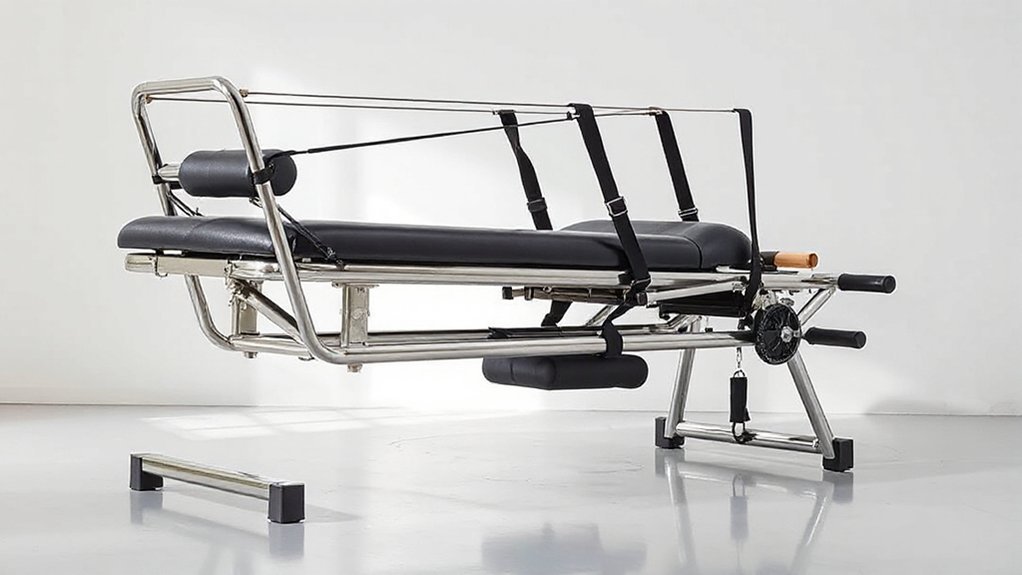
Ever wonder how you can safely deepen a stretch without yanking on your own hamstring or accidentally sliding into the splits?
A stretching machine is your personal flexibility coach—equipment designed to guide and control your stretches with precision. Instead of forcing yourself into uncomfortable positions, you’re working with mechanical support: adjustable angles, padded supports, and sometimes hand-wheel tension systems that let you dial in exactly how far you go.
A stretching machine guides your flexibility with precision, mechanical support, and adjustable angles—safe, controlled progress without guesswork.
Here’s the deal: you position yourself on the machine, then gradually adjust the angle using wheels, handles, or hand cranks. Many models offer ranges like 0–240°, so you’re not guessing. The padded supports cradle your legs or body, isolating specific muscles—hamstrings, quads, hips, lower back, adductors—while silent caster wheels keep everything stable underneath you.
The beauty? Repeatable, safe positioning every time. Progressive stretching becomes manageable, measurable, controlled.
What Types of Stretching Machines Fit Your Fitness Goals?
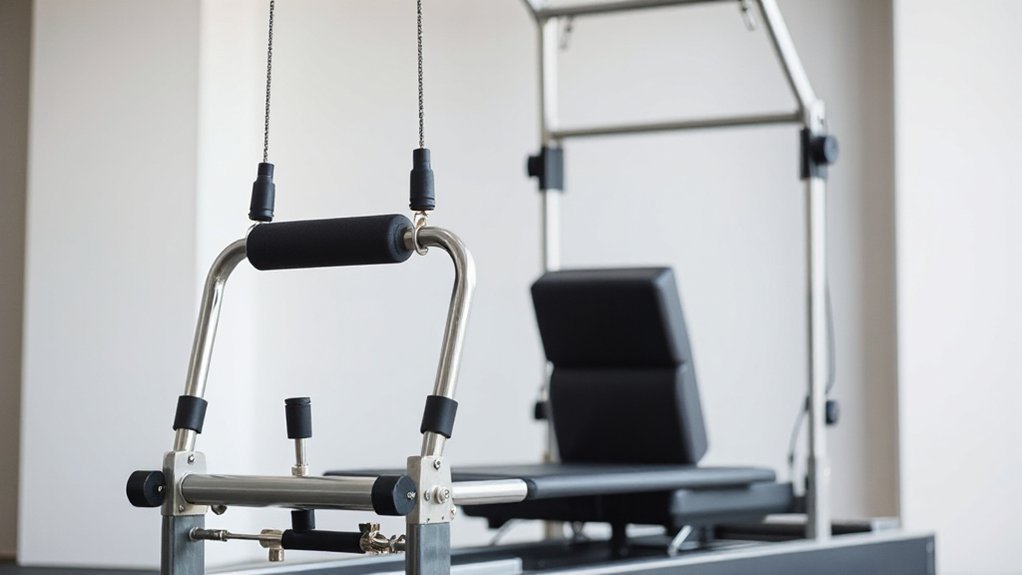
Your choice depends on three core factors:
- Your budget and space: Home leg-stretcher machines ($60–$170) deliver solid results in tight quarters, while seated full-body trainers ($199–$1,270) offer guided multi-joint stretches for serious warm-ups and cooldowns.
- Your capacity needs: If you’re under 300 lb, most consumer models work fine. Heavier users need heavy-duty frames (400–700+ lb capacity) built with reinforced steel and advanced mechanics.
- Your secondary goals: Want strength alongside stretching? Premium multifunction trainers like the Nitrofit Limber Pro ($439.95) blend flexibility with rehab features, perfect for athletic training or therapy work.
Budget-conscious? Pair any machine with resistance bands or massage rollers under $100 to amplify results without breaking the bank. Your goals guide your choice—not the other way around.
Why Stretching Machines Transform Flexibility, Recovery, and Injury Prevention
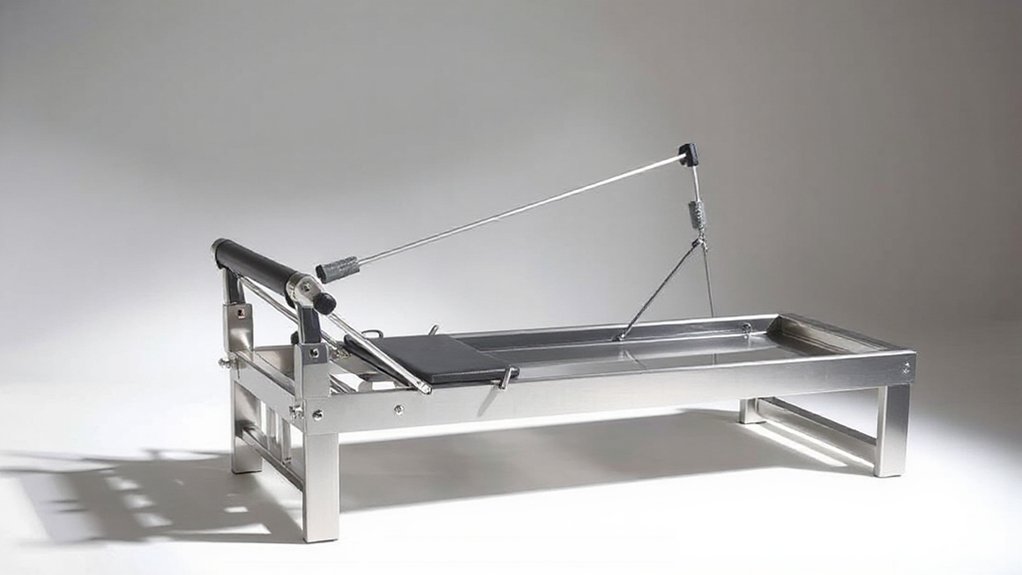
When you use a stretching machine consistently, you’re effectively giving your muscles a structured, progressive workout that builds flexibility the smart way—without forcing your joints into risky positions or relying on bouncing and guesswork. Here’s the real payoff: deeper, safer stretches reduce muscle tension, speed up recovery after intense training, and prep your muscle chains to handle load better, which means fewer pulled hamstrings, strained shoulders, and nagging joint issues down the road. Think of it as injury prevention and flexibility gains happening at the same time, all because you’re using equipment designed to guide you through the exact ranges of motion your body actually needs.
Flexibility Gains Through Consistent Use
Stretching machines, when used steadily over weeks and months, produce measurable gains in range of motion that floor stretching alone rarely delivers—and the difference is real. You’ll notice your body responding differently because machines offer what your living room floor can’t: precision, consistency, and progressive challenge.
Here’s what you’ll actually experience:
- Controlled end-range holds that adjust from 0–180° (or beyond), letting you push exactly as far as your body allows without guessing
- Safer, repeatable positioning through guided movements, eliminating the unpredictability of partner-assisted stretching
- Objective progress tracking via built-in feedback systems showing you joint angle improvements over time
The magic? Consistency. Your hamstrings, hips, and quads adapt faster when you’re hitting the same stretches with the same precision weekly. You’re not just flexible—you’re measurably, documentably flexible.
Injury Prevention and Recovery Benefits
Reducing strain before it becomes injury—that’s where stretching machines genuinely shine. You’re not just stretching; you’re protecting your body with precision. These machines guide you through controlled movements that unassisted stretching can’t match, eliminating the form errors that lead to tears and tendonitis. With biomechanically assisted ranges (0–240°), your muscles and tendons recover faster post-workout, improving circulation while relieving eccentric overload. You’ll notice reduced muscle tension, quicker return-to-play, and measurable progress through built-in feedback systems. Heavy-duty models support larger frames and post-surgical rehab without equipment failure, making recovery accessible for everyone. Whether you’re preventing overuse injuries or rebuilding after surgery, stretching machines standardize safety through guided sequences and padded supports—transforming recovery from risky guesswork into reliable, repeatable results.
Choosing the Right Machine for Your Needs
You’ve got three big decisions ahead: your budget (whether you’re looking at a $70 compact leg-stretcher or dropping $400+ on a premium assisted trainer), your space situation (do you need wheels and portability, or can you dedicate room for a 200-pound industrial setup?), and which muscles you’re actually targeting—because a focused split machine won’t give you the full-body mobility work that a guided stretch trainer delivers. Each choice pulls you in different directions, so knowing what you genuinely need, not what sounds fancy, keeps you from buying gear that sits unused in your closet.
Budget vs. Performance
Because your flexibility goals and living situation are unique, matching the right stretcher to your actual needs—not just your wallet—makes all the difference.
You’ve got three main lanes here:
- Budget models ($29–$150): Perfect for occasional home stretching, basic steel frames, lighter padding. You’ll sacrifice durability, but you’re not overpaying for features you won’t use.
- Mid-range ($70–$170): Better load capacity (~300 lbs), quieter casters, wider angles (210–240°). Ideal if you’re stretching regularly and want equipment that’ll stick around.
- Heavy-duty/premium ($120–$3,300+): Industrial frames, guided feedback systems, commercial warranties. Only invest here if you’re running a studio, need professional-grade durability, or want measurement tracking.
Here’s the thing: don’t chase expensive features you’ll never touch. Match your machine to your reality—occasional home use? Go budget. Daily training? Go mid-range. Professional setting? Go premium.
Space and Portability
Measuring your space before you buy isn’t just smart—it’s essential, because a stretcher that doesn’t fit your room is basically an expensive paperweight. Compact models like the Precor StretchTrainer™ run 60 x 36 x 40 inches, while heavy-duty commercial units can sprawl up to 80 x 44 x 41 inches. You’ll want roughly 113 x 76 inches of clear floor space for safe, comfortable use.
Weight matters too. Home leg stretchers often weigh under 55 pounds—totally movable solo—but commercial machines hit 245 pounds or more, demanding multiple people and serious logistics. Got a dedicated gym corner? Heavy frames with bearing-assisted slides stay put. Need flexibility? Portable, foldable models rated 300–330 pounds offer the best balance, letting you reposition or store them without headaches.
Target Muscle Groups
What’re you actually trying to fix—tight hamstrings, stubborn hip flexors, or that elusive front split? Your answer shapes everything. Here’s how to match your goals with the right machine:
- Leg-stretcher or split machines target hamstrings, hip flexors, inner and outer thighs, plus glutes for front-and-side split mobility
- Full-body stretch trainers emphasize lower and upper back, shoulders, and hip extensors for thorough recovery across multiple regions
- Heavy-duty commercial models with 300–500+ lb capacity deliver deep, stable assisted stretches for serious hip and quad mobilization
Pick a leg machine for laser-focused split work. Choose full-body trainers when you’re juggling multiple tight spots. And grab those high-capacity models if you need serious force behind your stretches or require extra stability. Match the machine to your actual needs, not some generic fitness fantasy.
Comparing Stretching Machines by Price and Performance
If you’re shopping for a stretching machine, you’ve probably noticed the price tags range wildly—anywhere from $30 to over $3,000—and that’s not just hype or brand markup talking. Here’s the deal: budget models under $150 give you basic adjustability and lighter frames perfect for home use. They’ll handle most folks fine, though you’re trading durability for portability. Step up to mid-range machines ($70–$170), and you’re getting reinforced steel, higher weight capacities around 300–330 lbs, and wider angle ranges. Want something serious? Premium options ($400+) bring bearing-assisted movement, digital guidance, padded cushions, and institutional warranties. So ask yourself: are you stretching casually at home, or do you need commercial-grade reliability? Your answer determines whether you’re dropping $30 or $3,000.
How to Use Stretching Machines Safely and Track Progress
Before you climb onto any stretching machine, you’ve got to check the load rating—and I mean actually look it up, not assume. Models like the Precor StretchTrainer™ max out at 300 lb, while heavy-duty leg stretchers handle 330–500 lb. Exceeding your machine’s limit? That’s how accidents happen.
Here’s your safety game plan:
- Start conservatively with angle settings (most machines offer 0–180° ranges), then gradually increase as your mobility improves
- Use built-in safety features: instruction placards, padded supports, welded steel frames, and safety rails—they’re there for you
- Incorporate stretching into warm-ups and cool-downs, never pushing into sharp pain or numbness
Track progress objectively by logging your maximum safe angle, reps, and session dates. Some machines provide numeric feedback—use it. You’re building mobility intentionally, not recklessly. Stop immediately if anything feels unstable. Your body’ll thank you.
Frequently Asked Questions
Do Stretching Machines Work?
Yeah, they work—if you actually use them. Here’s the deal: stretching machines target the same muscle groups as floor stretching, but they give you controlled angles, reduce technique mistakes, and keep you consistent. You’ll see measurable flexibility gains faster when you progress gradually and stick with it. Think of them as your accountability partner, especially for hamstrings, hips, and shoulders.
What Is the Best Equipment for Stretching?
You’ll want to match your equipment to where you’re stretching and what you’re after. Starting out? Grab resistance bands ($14–$25)—they’re portable, affordable, and genuinely effective for mobility work. If you’re serious about splits, mid-range leg stretchers ($70–$140) deliver solid results. Got a studio or clinic? Guided full-body machines ($200–$1,270) provide structure and safety. The honest truth: consistency matters more than price tag.
So
You’ve got the tools now—stretching machines aren’t magic wands, but they’re darn close when you’re consistent. Pick what fits your body and budget, use it right, and you’ll notice changes: better flexibility, faster recovery, fewer injuries. Your future self’s thanking you already. Start this week, track your progress, stay patient. You’ve got this.






Leave a Comment