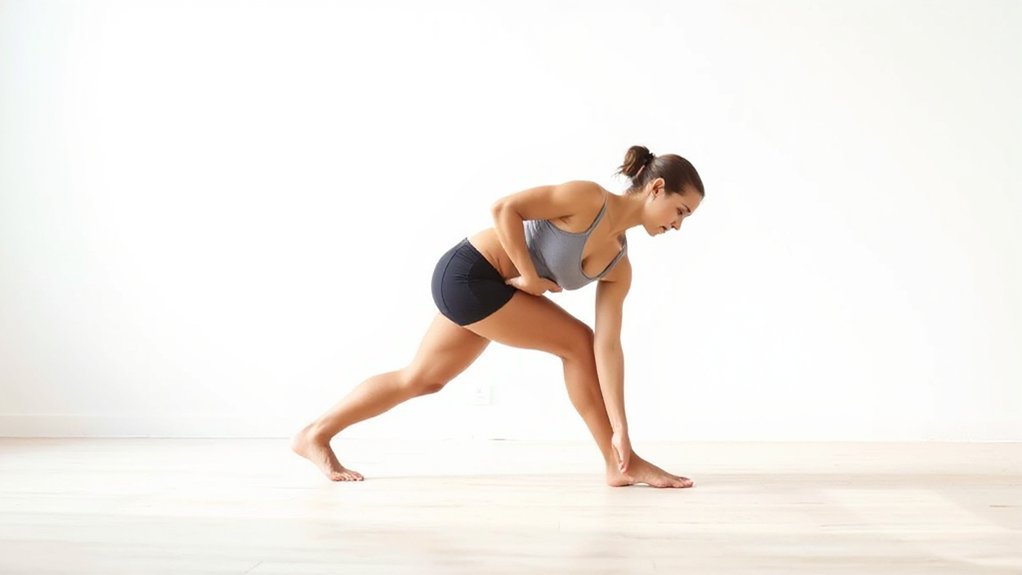

You’ve got tight hips and a stiff upper back—yeah, that’s fixable in 14 minutes. Brian’s routine hits three phases: first, you wake up your joints with light movement and circulation; then you flow through dynamic stretches like side shuffles and leg kicks to open everything up; finally, you settle into deep static holds for 60 seconds each, breathing out tension with every exhale. No equipment needed, just your bodyweight and a willingness to move deliberately. Use it after workouts, on recovery days, or before lighter training—whatever fits. The real magic, though, happens when you understand why each phase matters and how to breathe through the resistance.
Key Takeaways
- 14-minute bodyweight stretching routine targeting groin, hips, and upper back led by Brian with optional mat
- Three-phase structure: 30-second joint activation, 60-second dynamic mobility movements, and 60-second static stretches for progressive release
- Diaphragmatic breathing techniques (4–6 seconds inhale/exhale) guide gradual muscle softening without bouncing or forcing
- Dynamic movements include side shuffles, carioca steps, lunge walks, and straight-leg kicks for mobility and stability
- Ideal for post-workout cool-down, recovery days, or pre-training warm-up to improve range of motion and nervous system calm
Loosen Your Groin, Hips, and Upper Back in 14 Minutes
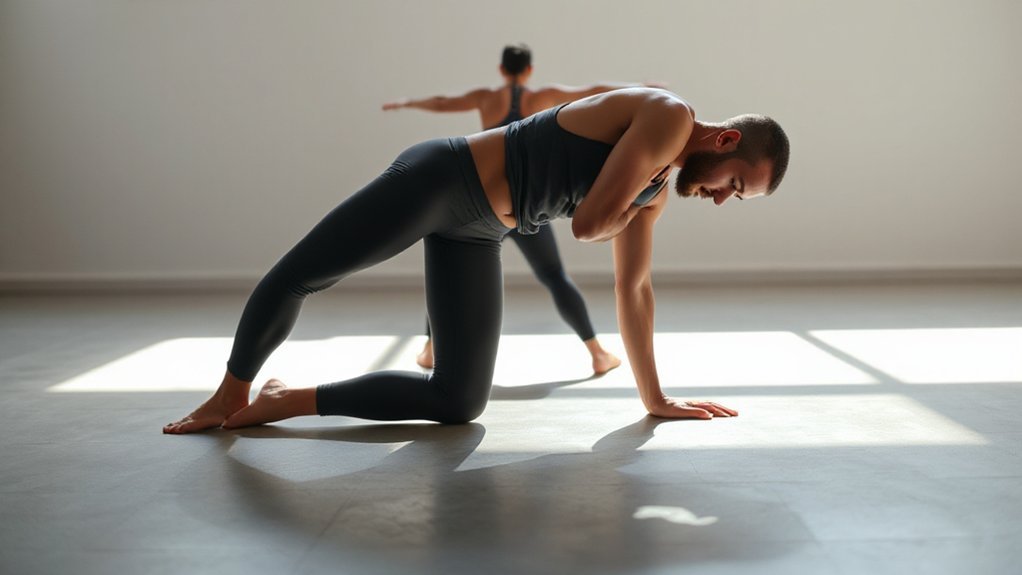
Tightness in your groin, hips, and upper back? You’re not alone—and Brian’s got a solution. This free 14-minute YouTube routine requires nothing but your body (and maybe a mat). Here’s the deal: it’s structured in three smart phases that ease you from activation into deep release.
First, you’ll prep your muscles with 30-second bursts, then move into dynamic mobility work—think side shuffles, carioca footwork, and straight-leg kicks that loosen those stubborn outer hips and groin. Next comes the walking sequences: lunge twists and knee-to-chest progressions that tackle thoracic rotation while your hips open further. Finally, you’ll hold stretches for a full minute, breathing deeply into tight spots.
The key? Don’t force it. Let gravity and breath do the heavy lifting. Your groin, hips, and upper back’ll thank you.
How to Move Through Each Phase (Warm-Up to Deep Stretch)

Since you’re moving from tight to mobile in just 14 minutes, you’ll want to nail each phase—and that means understanding why you’re doing what you’re doing.
Start with 30 seconds of gentle joint wakes: neck rolls, bodyweight squats, light arm circles. You’re not breaking a sweat here—you’re just raising circulation and lubricating those stiff joints.
Next comes your mobility round. Spend 60 seconds flowing through dynamic movements like carioca steps, straight-leg kicks, and side shuffles. These actively release tight spots without forcing anything. Breathe deeply—inhales and full exhales—to relax tissues and smooth out your movement quality.
Finally, settle into static stretching. Hold each tight area—hip flexors, groin, hamstrings—for 60 seconds. Don’t push into pain. Instead, stay present with the stretch, visualizing your body opening gradually. Keep it light, recovery-focused. You’re building mobility here, not proving anything to anyone.
7 Stretches That Prevent Injuries and Build Flexibility
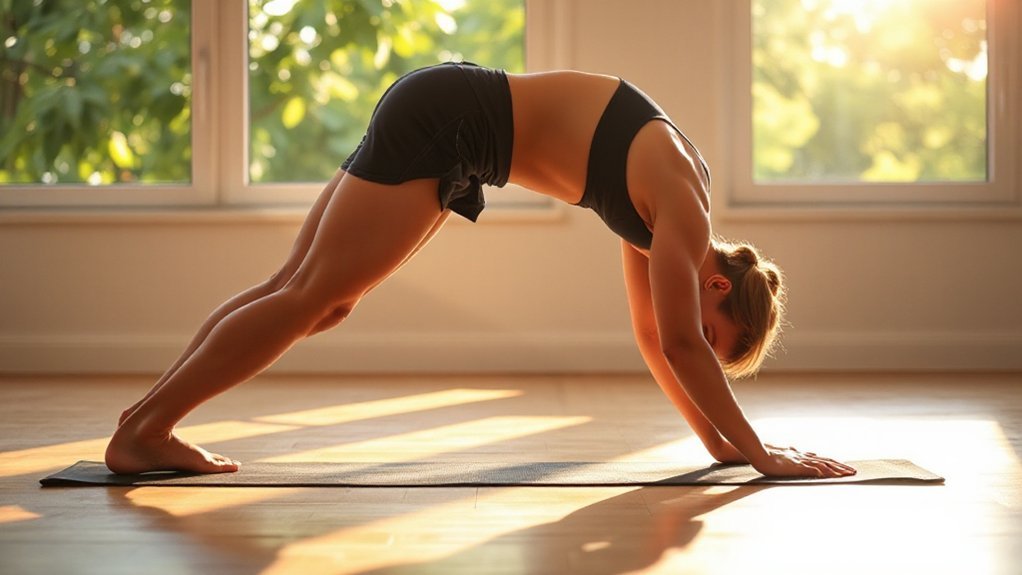
Now that you’ve got your joints moving and your tissues warming, here’s the payoff: the stretches that actually stick with you, the ones that build real flexibility while keeping injury off the table.
Your body’s ready for the deeper work. Here’s what locks in those gains:
- Lateral protection matters. Side shuffles reinforce groin and outer-hip stability, lowering strain risk when you move fast or change direction.
- Leg-focused holds target the chains. Carioca, straight-leg kicks, and heel-to-rear jogs open your hamstrings, hip flexors, and anterior thighs—areas that get tight and cranky without attention.
- Core and hip-flexor work prevents compensation. Backpedal jogs and lunge walks with a twist open your front hips and mobilize your thoracic spine, stopping that lower-back pain before it starts.
Hold these stretches for 60 seconds each. Breathe deep. You’re not forcing anything here; you’re inviting your tissues to release gradually, rewiring your nervous system toward calm and control.
Breathing Cues and Form Tips to Deepen Every Stretch
The difference between a stretch that actually works and one that leaves you tight? Breathing. Your breath is the key that releases deeper flexibility without injury.
Here’s what changes everything: slow diaphragmatic breaths—four to six seconds in, four to six seconds out—lower your heart rate and let tissues surrender into real stretch. On each exhale, consciously soften that tight muscle and ease a few more degrees forward. Never force it. Never bounce.
Keep your form sharp: hips square, spine long and neutral, supporting joints slightly bent to protect them. Imagine directing your breath directly into the area you’re opening—your hips, hamstrings, chest, wherever. This simple mental trick reduces guarding and triggers actual relaxation.
When you hit a stubborn tight spot? Stay put. Multiple breath cycles beat aggressive pushing every single time. Small, patient increments over sixty seconds create lasting, safer gains.
Best Times to Use This Routine in Your Weekly Training
On your hardest training days—strength sessions, HIIT circuits, long runs—this routine becomes your secret weapon. You’ll cool down faster, flush metabolites, and prevent that stubborn stiffness that creeps in later. Here’s where it fits best:
- After intense workouts: Use the 14-minute session as your cool-down. Those 60-second stretch holds genuinely improve range of motion and calm your nervous system when you need it most.
- On recovery or rest days: Slip it in gently to loosen joints without taxing your body. Perfect for active recovery that actually speeds healing.
- Before lighter training days: Run through it as a warm-up. The mobility rounds wake your joints, prime movement quality, and prep you mentally.
When you’re slammed for time, swap the full 25-minute Day 18 routine for this version. You’ll maintain consistency without guilt. Evening? Absolutely—deep holds promote relaxation and better sleep. Think of this as your flexible friend, adapting to whatever your week throws at you.
Frequently Asked Questions
Can Beginners Safely Perform This Stretching Video Without Prior Fitness Experience?
You can absolutely start stretching without fitness experience—that’s the beauty of it. Listen to your body, though. Move gently into each stretch, breathe steadily, and never bounce or force anything. If you feel sharp pain (not just mild tension), back off immediately. Start with shorter sessions, maybe 10 minutes, then build up. You’ve got this. Just respect your limits, stay consistent, and you’ll notice improvements surprisingly fast.
What Equipment or Props Are Needed to Complete This Dynamic Warm-Up Routine?
You’ll need minimal stuff, honestly. Grab a yoga mat or towel for cushioning—your knees’ll thank you. A sturdy chair works great for balance support during standing stretches. Resistance bands? Optional, but they’re handy for deeper engagement. Water bottle nearby keeps you hydrated. That’s it. You’ve got everything at home already. No fancy equipment required; your bodyweight does the heavy lifting here.
How Often Should I Repeat This Stretching Sequence for Optimal Flexibility Gains?
you’ve gotta commit. Aim for five to seven days weekly, holding each stretch for thirty seconds. Why? Your muscles need consistent signals to lengthen permanently. Start with three sessions weekly if you’re new, then build up. Honestly, daily’s your sweet spot—that’s when you’ll notice real, lasting flexibility gains. Your body responds to routine, so show up regularly and you’ll transform.
Are There Modifications Available for People With Existing Joint Pain or Injuries?
Absolutely—you’ve got options. Scale back your range of motion, holding stretches at 50% depth instead of going full extension. Skip moves that pinch or aggravate your joint. Try isometric stretches, where you resist gently without moving. Ice afterward if needed. Work around the injury, not through it. Chat with your physical therapist about which stretches suit your specific situation best.
Can This Routine Be Combined With Other Workout Styles Like Strength Training?
Absolutely—you can combine stretching seamlessly with strength training. Here’s how: perform dynamic stretches before lifting to prep your muscles, then hit your weights hard. After strength sessions, do static stretches to cool down and prevent soreness. This combo creates a complete cycle, honestly. You’re building strength while maintaining mobility and flexibility. That’s the sweet spot for balanced fitness that actually feels sustainable long-term.
So
You’ve just given your body a gift—fourteen minutes that’ll reshape how you move. Think of flexibility like a garden: you can’t expect roses to bloom overnight, but consistent watering changes everything. Stick with this routine weekly, and you’ll notice it. Less stiffness. Better performance. Fewer injuries sidelining you. Your hips, groin, and upper back? They’re already thanking you. You’ve got this.






Leave a Comment