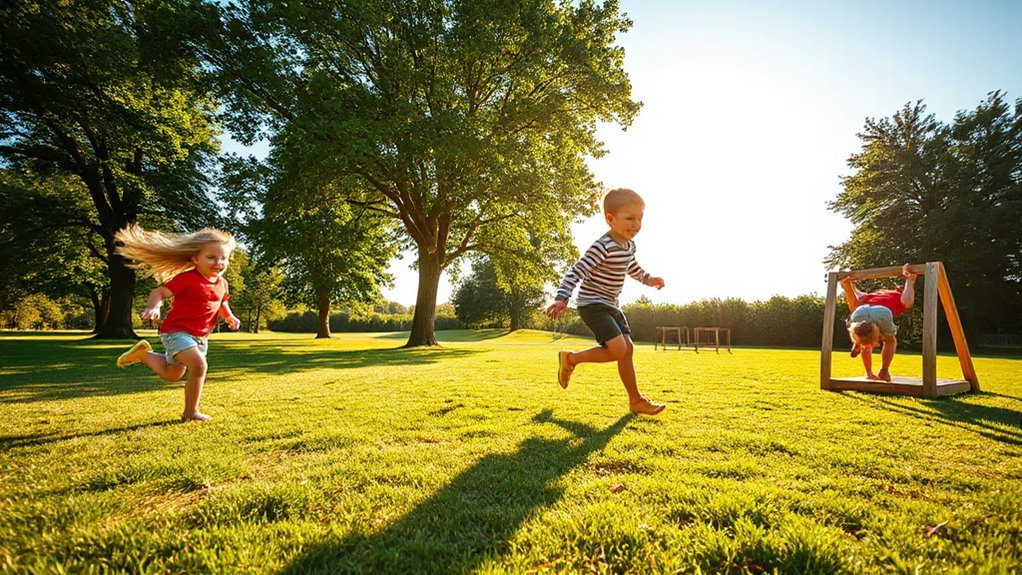

Your kid needs at least 60 minutes of daily movement—but here’s the thing: it doesn’t have to be one marathon session. Break it into bite-sized chunks: a 15-minute cardio burst, 20 minutes of bodyweight strength, some active play. Mix aerobic activities like running or tag with muscle-builders like push-ups and planks, plus bone-loaders like jumping. Keep it fun, rotate activities so boredom doesn’t kill momentum, and model movement yourself—kids follow what they see. Warm up first, nail proper form, and you’ll build resilience while preventing injury. Stick around for age-specific routines and concrete moves.
Key Takeaways
- Kids need at least 60 minutes daily of moderate-to-vigorous activity split into shorter bursts throughout the day.
- Regular exercise strengthens the cardiovascular system, builds aerobic fitness, and improves sleep, focus, and mental health.
- Age-appropriate activities range from unstructured play (ages 0–5) to structured routines with resistance training (ages 16–17).
- Effective home exercises include aerobic bursts, bodyweight moves like push-ups and planks, and bone-loading activities like jumping.
- Warm-up and cool-down with proper form, parental modeling, and rotating activities prevent injury and build lasting habits.
Why Kids Need Daily Exercise

Because your kids’ bodies are built to move, they need to get moving—seriously. Here’s why: your children require at least 60 minutes of moderate-to-vigorous activity daily. This isn’t arbitrary. Regular exercise strengthens their cardiovascular system and builds aerobic fitness, basically giving them hearts and lungs that work efficiently.
But there’s more. Movement prevents excess weight gain and type 2 diabetes by improving how their bodies process food and build muscle. Your kids also need bone-strengthening activities—running, jumping, hopping—plus muscle work like push-ups and squats at least three times weekly. These build resilience and reduce injury risk.
Beyond the physical stuff, exercise transforms their minds. Better sleep, sharper focus in class, improved grades—it’s all connected. Physical activity also quiets anxiety and depression, genuinely supporting their mental health.
Exercise transforms kids’ minds: better sleep, sharper focus, improved grades, and genuine mental health support that quiets anxiety and depression.
Your kids aren’t just becoming healthier. They’re building confidence, resilience, and habits that’ll carry them forward.
How Much Daily Exercise Do Kids Need?
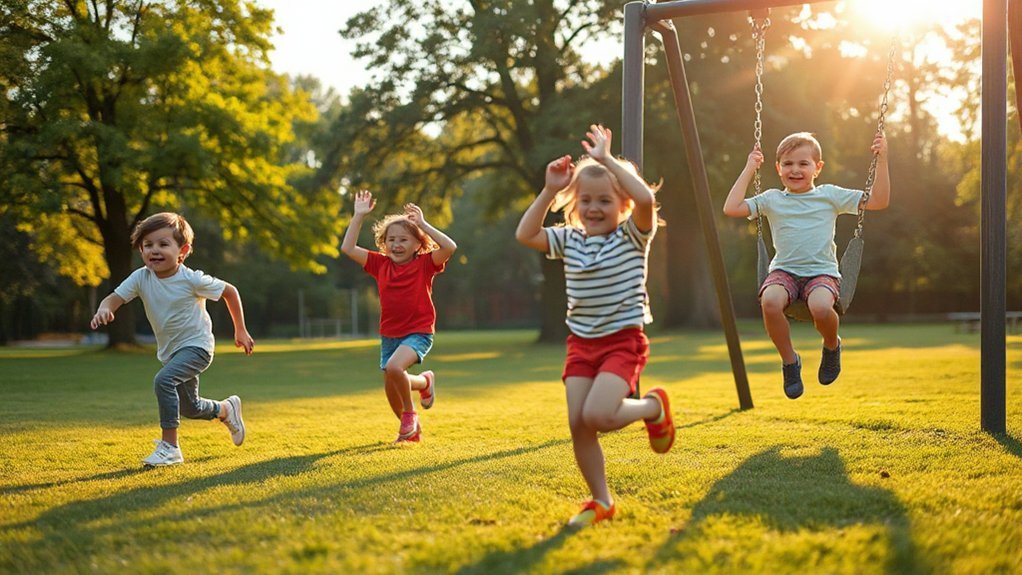
You’re probably wondering: exactly how much activity does your kid actually need, and does it have to happen all at once? The truth is, children ages 6–17 need at least 60 minutes of moderate-to-vigorous movement daily, but here’s the good news—you don’t have to block off one solid hour, since those minutes can pile up through shorter bursts like three 20-minute sessions or several 10–15 minute chunks spread throughout the day. Age matters too: your preschooler (ages 3–5) needs roughly 3 hours of mixed-intensity activity woven naturally into play, while older kids benefit from structured aerobic work most days plus muscle- and bone-strengthening exercises at least three times weekly.
Daily Activity Requirements
How much exercise do kids really need? You’d be surprised—it’s not as complicated as you think.
- Ages 6–17 need 60 minutes daily of moderate-to-vigorous activity, mixing aerobic work (running, swimming), muscle-strengthening moves (push-ups, crab walks), and bone-strengthening jumps at least three days weekly.
- Younger kids (ages 3–5) need about 3 hours total of light-to-vigorous activity spread throughout the day—think active play, not structured workouts.
- Break it into chunks. You don’t need one solid hour; several 15-minute bursts work beautifully, and shorter 5–10 minute sessions count too.
Here’s what matters most: keep them moving consistently, vary the activities, and limit sitting. More than two hours of extended screen time? That’s your red flag. Movement keeps their bodies strong, minds sharp, and energy balanced.
Breaking Up Movement Sessions
Squeezing in movement throughout the day—rather than forcing your kids to log one solid hour—actually works better, and here’s why: their bodies thrive on variety, their attention spans are shorter, and honestly, life’s too chaotic for one continuous block anyway. Your kids can hit that 60-minute target through scattered sessions. A quick 15-minute bike ride before school, a 20-minute playground sprint after lunch, and a 25-minute dance party at dinner? That’s your 60 minutes, no forced marathon required. This approach keeps energy up, prevents boredom, and fits real life. Plus, shorter bursts feel manageable for kids—they’re not staring down an intimidating hour-long commitment.
| Time of Day | Activity Type | Duration | Example | Intensity |
|---|---|---|---|---|
| Morning | Cardio burst | 10–15 min | Walk or bike to school | Moderate |
| Midday | Strength work | 15–20 min | Playground climbing | Vigorous |
| Afternoon | Active play | 15–20 min | Tag or sports | Moderate–vigorous |
| Evening | Flexibility | 10 min | Stretching or yoga | Light |
| Weekend | Mixed session | 20–30 min | Family hike or games | Varies |
Age-Specific Guidelines Matter
Now that you’ve got the timing down—breaking up those movement sessions into bite-sized chunks throughout the day—it’s time to talk numbers: what actually counts as “enough” depends entirely on your kid’s age.
- Preschoolers (3–5 years): aim for roughly 3 hours total of active play spread across the day—think unstructured, spontaneous movement like running around the yard or dancing in the living room.
- School-age kids (6–17 years): they need at least 60 minutes of moderate-to-vigorous aerobic activity daily, plus muscle and bone-strengthening work (push-ups, jumping) on at least 3 days weekly.
- The sweet spot: multiple shorter bursts work better than one long session, keeping their bodies and minds engaged without burnout.
Age matters. Your expectations shouldn’t mirror what works for teenagers when you’re raising a five-year-old.
Best Exercises by Age Group
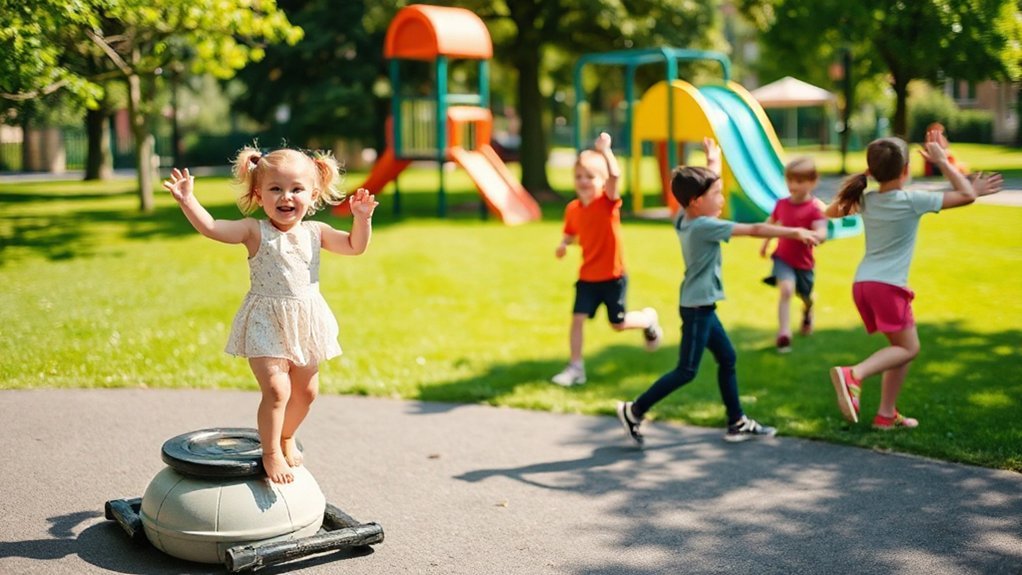
You’ll want to match exercises to where your kid actually is developmentally—not what you think they should be doing—because what works for a seven-year-old simply won’t cut it for a teenager ready for real strength training. From building foundational motor skills in the early years through introducing bodyweight resistance in the tweens, then progressing to supervised lifting and circuit work as teens, you’re basically scaffolding their fitness so they gain confidence, proper form, and injury smarts before anything gets intense. Here’s the thing: age-appropriate doesn’t mean boring or easy, it means setting your kid up to succeed now and develop into someone who actually *wants* to move their body for life.
Building Motor Skills Early
Building coordination, balance, and body awareness doesn’t happen in a gym—it happens when your child’s moving, playing, and exploring their world freely. You’re not coaching perfection here; you’re opening doors.
- Ages 0–5: Prioritize unstructured play—running, climbing, hopping, dancing—about three hours daily across light to vigorous activity. This builds foundational balance and spatial awareness naturally.
- Ages 3–5: Introduce games like hopscotch and simple obstacle courses. Soft ball throws and catches develop hand-eye coordination and bilateral control without pressure.
- Ages 6–8: Create short, playful circuits using jumping jacks, bear crawls, and hop-skips. These teach movement quality and cement core motor patterns your child’ll use forever.
The key? Keep it fun, keep it varied, and let their bodies learn through play.
Strength Training for Teens
When your teen hits their mid-teens, those playful motor skills you’ve been building shift into something more intentional—strength training. Here’s the thing: you’re not rushing them into heavy weights. Instead, you’re teaching their bodies how to work smarter, not harder.
For 13–15-year-olds, bodyweight moves reign supreme. Planks, push-ups, Superman lifts, crab crawls—these build stability and coordination without unnecessary strain. Focus on movement quality over quantity.
Lower-body strength comes through squats, lunges (forward, reverse, side), and single-leg progressions. Jump variations? Absolutely. External load? Not yet.
Around 16–17, light resistance enters the picture—bands, dumbbells, structured training under qualified supervision. Technique matters infinitely more than how much they’re lifting. Three days weekly, variety included, and you’re building strength that lasts.
Age-Appropriate Activity Selection
Because every age brings different capabilities—and different needs—there’s no one-size-fits-all approach to kids’ exercise.
Your child’s developmental stage shapes what activities work best. Here’s what matters:
- Little kids (0–8) thrive on unstructured play—dancing, tricycle riding, hopscotch—before formal moves enter the picture.
- Middle schoolers (9–12) combine aerobic games like soccer and jump rope with bodyweight strength work: push-ups, planks, squats.
- Teens (13–17) progress toward structured routines mixing daily aerobic activity plus muscle and bone-strengthening exercises at least three days weekly.
School-age children need 60 minutes of moderate-to-vigorous activity daily, spread throughout the day in short bursts. You’re not cramming everything into one session—think movement as part of their rhythm. Mix aerobic work, strength moves, and bone-loading activities naturally, and you’ll build stronger, more confident kids.
20 Home Exercises to Get Started
You don’t need a fancy gym membership or fancy equipment to get your kid moving at home—just some space, a little creativity, and a solid game plan.
Start with no-equipment aerobic moves: high-knees in place, jumping jacks, tuck jumps, or jump-rope practice. Hit these for 5–10 minute bursts to spike that heart rate. Then layer in bodyweight strength three times weekly—squats, lunges, modified push-ups, planks, and Superman lifts build real muscle without weights.
Here’s the fun part: playful full-body movements like bear crawls and crab walks transform your living room into a mini obstacle course. They’re not just entertaining; they’re developing coordination, core strength, and upper-body power simultaneously.
Wrap each session with 3–5 minutes of kid-friendly yoga and stretches—Downward Dog, Child’s Pose, hamster stretches. It cools them down while boosting flexibility.
Break everything into 10–20 minute sessions throughout the day. That’s your realistic path to 60 daily minutes.
Injury Prevention and Safety Tips
As your kid builds momentum with those home workouts, keeping them safe matters just as much as keeping them moving. Smart injury prevention isn’t complicated—it’s about being intentional with how you structure their exercise time.
Smart injury prevention isn’t complicated—it’s about being intentional with how you structure your child’s exercise time.
Here’s what works:
- Bookend every session with warm-ups and cool-downs—five to ten minutes of light jogging and dynamic stretches before, static stretches after. Your child’s muscles need that gradual ramp-up and wind-down.
- Watch their form like a hawk. Knees aligned over feet during squats, hips pushed back—bad technique compounds into injury fast. Catch it early.
- Choose soft, indoor-safe gear (foam balls, beanbags, squishy yoga balls) and match activities to your space. Fewer collisions means fewer accidents.
Mix up their activities too. Avoid early sport specialization, and pay extra attention during growth spurts—that’s when kids need more stretching and mobility work. You’re building foundation, not pushing limits.
Building Lasting Exercise Habits
Once your child’s moving safely, the real work begins—and it’s not about pushing harder, it’s about making exercise stick.
Here’s what actually works: break that 60-minute goal into bite-sized chunks. Ten to twenty minutes of tag, obstacle courses, or dancing fits into packed schedules without feeling like a chore. Variety matters too—rotate between running, yoga, strength moves like squats, and team games so boredom never settles in.
But here’s the secret nobody tells you: your kid watches what you do. When you take family walks or join them for basketball, you’re not just exercising—you’re showing them movement belongs in everyday life. Make it social. Playdates, team sports, group classes—these build connection and accountability.
Ditch the early sport specialization trap. Let them explore, discover what clicks, then commit. And seriously, limit screens. Every hour of Netflix is an hour they’re not moving, not discovering what they love.
Frequently Asked Questions
How Can I Motivate My Child to Exercise if They’re Naturally Resistant to Physical Activity?
You’ve got to meet them where they’re at. Start small—forget “exercise,” try activities they actually enjoy. Dance, skateboarding, climbing trees, video game competitions? Perfect entry points. Make it social; friends change everything. Keep sessions short, celebrate wins genuinely, and ditch the pressure talk. Your enthusiasm matters; they’re watching you. Most importantly, stop forcing it. Resistance often softens when you remove the battle entirely.
What Should My Child Eat or Drink Before and After Exercising?
chocolate milk, turkey sandwich, or apple with cheese. This combo replenishes energy and builds muscle. Trust me, proper nutrition transforms how your child feels during activity.
How Do I Know if My Child Is Exercising at the Right Intensity Level?
You’ll know your child’s hitting the right intensity when they can talk but can’t sing during activity—that’s the sweet spot. Watch for a light sweat, flushed cheeks, maybe slightly heavier breathing. They should feel challenged yet capable, not gasping or completely unbothered. Ask them directly: “How hard does this feel?” They’re nailing it if they say moderate, not easy or exhausting.
Can Video Games or Screen Time Count Toward Daily Physical Activity Requirements?
Most screen time doesn’t count toward physical activity requirements—here’s why: your kid’s heart isn’t pumping hard enough, and their muscles aren’t engaged. Now, some interactive games like Dance Dance Revolution or active VR experiences? They’re borderline, but they’re not a replacement. You’re looking for genuine movement—sweating, breathlessness, real exertion. Stick with traditional sports, outdoor play, or structured exercise for those daily 60 minutes kids need.
What’s the Best Way to Balance Structured Sports With Unstructured Free Play?
You’ll want roughly 60% structured sports, 40% free play—that’s your sweet spot. Structured activities build skills and confidence; unstructured play? That’s where creativity and pure joy live. Your kid needs both. Try soccer practice Tuesday, then backyard adventures Wednesday. Mix it up. Sports teach discipline, but free play teaches them to love moving. Don’t overthink balance—just make sure they’re moving daily, laughing regularly, and not burnt out.
So
You’ve got this. Your kid’s moving more, building strength, dodging injuries—that’s the win right there. Sure, getting them off their telegraph and into actual motion takes persistence, but you’re creating habits that’ll stick. They’ll sleep better, focus sharper, feel stronger. Start small, stay consistent, celebrate the wins. Exercise isn’t punishment; it’s their superpower. You’re not just raising active kids—you’re raising confident ones.







Leave a Comment