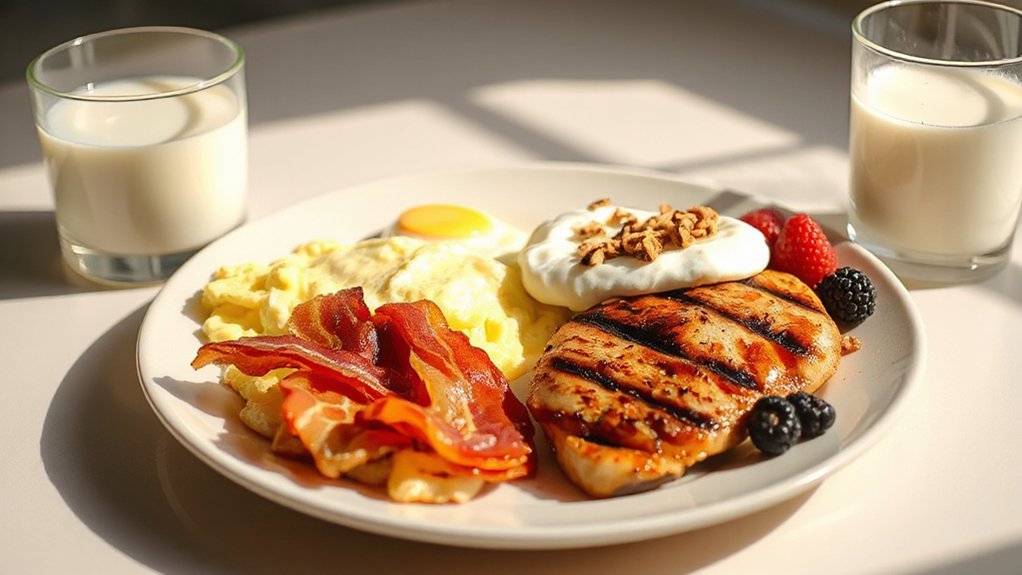

You’ll crush mid-morning cravings by front-loading 25–30 grams of protein at breakfast—it slows digestion, triggers fullness hormones, and stabilizes your blood sugar for hours. Skip the carb-heavy cereal routine; instead, grab cottage cheese with fruit, overnight oats with Greek yogurt, or batch-prepped egg muffins straight from your freezer. These strategies flip the script on how most people eat (biggest protein hit at dinner), giving you lasting energy and consistent hunger control. Stick around to discover exactly which no-cook bowls and make-ahead options fit your schedule.
Key Takeaways
- Aim for ~30 g protein at breakfast to trigger fullness hormones, reduce mid-morning cravings, and stabilize blood sugar throughout the day.
- No-cook options like cottage cheese bowls, overnight oats, and chia pudding offer 20–30 g protein with zero morning preparation required.
- Make-ahead egg muffins and bites deliver 18–22 g protein per serving and freeze for up to three months.
- Batch-prep protein pancakes and waffles provide ~18 g protein per serving, toast straight from frozen, and eliminate morning cooking.
- High-protein skillets with crispy potatoes, pre-cooked meat, and eggs reach ~30 g protein in approximately twenty minutes of total prep time.
Why Protein Matters at Breakfast
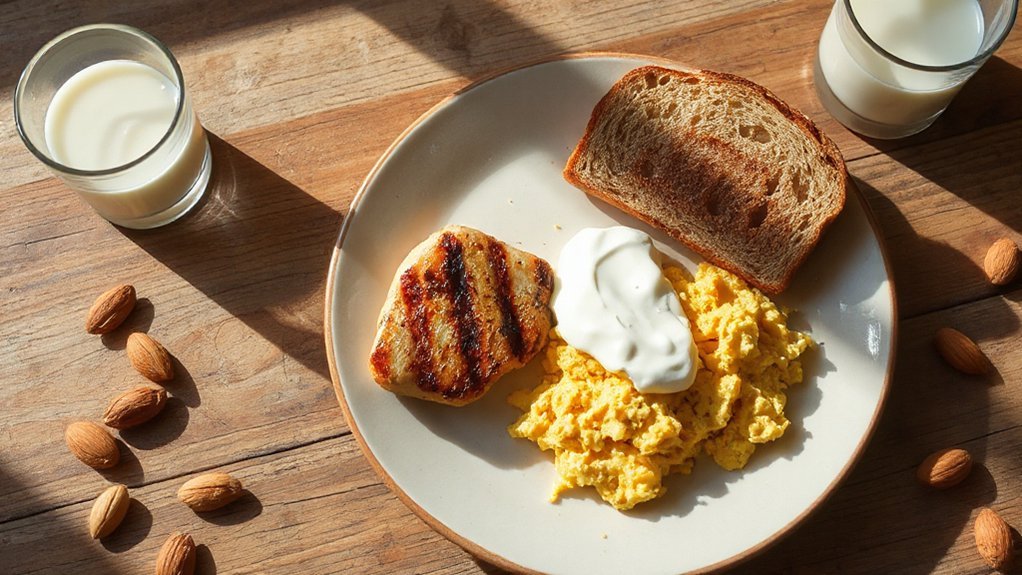
If you’ve ever crashed hard by mid-morning—reaching for cookies or coffee to power through—you’re not alone, and there’s solid science behind it. Your breakfast choices directly shape your hunger, cravings, and energy for hours afterward.
Here’s the deal: when you eat roughly 30 grams of protein at breakfast, your body responds by slowing digestion and releasing fullness hormones. That means you stay satisfied longer, sidestep those 10 a.m. snack attacks, and naturally eat fewer calories overall. Protein burns more energy during digestion than carbs or fat do, so your metabolism gets a modest boost too.
But there’s more. Most of us pile protein onto our dinner plates and skip it at breakfast. That imbalance makes hitting your daily target harder than it needs to be. By shifting 20 to 40 grams of protein earlier in the day, you level out your intake, stabilize blood sugar, and set yourself up for genuine, lasting control.
No-Cook Bowls and Pudding Bases: Start With Zero Prep
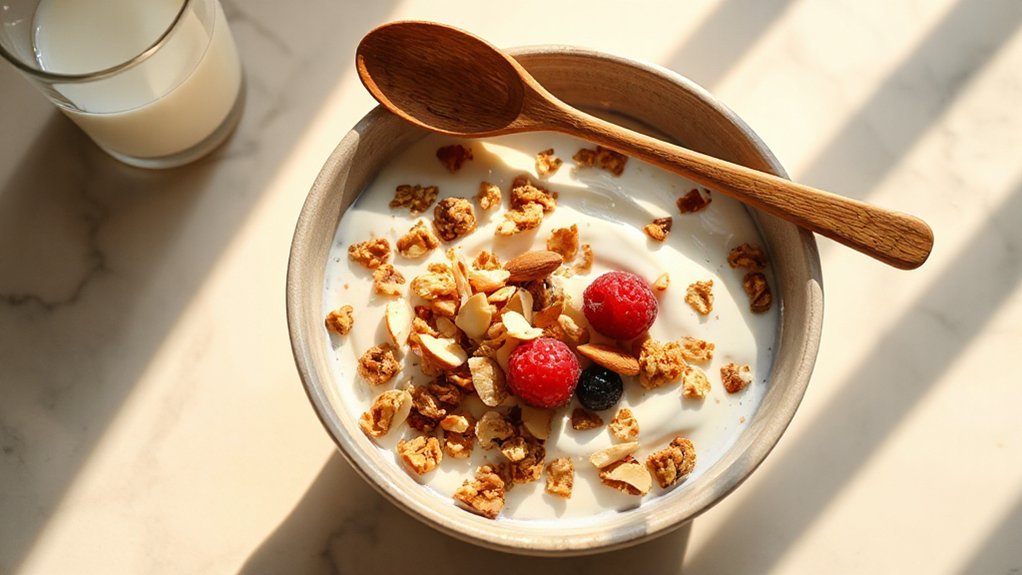
When you’re running late—or honestly, just not in the mood to cook—zero-prep breakfast bowls and pudding bases become your secret weapon. You’ve got options that work while you sleep.
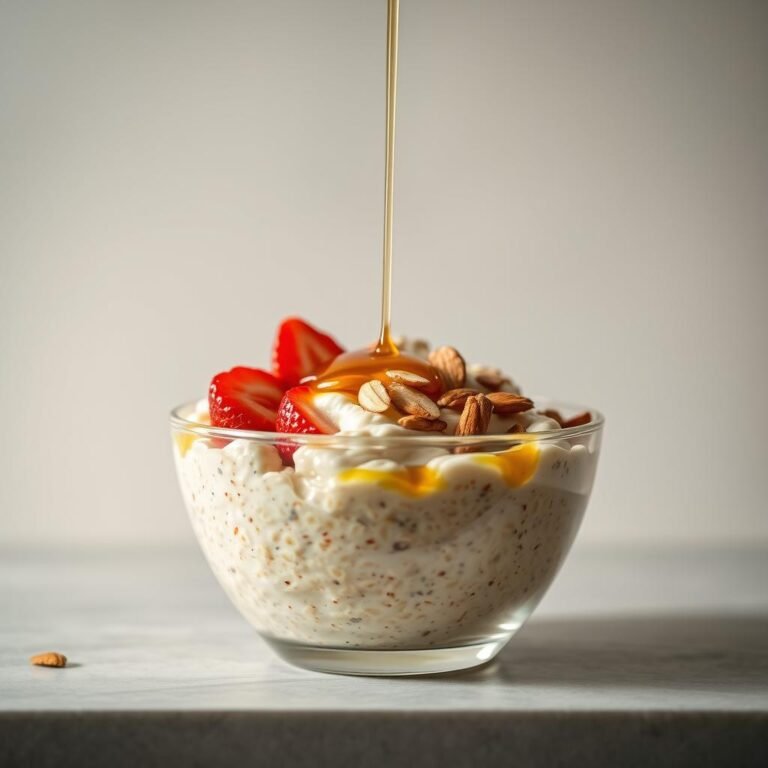
Cottage-cheese bowls? Dump a cup into a jar with strawberries and basil or whatever fruit speaks to you. Boom—20–25 g protein, zero heat required. Chia seed pudding takes three tablespoons mixed with milk or yogurt, then you wait overnight. It thickens into something creamy and tapioca-like, adding roughly 6 g protein plus serious fiber. Swap in Greek yogurt or protein-fortified milk and you’re climbing higher.
Cottage cheese and chia seed pudding deliver 6–25g protein overnight with zero cooking required.
Then there’s overnight oats. Soak rolled oats in milk for three-plus hours, stir in a protein scoop or Greek yogurt, and you’ve built a 25–30 g protein breakfast that tastes indulgent.
Pack these jars the night before. Grab, go, eat. Your morning self will thank you.
Make-Ahead Egg Muffins and Bites: Batch-Cook for the Week
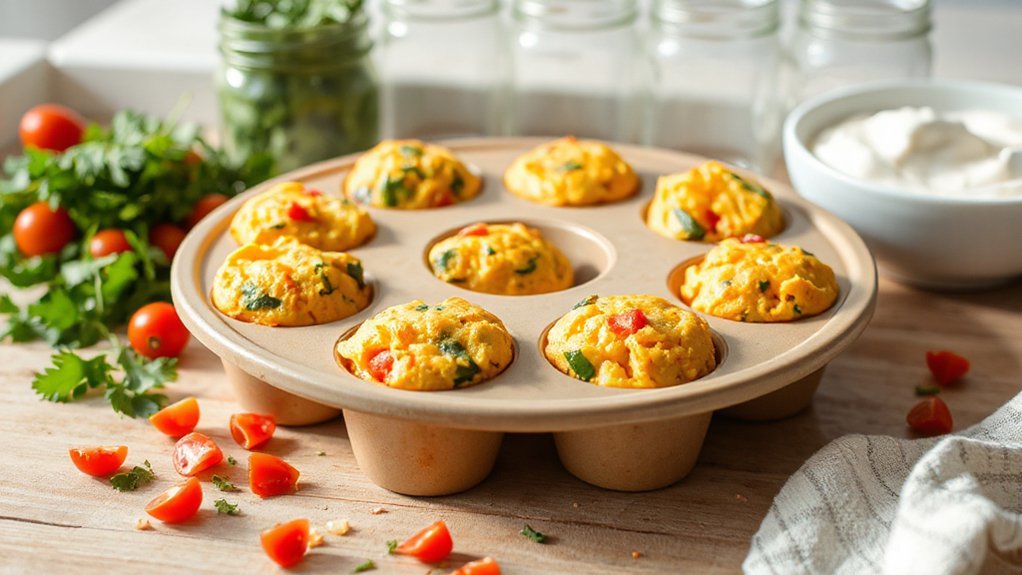
You’ve got two game-changers here: freezer-friendly storage that lets you prep a whole week’s worth in one go, and protein-packed mix-in options that keep things interesting without turning your muffins into soggy messes. Think Buffalo Chicken Egg Muffins (~22g protein per 3) or Cottage Cheese Egg Bites (~18g protein per 3)—grab-and-go breakfasts that don’t require you to think before your coffee kicks in. The trick? Stick to one or two mix-ins, use pre-cooked meats and veggies, freeze what you don’t eat in the next few days, and you’re set.
Freezer-Friendly Storage Tips
Because batch cooking’s only worth it if your muffins don’t turn into soggy hockey pucks, you’ll want to nail the freezing process from the start. Cool everything completely first—no shortcuts—then flash-freeze on a baking sheet for an hour before bagging. This single step prevents clumping and keeps texture solid.
Wrap individual muffins in parchment or plastic wrap, or layer parchment between them. Label everything with dates; you’ve got three months in the freezer, three to four days in the fridge.
Here’s the thing: skip super-wet mix-ins like fresh tomatoes or high-moisture veggies, or pre-cook and drain them hard. Excess moisture is your enemy. Reheat frozen muffins in the microwave (60–90 seconds, flip halfway) or bake at 350°F for 12–18 minutes. Already thawed? Just 30–60 seconds in the microwave.
Protein-Packed Mix-In Options
The real magic of egg muffin meal prep isn’t just in the baking—it’s in what you fold into that protein-rich base before they hit the oven. You’ve got options that’ll keep your week interesting.
Shredded chicken or turkey transforms ordinary muffins into buffalo-style bites, hitting around 22 grams of protein per serving. Prefer dairy-free? This works beautifully for Whole30 too. Breakfast sausage paired with hash browns, bell pepper, and onion creates a savory combo that reheats flawlessly—roughly 21 grams protein per three muffins.
Want to switch things up? Smoked salmon keeps it pescatarian-friendly, while ham-and-cheese versions can reach 25 grams per serving. Spinach, kale, or sweet potato bulk things up without weighing you down. Add feta, beans, or Greek yogurt for that protein boost you’re craving.
Freezer-Friendly Burritos and Sandwiches: Cook Once, Eat All Week
You’ll nail freezer-friendly breakfasts by mastering two batch-cooking strategies: prepare your burritos and sandwiches in one focused session, then portion and wrap them strategically to lock in freshness and flavor. Here’s the game-changer—you’re not just cooking; you’re building a system where freezer storage and smart reheating transform minimal effort into grab-and-go protein power throughout your entire week. Label everything with dates and contents, reheat from frozen until piping hot, and you’ve cracked the code to consistency, convenience, and never skipping breakfast again.
Batch Cooking Strategies
Prepping a week’s worth of high-protein breakfasts in a single cooking session? You’ll nail it in about an hour. Cook your proteins—scrambled eggs, sausage, chicken—all at once, then assemble everything while it’s fresh. Portion into single servings, let them cool completely, then freeze flat on a sheet pan. This saves serious freezer real estate. Once solid, transfer them into labeled bags. Here’s the game-changer: keep mix-ins dry. Watery veggies and extra sauce? They’ll turn your burrito or sandwich into mush. Eggs work brilliantly as your binder, holding fillings together through freezing and reheating. When you’re ready to eat, grab straight from frozen and microwave or oven it. Minutes later, you’ve got a protein-packed breakfast waiting.
Freezer Storage And Reheating
Once your burritos and sandwiches are assembled and cooled, proper freezing is what separates a grab-and-go breakfast from a freezer-burned disappointment. You’ll want to flash-freeze individually on a tray for 30–60 minutes before bagging—this prevents sticking and makes reheating a breeze. Then wrap tightly in parchment and foil, or double-bag in freezer bags, labeling with the date. They’ll keep beautifully for 2–3 months.
When you’re ready to eat:
- Unwrap foil, wrap in a damp paper towel
- Microwave on high for 1½–3 minutes (turning once)
- Verify internal temp hits 165°F
- Or air-fry at 350°F for 8–12 minutes for crispier results
- Add wet fillings after reheating to dodge sogginess
High-Protein Hashes and Skillets: Fresh Breakfast in 20 Minutes
Building a satisfying, protein-packed breakfast hash or skillet doesn’t require hours in the kitchen—it’s all about smart shortcuts and strategic layering. You’re looking at roughly 20 minutes, tops.
Here’s your game plan: crank your skillet to high heat and get those diced potatoes or frozen hash browns crispy first (8–10 minutes). While they’re working, grab your pre-cooked shortcuts—rotisserie chicken, breakfast sausage, canned beans—whatever protein speaks to you. Toss them in with quick-wilting greens like spinach or kale for 2–3 minutes.
Top it all with two large eggs or one fried egg, and you’ve hit your protein sweet spot. You’re aiming for roughly 30 grams total—combining those eggs with 18 grams from your meat and beans layers.
Want Tex-Mex vibes? Taco-seasoned ground beef delivers 15–18 grams per serving. Add cheese or extra chicken, and you’re pushing 20–25 grams easily. That’s fresh, filling, and genuinely doable.
Batch-Cook or Quick-Prep Protein Pancakes and Waffles
If you’ve got a weekend morning to spare, protein pancakes and waffles become your secret weapon for stress-free breakfasts all week long. You’ll mix a simple batter—eggs, protein powder, oats or flour—cook a massive batch, then slice and freeze individual portions. Toast them straight from frozen whenever hunger strikes. That’s it. No morning scramble, no excuses.
Your pancakes deliver roughly 18 grams of protein per serving, while waffles pack about 17 grams. You’re building satiety that actually sticks.
Make it work for you:
- Cook large batches on Sunday; reheat in the toaster or microwave
- Boost protein with Greek yogurt, cottage cheese, or nut butter
- Freeze portions in parchment layers for easy grabbing
- Top with almond butter, berries, or yogurt for healthy fats and fiber
- Swap regular flour for gluten-free or use dairy-free powder
These recipes bend to your needs. Dietary restrictions? No problem. You’ve got grab-and-go meals ready when life gets hectic.
Frequently Asked Questions
How Much Protein Should I Aim for in My Breakfast Meal?
You’ll want to aim for 25–40 grams of protein at breakfast, depending on your goals and body weight. A solid rule? Shoot for 0.25–0.4 grams per pound of your body weight. So if you weigh 150 pounds, that’s roughly 37–60 grams. Eggs, Greek yogurt, cottage cheese, or protein powder get you there fast. Start with what feels sustainable, then adjust based on your hunger and energy levels throughout the morning.
Can High-Protein Breakfasts Help With Weight Loss and Appetite Control?
You’ll absolutely crush your hunger when you load up on protein at breakfast—seriously, it’s a game-changer. Protein keeps you satisfied longer, stabilizes blood sugar, and reduces those annoying mid-morning cravings that derail your goals. You’re effectively building a satiety shield. Studies show high-protein breakfasts genuinely support weight loss by helping you eat less overall. Think eggs, Greek yogurt, or cottage cheese. Your appetite won’t stand a chance against that staying power.
What Are the Best Protein Sources for Vegetarians and Vegans?
You’ve got solid options. Legumes—lentils, chickpeas, black beans—pack serious protein and fiber. Greek yogurt and cottage cheese work if you’re okay with dairy. Tofu and tempeh deliver complete amino acids; they’re versatile, honest. Nuts, seeds, and nut butters add protein plus healthy fats. Quinoa’s your grain friend here. Mix these throughout breakfast: yogurt parfaits, tofu scrambles, bean-based hash. You’ll stay fuller longer, honestly.
How Long Can I Safely Store Prepared High-Protein Breakfast Items?
You’ll practically never run out of grab-and-go breakfasts if you plan right. Refrigerate prepared eggs, yogurt parfaits, and protein pancakes up to four days—they’re golden that long. Overnight oats? Five days, easy. Freeze breakfast burritos for a month. Cooked grains last three to four days. Pro tip: store proteins separately from wet ingredients, keeping everything fresher. Label those containers, friend. Dating your meals prevents mystery-fridge surprises.
Will Eating Protein at Breakfast Affect My Energy Levels Throughout Morning?
Absolutely—you’ll feel steadier, more focused. Here’s why: protein digests slowly, stabilizing your blood sugar so you won’t crash at 10 a.m. You’re avoiding that carb-spike-then-plummet cycle. Aim for 25-30 grams at breakfast with whole grains or veggies. Eggs, Greek yogurt, cottage cheese—they’re your friends. You’ll notice sustained energy, sharper concentration, fewer cravings. Pretty game-changing, honestly.
So
You’ve got this. Yeah, mornings are chaotic—but you don’t need fancy cooking skills or hours of prep time. Pick one strategy: batch-cook eggs, freeze burritos, or grab a protein bowl. Start there, not everywhere. You’ll notice the difference quick: steadier energy, fewer mid-morning crashes, actual satisfaction. Your breakfast doesn’t need to be complicated to be powerful.





Leave a Comment