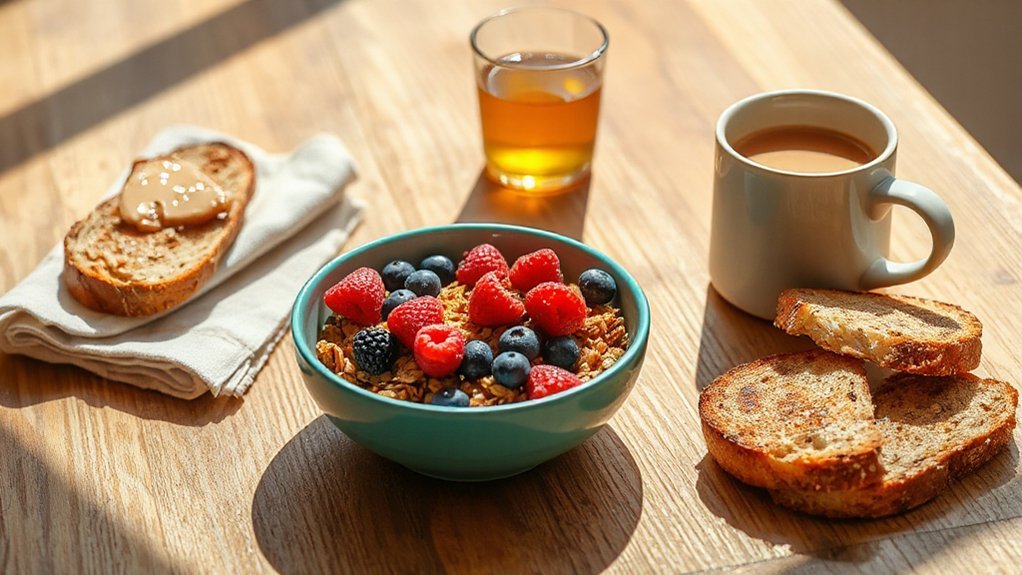

You’ve got this. Batch-cook freezer-friendly breakfasts on weekends—think muffin-tin omelets, breakfast burritos, overnight oats—and you’ll slash morning cooking by 80 percent. Pair protein (eggs, Greek yogurt, nut butter) with fiber (oats, whole grains, spinach) to stay genuinely full. Grab portioned smoothie packs, no-bake cookies, or reheated burritos on weekdays. Pick your schedule: five-minute mornings need freezer items; thirty-minute windows let you batch-cook fresh. The real win? You’ll discover which combos actually keep your energy steady.
Key Takeaways
- Overnight oats with Greek yogurt, nuts, and berries provide protein and fiber in a grab-and-go format.
- Batch-cook muffin-tin omelets with vegetables and cheese; freeze for quick 60–90 second reheats.
- Smoothie packs with spinach, avocado, and protein powder offer 18g protein and 8g fiber per serving.
- Freezer burritos filled with eggs, beans, and vegetables reheat in 1–3 minutes for busy mornings.
- Weekend batch-cooking reduces weekday breakfast time by 80–90 percent while maintaining nutritional balance.
Overnight Oats: Sweet, Savory & Make-Ahead Ready
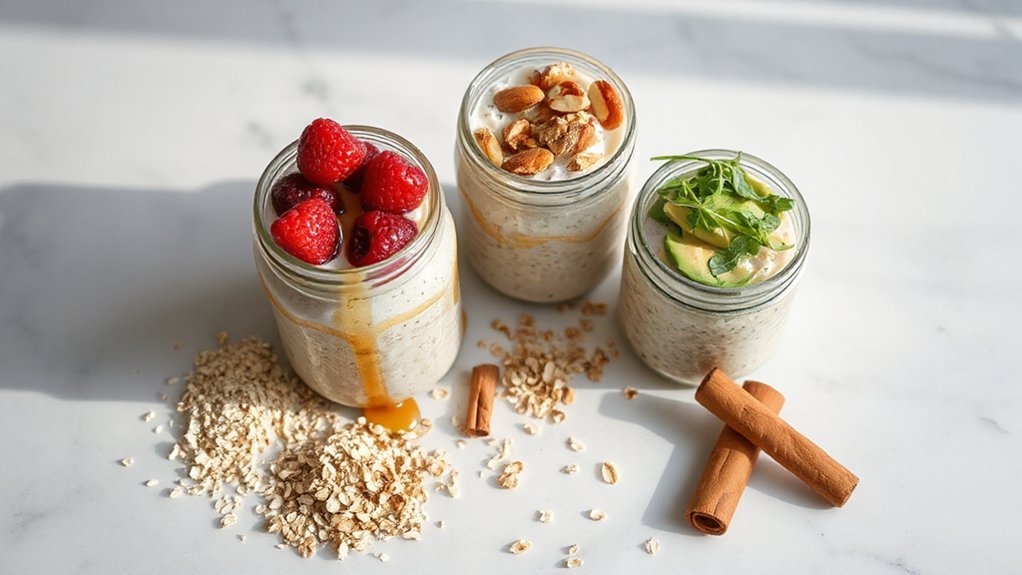
Prepping breakfast the night before? Overnight oats are your answer. You simply soak rolled oats in milk or yogurt—dairy or plant-based, your choice—and wake up to a ready-to-grab meal packed with whole grains and fiber.
Soak rolled oats in milk or yogurt overnight and wake up to a ready-to-grab breakfast packed with whole grains and fiber.
Want sweet? Think cinnamon-roll, cranberry-cheesecake, or banana-maple flavors. Mashed banana, dates, or frozen berries boost natural sweetness without the crash. Craving savory instead? Swap those add-ins for avocado, salsa, or sriracha, then top with a fried or soft-boiled egg for serious protein.
Here’s the game-changer: fold in Greek yogurt or nut butter for creaminess and staying power. Nuts, seeds, fresh fruit, and jam add texture and variety—though save the crunchy stuff for right before eating so it doesn’t get soggy.
Smart move? Portion oats into jars for three to five days. Use frozen fruit when fresh isn’t available. You’re basically meal-prepping breakfast while you sleep.
Egg Breakfasts That Freeze: Muffin-Tin Omelets, Burritos & More
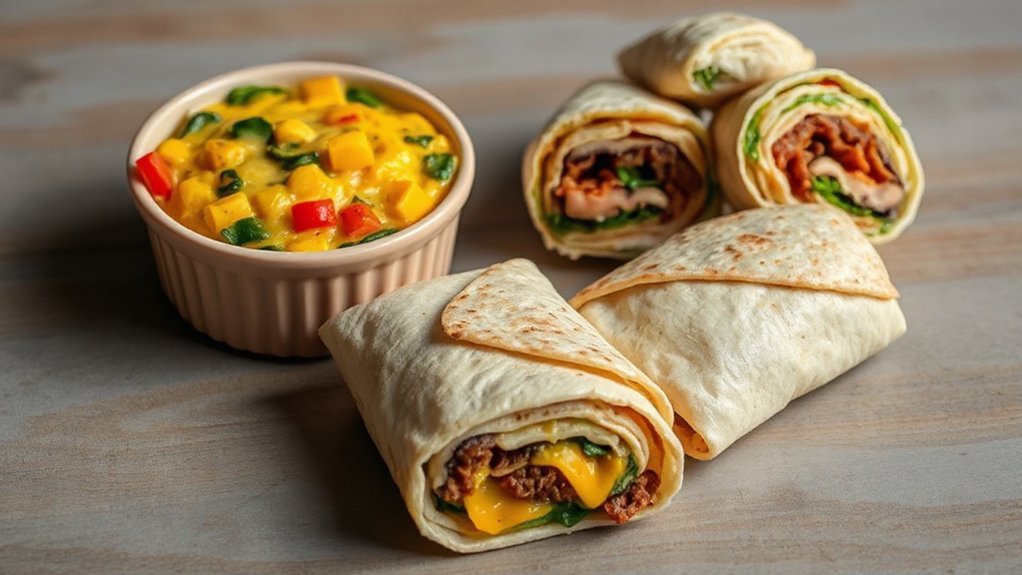
You can batch-prep freezer-friendly egg breakfasts—muffin-tin omelets, breakfast burritos, scrambled egg portions—that’ll save you serious time on hectic mornings. The trick’s in the setup: cook everything fully, drain your fillings well so they don’t turn soggy, and cool before freezing in labeled, airtight containers or foil-wrapped bundles. From there, you’re looking at just 60 seconds to five minutes of reheating (microwave or toaster oven, straight from frozen), and you’ve got a legit protein-packed breakfast without the scramble.
Make-Ahead Freezer Burritos
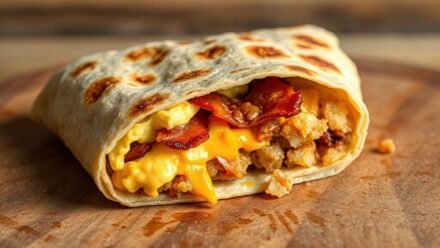
Assembling a stack of breakfast burritos on a lazy Sunday means you’ve basically handed yourself the gift of stress-free mornings for the next three months. Here’s your game plan: fill tortillas with scrambled eggs, cheese, spinach, and whatever add-ins call to you—serrano peppers, black beans, whatever sounds good. Wrap each burrito tightly in foil or plastic wrap, then freeze them flat. They’ll keep beautifully for up to three months, ready whenever hunger strikes.
Reheating’s ridiculously simple: microwave for one to three minutes, or unwrap and warm in a 350°F oven for twenty to thirty minutes if you’re patient. Pro tip? Cool your fillings completely before wrapping to dodge those pesky ice crystals. Label everything with dates. Rotate through oldest first. Done.
Muffin-Tin Omelets & Eggs
Muffin-tin omelets kick burritos’ convenience up another notch—no wrapping, no waiting for them to thaw evenly, just grab one and go. You’ll whisk whole eggs (or whites), fold in your favorites, and bake until set. Here’s what makes them shine:
- Diced peppers, cooked beans, spinach, and cheese create texture and nutrition
- Bake ~15–20 minutes at 350°F until just set
- Cool completely before freezing in airtight containers or foil
- Store up to 2–3 months for peak quality
- Reheat from frozen in 60–90 seconds in the microwave
Pro tip: slightly undercook them before freezing—you’ll finish cooking during reheating and avoid rubbery eggs. Mix-ins like beans and veggies keep things interesting and boost fiber. These little powerhouses make weekday mornings genuinely manageable.
Storage & Reheating Tips
Freezing your egg breakfasts is honestly the secret to mornings that don’t feel chaotic—but you’ve got to do it right. Cool everything completely before you freeze, portion into single servings, and label with the date. You’ll thank yourself later.
| Item | Freezer Life | Reheat Method | Time |
|---|---|---|---|
| Egg muffins | 2–3 months | Microwave from frozen | 60–90 seconds |
| Muffin-tin omelets | 2–3 months | Microwave or thaw overnight | 60–90 seconds |
| Egg burritos | 2–3 months | Microwave or 350°F oven | 2–4 min / 20–30 min |
| Vegan burritos | 3 months | Microwave or oven | 2–4 min / 20–30 min |
| All items | Best quality | Heat to 165°F internal temp | Verify thoroughly |
Store in airtight freezer bags or foil wrap. Microwave works quickest, but oven-warming gives you crispier tortillas. Always heat until steaming hot throughout—food safety isn’t negotiable here.
Smoothies That Pack Vegetables & Lasting Protein
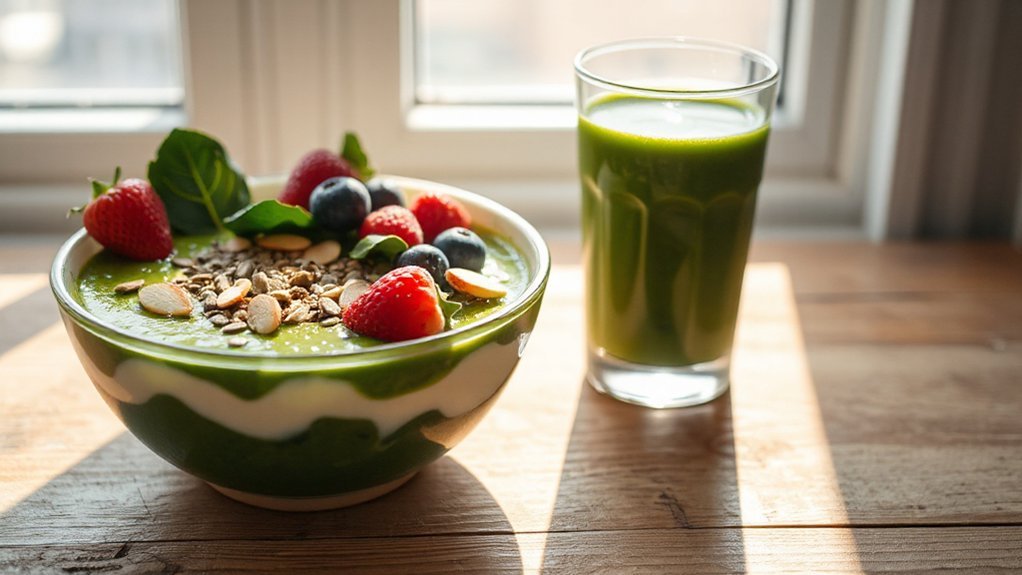
When you’re scrambling to get out the door, a smoothie that actually fills you up—and sneaks in vegetables—feels like a small miracle.
A smoothie that fills you up and sneaks in vegetables feels like a small miracle when you’re rushing out the door.
Here’s the secret: you’re not choosing between nutrition and taste. You’re getting both.
Start with these game-changing additions:
- Leafy greens like spinach (truly invisible in fruit smoothies)
- Protein sources: Greek yogurt, cottage cheese, nut butter, hemp seeds, or protein powder
- Fiber boosters: oats or cooked quinoa for slow-digesting carbs
- Healthy fats: avocado pairs perfectly with spinach
- Prep strategy: freeze smoothie packs with pre-portioned ingredients
That spinach-avocado combo? You’re looking at roughly 18 grams of protein and 8 grams of fiber in one glass. That’s sustenance, not just calories.
The prep trick saves you mornings. Load your freezer bags the weekend before, then blend straight from frozen or thaw overnight in the fridge. No excuses. Just smoothies that genuinely keep you satisfied until lunch.
Make-Ahead Breakfasts That Travel: No-Bake Cookies, Muffins & Baked Oatmeal
If smoothies feel too liquid for your lifestyle, make-ahead breakfast cookies, muffins, and baked oatmeal are your answer—real food you can grab, stash in your bag, and actually enjoy without thinking twice.
No-bake breakfast cookies made with oats, almond butter, chia seeds, and dried fruit? They’re shelf-stable for a day or two, frozen for months. Muffins—whether flourless banana or protein-packed Greek yogurt varieties—freeze brilliantly in single portions, reheating in 30–60 seconds flat. Baked oatmeal (think blueberry-coconut-walnut or banana-date) bakes in a casserole or individual portions, refrigerates up to five days, and microwaves into a portable hot breakfast instantly.
For minimal prep and cleanup, blender-based batters like flourless banana chocolate chip minis bake in fifteen minutes, producing travel-friendly portions that freeze and thaw effortlessly. Label and date everything. Pack muffins and cookies in airtight containers or parchment-wrapped stacks. Use certified gluten-free oats if needed. You’re building a breakfast system that actually works.
Choose Your Breakfast by Schedule: 5-Minute, 30-Minute & Weekend Options
Your schedule shapes what you can realistically eat—and that’s not an excuse, that’s just smart planning. Whether you’ve got five minutes before you bolt out the door, a leisurely 30-minute window, or a whole weekend to cook, there’s a breakfast strategy that actually fits your life, not some fantasy version of it. Let’s match your time and energy to the right meals so you’re not choosing between rushed and hungry, or elaborate and stressed.
Quick Weekday Breakfast Ideas
Building a breakfast routine that actually fits your life means matching what you eat to how much time you’ve got—and honestly, most mornings you’ve got less than you think. You’ve got options, real ones, that don’t demand you wake up at dawn.
Here’s what works:
- 5-minute grab-and-gos: overnight oats or spinach-avocado smoothies—no cooking, just cold and ready
- Micro-reheat meals: frozen burritos or muffin-tin omelets that warm in under two minutes
- Weekend prep: batch-baked oatmeal or frittatas you portion for four weekday breakfasts
- 15-minute bakes: blender muffins or doubled pancakes you freeze for toaster reheating
- Leisurely weekends: shakshuka or grain bowls yielding leftovers for weekday simplicity
Pick your time window, choose your method, and stick with it. That’s how breakfast actually happens.
Leisurely Weekend Breakfast Options
Once you’ve locked down your weekday routine, weekends are where you actually get to cook—no alarm clock, no rushing, just time and hunger and the kitchen all to yourself. This is your moment for homemade granola, whole-grain waffles, banana bread, or pumpkin quick bread. You’ve earned the leisure.
Here’s the beauty: you’re not just feeding yourself today. Make a big batch, enjoy it fresh, then freeze the extras. Pancakes? Pop them in the toaster midweek. Granola? Grab it straight from the jar. Crustless quiche or baked oatmeal become your weekday anchors without the stress.
Weekend cooking isn’t about complexity—it’s about presence. You’ve got the time now. Use it boldly, prep generously, and let Monday morning thank you for it.
Meal Prep For Busy Mornings
Matching your breakfast to the time you’ve actually got—that’s the real game changer. You’re not lazy; you’re realistic. So let’s build a system that works.
Here’s your strategy:
- 5-minute mornings: Stock portioned freezer burritos, muffin-tin eggs, or breakfast sandwiches that reheat in 1–2 minutes
- 30-minute prep windows: Batch-cook skillet eggs, baked oatmeal, or pancakes; freeze portions for weekday reheats
- Overnight options: Assemble smoothie packs or overnight oats the night before—zero cooking required
- Weekend power moves: Bake loafs, quiches, or grain bowls; label everything with dates for rotation
- Protein + fiber focus: Choose eggs, Greek yogurt, and whole grains to fuel lasting energy
You’re basically front-loading effort so mornings stay simple. Label those freezer portions clearly, rotate before the 2–3 month window closes, and you’ve built yourself breathing room.
Batch-Cook Healthy Breakfasts: Save Time & Money
If you’re tired of rushing through mornings or watching your breakfast budget evaporate at the coffee shop, batch-cooking is your answer. You’re basically working smarter, not harder.
Start simple: double your pancake or waffle recipe, freeze the extras, and reheat in your toaster. Done in seconds. Breakfast burritos and muffin-tin omelets? They’ll keep for two to three months and reheat in minutes—seriously cutting your weekday prep time to under five minutes.
Try overnight oats or baked oatmeal made in bulk. Portion it out, grab a container, go. Low-cost, high-fiber, sustained energy all morning.
Want something faster? Assemble frozen smoothie packs ahead—pre-measured fruit, spinach, seeds—and blend a nutrient-dense drink in under a minute. Boom: eighteen grams protein, eight grams fiber.
The math’s simple: batch-cooking slashes your morning cooking time by 80–90 percent and costs way less than daily takeout. You’ll actually enjoy your mornings again.
Frequently Asked Questions
What Is the Healthiest Breakfast to Eat?
You’ll want to combine protein, whole grains, and healthy fats—that’s your sweet spot. Think steel-cut oats with nut butter and berries, or scrambled eggs with avocado and whole-grain toast. Honestly? Overnight oats work brilliantly when you’re rushed. Add Greek yogurt or protein powder to any option, and you’re golden. These choices keep you full, steady your blood sugar, and actually taste good. That’s breakfast done right.
What Breakfast Is Best for Weight Loss?
You’d think skipping breakfast helps you lose weight—funny how that backfires. Here’s the truth: you want 20–30g protein (eggs, Greek yogurt), 5–10g fiber (oats, berries), and healthy fats (nuts, avocado). This combo keeps you satisfied, stops mid-morning cravings, and actually reduces total calories eaten. Steel-cut oats beat sugary cereals every time. Keep it around 300–500 calories. Stick with low-glycemic whole foods, skip the juice, and you’ll genuinely control hunger while dropping weight.
Is 2 Eggs and 2 Toast a Healthy Breakfast?
Yeah, it’s solid—you’re getting about 300–360 calories and solid protein for staying full. Whole-grain toast beats white bread hands down for fiber and nutrients. Here’s the thing, though: you’d benefit from adding veggies, fruit, or a smidge of healthy fat like avocado or nut butter. That combo keeps your energy steady longer and rounds out the nutrition. You’re on the right track; just flesh it out a bit.
What Do Cardiologists Say to Eat for Breakfast?
Cardiologists want you eating whole grains—think steel-cut oats, quinoa, whole-grain toast—paired with lean protein and heart-healthy fats like eggs, Greek yogurt, avocado, or nuts. They’re pushing fiber hard, aiming for that 25–30 grams daily. Skip the processed meats, limit sodium, ditch added sugars, and throw in omega-3s from chia seeds or walnuts. Fresh fruit? Absolutely. Your breakfast should lower LDL, stabilize blood sugar, and keep you full, not spike your lipids before noon.
So
You’ve basically unleashed breakfast superpowers. Overnight oats’ll transform your mornings into zero-stress zones, while those freezer-stocked muffin-tin omelets become your secret weapon against 6 a.m. chaos. You’re not just eating—you’re outsmarting your schedule. Pick your pace: five-minute smoothies for sprints, weekend batch sessions for triumph. Stack protein, sneak in vegetables, save money hand over fist. You’ve got this. Your future self’s already thanking you.





Leave a Comment